SAEDNEWS: As the legendary ruler’s beloved wife, Borte kept his vast camp organized and advised him on everything from politics to military strategy.
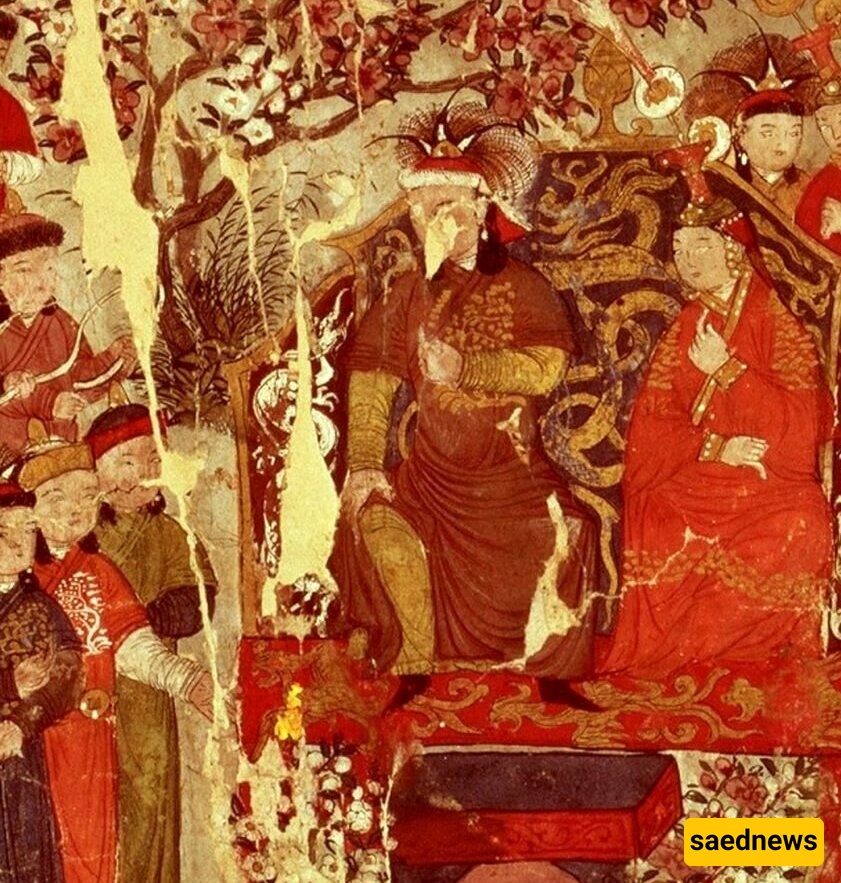
According to Saednews, Tents, horses, and swords defined the early days of the Mongol Empire. Warfare, conquest, and rapid expansion transformed the followers of Genghis Khan into the rulers of the largest contiguous empire the world had ever seen.
But the Great Khan did not rule alone. His chief wife, Borte, played a crucial role in the creation of the Mongol Empire during the 13th century. Her influence helped shape the empire’s political structure, and she remains one of the overlooked founders of Mongol power.
Borte was born around 1161 CE among the Olkhonud tribe in present-day Inner Mongolia. As a child, she was betrothed to the future emperor, Temujin, who would later become known as Genghis Khan.
Historical details about her early life are limited, but historians know that she married Temujin as a teenager. However, the couple’s happiness was short-lived. Soon after their marriage, Borte was kidnapped by members of the Merkit tribe.
Bride kidnapping was common among steppe tribes at the time. Rival groups often carried out such attacks either to disrupt the lives of their enemies or as revenge for past conflicts. The Merkit abducted Temujin’s new wife to settle an old grievance: Temujin’s mother, Hoelun, had originally been married to a Merkit man before she was captured by Yesugei, Temujin’s father.
Although such kidnappings usually resulted in women being forced to remain with their captors, Temujin chose a different path. With the help of his close friend Jamukha, he launched a rescue mission and successfully brought Borte back.
The event triggered a war between the Borjigin and Merkit tribes. Eventually, the Borjigin emerged victorious, and by around 1200 CE they had defeated the Merkits, enslaved many of their people, and taken control of their territory.
Several years later, Temujin adopted the title Genghis Khan and became the leader of a newly united group of tribes known as the Mongols.A Woman of Great Influence
For decades, Temujin continued conquering rival tribes, transforming the Mongols into a powerful military force that united enemies and expanded across vast territories. During this period, Borte became his principal wife.
Over his lifetime, Genghis Khan married at least six wives, had hundreds of secondary wives and concubines, and fathered at least 13 children. Yet Borte remained his first and most beloved wife, making her the most influential woman in his life.
According to historian Anne Broadbridge, author of Women and the Making of the Mongol Empire, Borte’s importance was clearly visible. Chief wives managed their own households and commanded large numbers of people, including junior wives, servants, herders, guards, and workers. These households could contain hundreds of individuals.
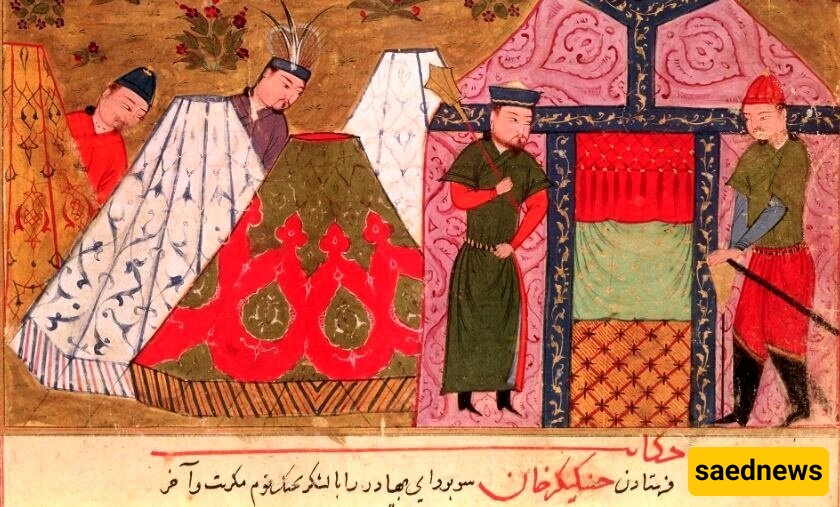
The Mongol royal families were not permanently settled. Like other nomads, they moved from one location to another. Their enormous households fascinated contemporary historians. During the reign of Kublai Khan, Genghis Khan’s grandson, the households of each of the emperor’s four wives reportedly included around 10,000 people, including servants and officials. The wives also traveled with thousands of animals and hundreds of wagons.
Broadbridge explains that the best locations within the camps were reserved for chief wives such as Borte, reflecting their social status and authority.
Like other senior wives, Borte supervised the marriages of her five daughters, who were engaged to sons of local rulers to strengthen political alliances. She also raised four sons, who became heirs to the wealth and political power of the growing Mongol Empire, as well as several adopted children.
Borte’s influence extended far beyond her household and children. Her position as chief wife gave her direct access to Genghis Khan, who consulted her on matters ranging from politics to military strategy.
She used this trust effectively, even when dealing with the emperor’s closest allies. One such figure was Jamukha, Genghis Khan’s childhood friend who had helped rescue Borte. Jamukha later became the leader of the Jadaran tribe and eventually became a rival of Temujin.
When Borte noticed signs that their friendship was collapsing, she advised her husband to end the alliance. In 1204, Temujin defeated Jamukha in battle, and Jamukha was later executed.
Another example of Borte’s political influence involved Teb Tengri, a powerful shaman who was initially one of Genghis Khan’s closest supporters. Teb Tengri had predicted Temujin’s rise to power and appeared destined to hold an important position at court.
However, after he publicly insulted Temujin’s brother, Borte demanded that her husband punish him severely. Historian Donna Hamill wrote that Genghis Khan followed Borte’s advice, restoring order among his people and strengthening his authority.
As chief wife, Borte managed a large royal household within Genghis Khan’s camp. In addition to organizing daily life, she served as a trusted political and military adviser to her husband.
Although archaeological evidence about influential Mongol women is limited, historical records reveal the essential role played by Mongol wives. While men fought wars and searched for new lands to conquer, women managed much of everyday life — both in military camps that supported warriors and in permanent settlements that expanded with the empire.
Borte, acting as part diplomat, part adviser, and part administrator, helped define the role of the Mongol empress. She also survived rumors claiming that her first son, Jochi, was the biological child of her Merkit captor rather than Genghis Khan.
Much of Borte’s life remains unknown, but her story represents the vital role women played in building the Mongol Empire and maintaining its daily operations.
Broadbridge argues that Genghis Khan had a wife he could “trust,” but more importantly, he and the Mongols also “needed” her. Without the women of the Mongol Empire, the Mongol Empire itself would never have existed.