SAEDNEWS: China Unveils Advanced Laser Targeting System: Could Its Sixth-Generation J-36 Fighter Feature Technology to Counter Missiles and Drones?
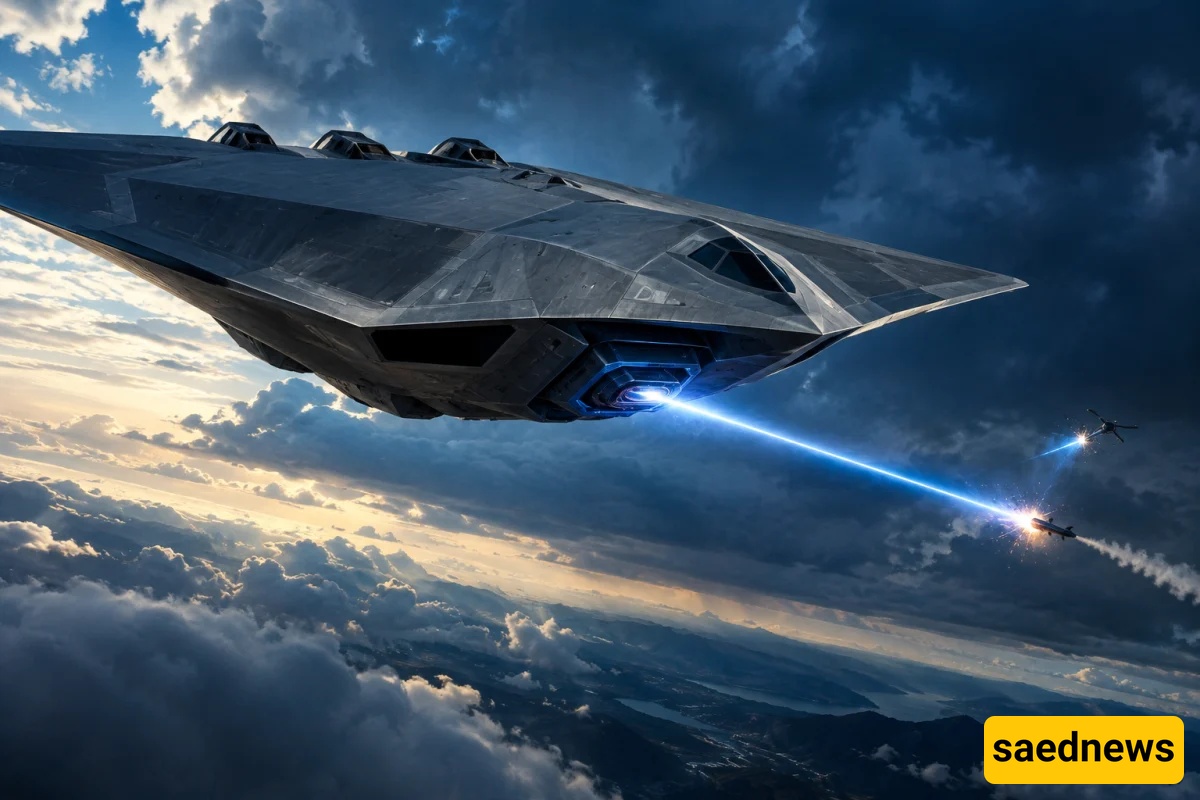
According to Saednews, China’s unveiling of an advanced laser weapon tracking and targeting system has intensified speculation that its sixth-generation J-36 fighter could eventually be equipped with directed-energy weapons. The technology, presented at a defense exhibition in Beijing, could potentially allow future combat aircraft to engage incoming missiles and drones without relying on conventional ammunition. Meanwhile, newly released footage of the J-36’s test flights and apparent design modifications has drawn renewed attention to China’s next-generation fighter development program.
According to published information, the new system was developed by an institute affiliated with the Aviation Industry Corporation of China (AVIC) and reportedly weighs less than 380 kilograms. Although it remains unclear whether the equipment has been installed on the J-36, its display alongside an image of the aircraft has raised questions about whether China is exploring this capability for its future combat platforms.
At the 14th China International Defense Electronics Exhibition, held in Beijing from September 15 to 17, 2026, the Aviation Industry Corporation of China (AVIC) presented a system identified as a “Fighter Laser Weapon Tracking and Targeting System.”
The technology was introduced by the Beijing Precision Engineering Institute for Aircraft Industry. Photographs from the exhibition showed the equipment displayed alongside an illustration of the J-36 fighter, strengthening speculation about a possible connection with China's sixth-generation combat aircraft program.
According to the information displayed on the product's exhibition board, the system has the following reported specifications:
Specification | Published information |
|---|---|
Manufacturer | Aviation Industry Corporation of China (AVIC) |
Equipment type | Fighter laser weapon tracking and targeting system |
Weight | Less than 380 kg |
Transmitted power | Partially obscured: “*00 kW” |
Tracking accuracy | Numerical value concealed |
Exhibition venue | Beijing Defense Exhibition |
Unveiling date | September 15–17, 2026 |
One of the most notable aspects of the announcement is the incomplete power specification. The exhibition board listed the system's transmitted power as “*00 kilowatts.” Some analysts believe the first digit was deliberately obscured. If this interpretation is correct, the system could potentially have an output of at least 100 kW.
The system's tracking accuracy was also expressed in microradians (μrad), although the precise figure was not visible in the published information.
Despite these details, its actual laser output, effective engagement range, and destructive capability remain unknown. The equipment presented at the exhibition is identified as a laser weapon tracking and targeting system, and its complete operational specifications have not been made publicly available.
The J-36 is one of China's most secretive military aviation projects, with its development widely attributed to the Chengdu Aircraft Corporation.
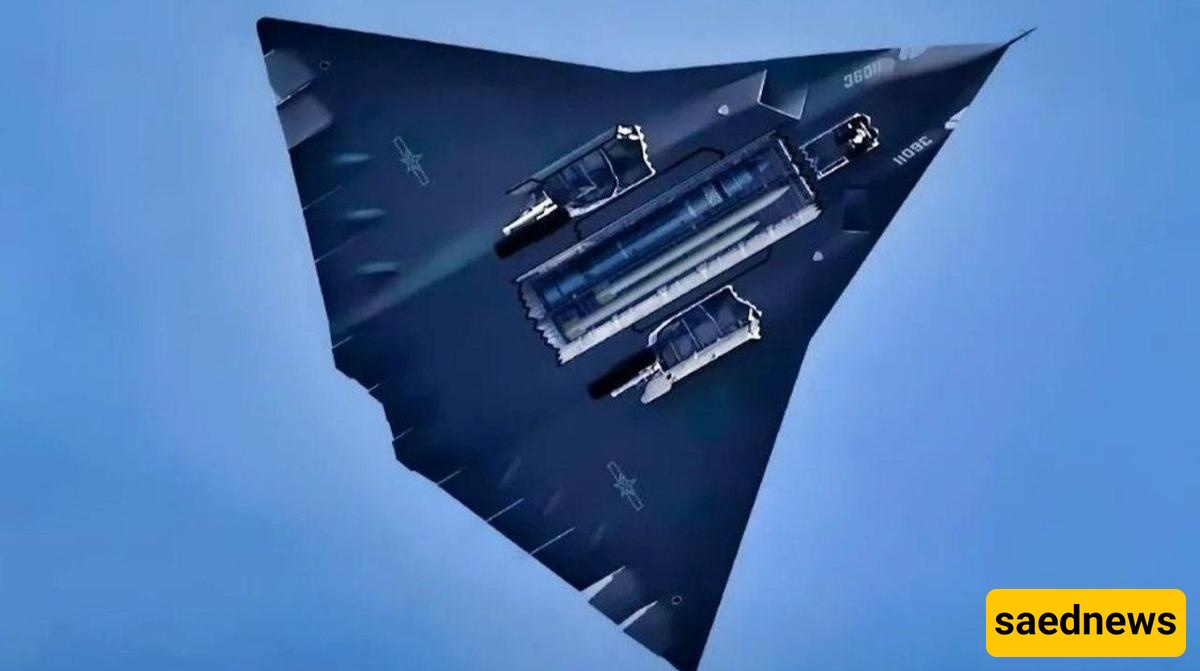
The aircraft first appeared in publicly circulated photographs in December 2024, when it was spotted flying over the city of Chengdu. Since then, its test flights and various design modifications have attracted considerable attention from military analysts.
The J-36 designation is commonly used by media outlets to refer to the aircraft. Its unconventional configuration distinguishes it from traditional fighter jets.
Its most notable observable features include:
A tailless design without conventional vertical stabilizers, featuring large, wide wings.
A three-engine propulsion configuration.
An airframe designed to reduce radar cross-section.
A twin-seat cockpit with side-by-side seating in observed configurations.
Modified engine exhaust designs and thrust-vectoring control systems in newer prototypes.
A report by specialist defense publication Janes indicates that a newer version of the aircraft has conducted flight tests featuring significant structural modifications.
The updated prototype reportedly includes changes to the side engine air intakes, the exhaust outlets of all three engines, and the rear landing gear configuration.
According to the publication, the newer aircraft retains its three-engine architecture and flying-wing configuration. However, the modifications suggest that China's development and testing program is continuing.
China has yet to release complete official specifications for the J-36. Figures circulating in unofficial reports, including an estimated wingspan of approximately 20 meters and a maximum takeoff weight of 50–55 tonnes, remain unverified and should not be treated as confirmed specifications.
One of the most intriguing potential applications of China's newly unveiled system is the creation of a laser-based defensive capability for advanced fighter aircraft.
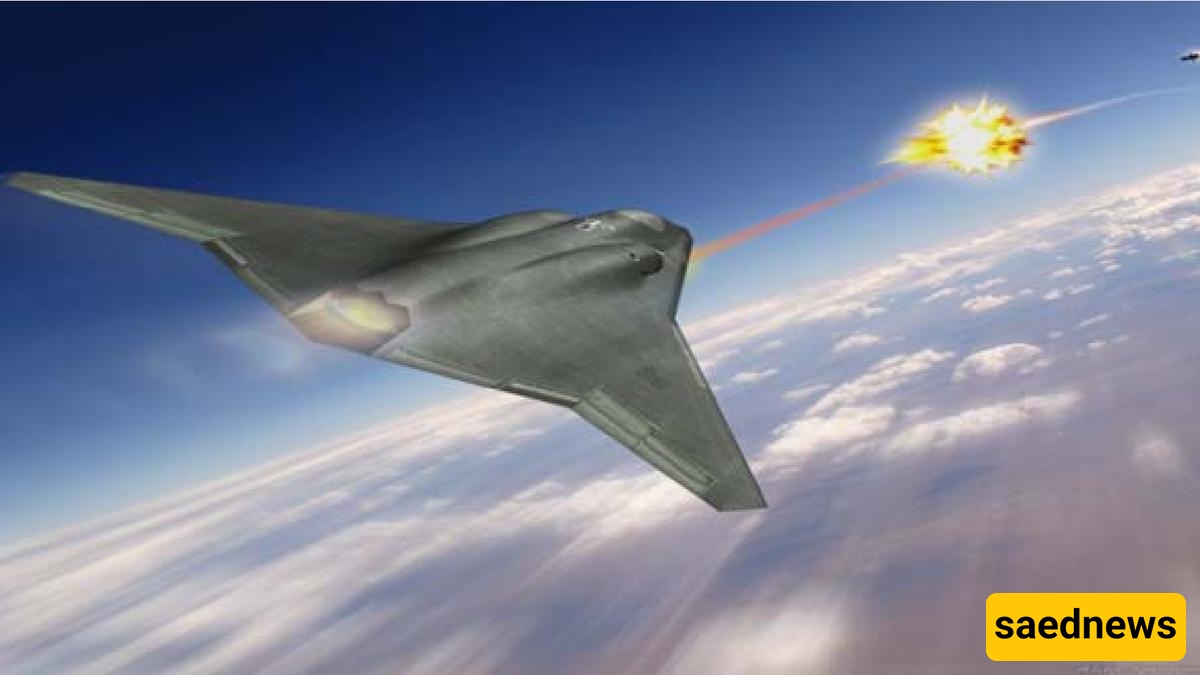
If successfully developed and integrated, the J-36 could potentially use concentrated energy alongside conventional weapons to counter certain airborne threats.
High-energy laser weapons work by focusing a powerful beam of light onto a specific point on a target, transferring substantial thermal energy. Depending on the system's power and exposure time, this energy could disrupt sensitive sensors, damage electronic components, or destroy sections of the target's structure.
Potential applications include:
One possible mission for an airborne laser weapon would be engaging incoming air-to-air and surface-to-air missiles.
In this scenario, the system would detect and track an approaching missile before directing a concentrated laser beam toward its vulnerable components.
Damaging guidance sensors or electronic systems could interfere with the missile's operation. However, completely destroying a missile would depend on laser power, engagement distance, and the amount of time the beam remains focused on the target.
Small, inexpensive drones have become important targets for directed-energy weapons.
Using expensive interceptor missiles against large numbers of relatively cheap drones can impose significant financial costs on military forces.
An appropriately powered laser weapon could potentially engage some of these targets at a lower cost per engagement.
High-energy lasers can interfere with or damage optical and infrared sensors.
This capability could be particularly valuable against missiles that rely on optical seekers to identify and track targets.
Unlike conventional missiles, laser systems do not require a separate physical projectile for every engagement. However, their firing capacity remains dependent on available electrical power, energy storage, and the aircraft's cooling capabilities.
Despite their potential advantages, integrating high-energy laser weapons into fighter aircraft presents several significant engineering challenges.
Generating a powerful laser beam is only one part of the problem. A fighter must also supply sufficient electrical energy, manage heat, and maintain extremely accurate targeting while operating under demanding flight conditions.
Electrical Power Supply: High-energy lasers require substantial amounts of electricity. The aircraft must generate enough power without compromising the operation of its radar, communications equipment, and other electronic systems.
Thermal Management: Producing a powerful laser beam generates considerable heat. Developing an effective cooling system is therefore one of the biggest obstacles to integrating this technology into the limited space available inside a fighter aircraft.
Targeting Accuracy: Fighter aircraft experience vibration, altitude changes, and rapid maneuvers during flight. The system must maintain an extremely precise beam alignment on a small, moving target. This becomes particularly challenging when engaging fast-moving missiles.
Weather Conditions and Operational Range: Humidity, dust, rain, fog, and atmospheric turbulence can reduce laser effectiveness. Furthermore, unlike conventional missiles, laser weapons require a direct line of sight to reach their targets and cannot penetrate physical obstacles.
Technical assessments by US defense organizations and NATO have also identified these factors as major challenges facing directed-energy weapons.
China's laser system unveiling comes as the United States continues to invest heavily in next-generation combat aircraft and advanced defensive technologies.
The American F-35, developed by Lockheed Martin, is one of the world's best-known fifth-generation fighters. It combines stealth technology, advanced sensors, and battlefield information integration.
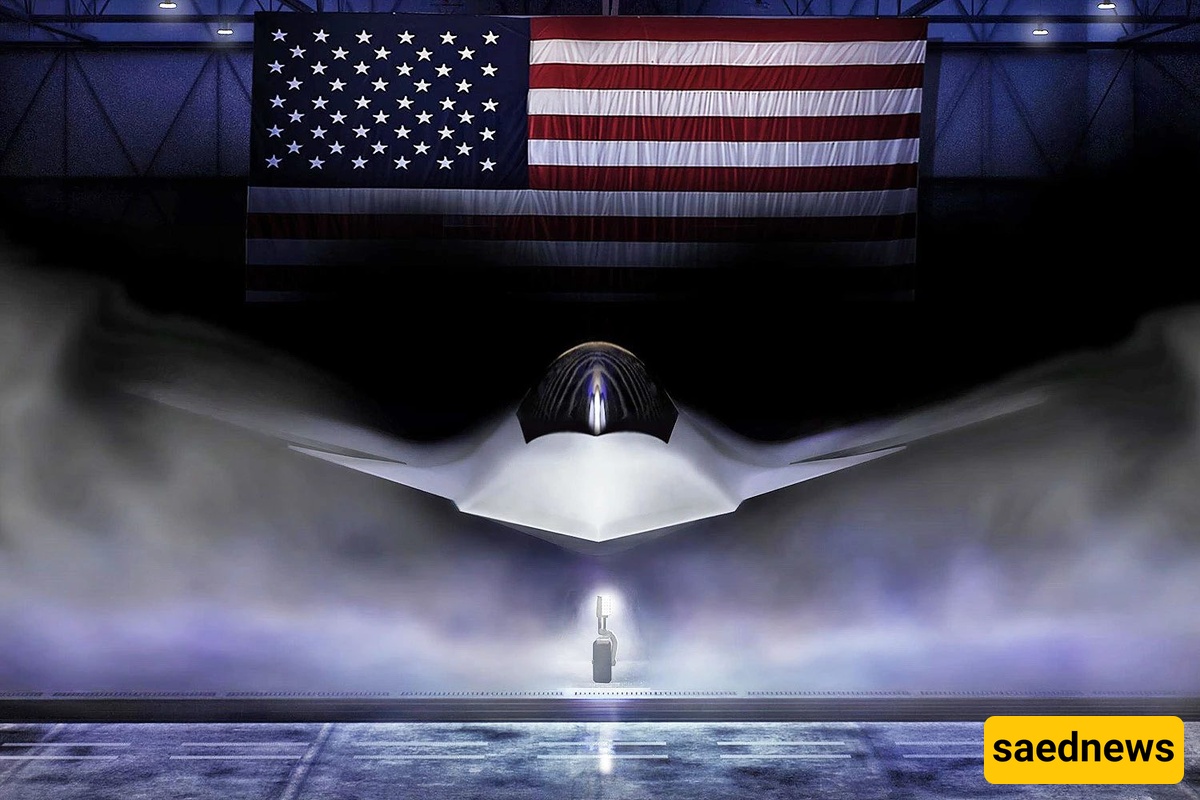
Meanwhile, the F-47, developed by Boeing, is part of the US Air Force's Next Generation Air Dominance (NGAD) program.
According to information published in July 2026, the F-47 program has entered the engineering and manufacturing development phase, with its first flight targeted for 2028. The US Air Force also plans to purchase at least 185 aircraft.
The publicly reported status of the three aircraft can be summarized as follows:
Fighter | Country | Status and key characteristics |
|---|---|---|
F-35 | United States | Operational fifth-generation stealth fighter |
F-47 | United States | Sixth-generation fighter development program; first flight targeted for 2028 |
J-36 | China | Experimental three-engine aircraft with an unconventional tailless design |
A direct comparison of their combat capabilities is not currently possible because complete specifications for the J-36 and F-47 remain undisclosed. Reliable information about their weapons and operational performance is also limited.
The appearance of a fighter laser weapon tracking and targeting system alongside an image of the J-36 represents an important indication that China is exploring directed-energy technologies for future combat aircraft.
However, there is a significant difference between unveiling a technology, testing a system, and operationally integrating it into a fighter.
As of October 31, 2026, publicly available information indicates that:
China's AVIC has unveiled a fighter laser weapon tracking and targeting system at the Beijing Defense Exhibition.
The system's reported weight is less than 380 kilograms.
Its transmitted power and tracking accuracy have not been fully disclosed.
Exhibition photographs show the system alongside an illustration of the J-36.
No publicly confirmed evidence has established that the system has been installed on the J-36 or tested in flight.
Consequently, there is currently insufficient evidence to conclude that China has equipped the J-36 with an operational laser weapon.
Nevertheless, the unveiling demonstrates Beijing's growing interest in technologies that could transform how next-generation fighters defend themselves against missiles and drones.
If China can overcome the challenges associated with electrical power generation, thermal management, and precision targeting, high-energy laser weapons could become an important capability for sixth-generation combat aircraft.
Such technology could play an increasingly significant role in the future military competition between China and the United States.
Make the title more Discover-friendlyRemove unsupported attribution language