SAEDNEWS: These saunas were designed so that water flowing out of the rocks entered the chambers, where it produced steam. The steam then escaped through a small opening.
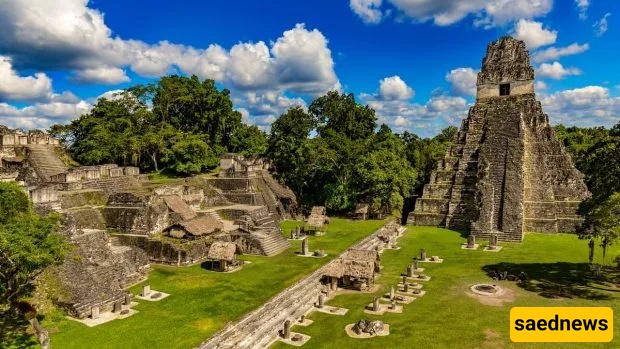
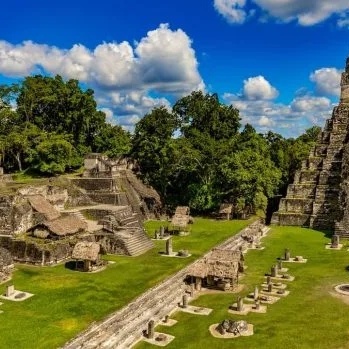
According to Saednews, Less than a month ago, news of the destruction of one of the most famous and oldest Mayan pyramids in Belize sent shockwaves through the archaeological community, leaving archaeologists and history enthusiasts deeply saddened.
Although most people associate pyramids with the Egyptian pyramids of Giza, the destroyed structure in Belize, which belonged to the ancient archaeological site of Noh Mul, was also considered one of the world's most valuable pyramids, dating back approximately 2,300 years.
The pyramid was destroyed by a bulldozer during a road construction project. It was a remarkable testament to an ancient civilization that once flourished in the Americas. This civilization had survived numerous natural disasters, including meteor showers, massive earthquakes, floods, and storms. However, according to archaeological and scientific research, it eventually collapsed as a result of severe climate changes and a 200-year-long drought.
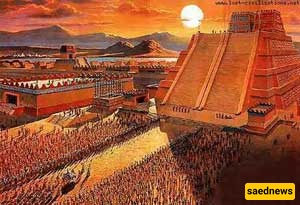
The Maya were one of the ancient peoples of the Americas, alongside civilizations such as the Aztecs. Their civilization extended from southern Mexico to what is now Honduras and El Salvador.
Renowned for their achievements in astronomy and medicine, the Maya civilization existed from approximately 2000 BC until 1600 AD, when Spanish conquests brought an end to much of their civilization. However, their famous pyramids were primarily constructed between 200 and 900 AD.
Mayan pyramids are among the most fascinating architectural achievements inherited from the ancient world. Their designs were remarkably precise, and the surviving structures demonstrate the extraordinary human effort and engineering skills involved in their construction.
Carvings and images found on these pyramids also provide valuable insights into the daily lives and customs of the ancient Maya, including human sacrifices, sometimes frightening religious ceremonies, and cruel practices involving fellow human beings.
Unlike ancient Egyptian pyramids, Mayan pyramids generally had steeper slopes. At least one side of many structures featured staircases that Mayan priests climbed to reach the summit. There, inside temples built at the top, they performed religious rituals and sacrificial ceremonies, which often involved human victims.
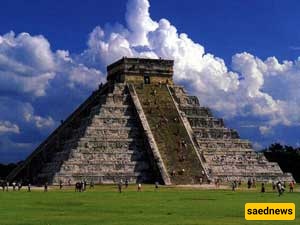
The walls of these temples were decorated with carvings depicting religious ceremonies. They also contained inscriptions that archaeologists have not yet fully deciphered.
The temples consisted of several rooms, each dedicated to a particular religious ritual. Some of these ceremonies were conducted in complete secrecy.
However, not every part of a pyramid was dedicated to religious worship. Palaces were built on its lower levels, containing rooms resembling modern-day saunas. These structures were designed so that water flowing from the surrounding rocks entered the rooms and produced steam, which escaped through a small opening.
Another important feature of these pyramid complexes was the Ball Court. It was not used exclusively for playing games; it also served as a venue for musical performances and celebrations.
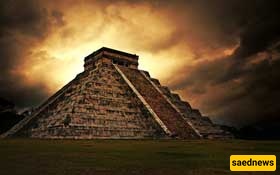
In some of these pyramids, archaeologists have also discovered rooms containing the tombs of Mayan kings.
Many other Mayan pyramids were specifically designed to serve the civilization's greatest passion: astronomy. Using specially designed astronomical chambers within these temples, the Maya were able to observe celestial events and phenomena and even make predictions about them.