SAEDNEWS: The Great Wall of China: History, Length, and Its Role in Defending Against Northern Invasions
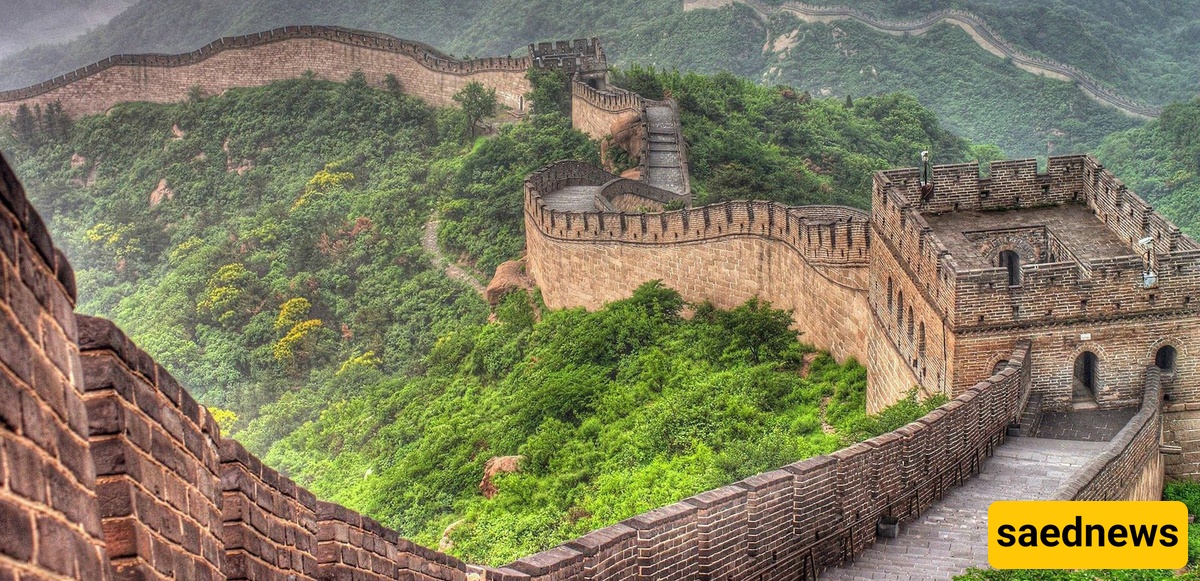
The Great Wall of China, regarded as one of the Seven Wonders of the World, is the longest and largest ancient defensive engineering structure in the world in terms of its construction history and scale.
The history of the Great Wall dates back to the 9th century BC. At that time, the Chinese government constructed signal-fire towers for communication and border fortresses to monitor enemy movements. These structures were built along and on top of the wall to protect the country against attacks from northern tribes.
During the Spring and Autumn Period and the Warring States Period, conflicts broke out among the various states. To defend their territories, rulers began constructing walls along natural mountain boundaries. In 221 BC, after unifying China, Emperor Qin Shi Huang connected the separate walls built by different states, creating a massive defensive barrier along the northern borders. His main objective was to prevent enemy invasions from the northern grasslands.
At that time, the Great Wall extended approximately 5,000 kilometres. During the Han Dynasty, which followed the Qin Dynasty, its length increased to around 10,000 kilometres.
Throughout more than two thousand years of Chinese history, successive rulers continued expanding and rebuilding the Great Wall. Eventually, the total length of its various sections reached approximately 50,000 kilometres, a distance comparable to travelling around the Earth.
Photograph of the Great Wall of China taken in 1907.
The sections of the Great Wall that can be seen today mainly date back to the Ming Dynasty (1368–1644 AD).
The wall stretches from Jiayuguan Pass in Gansu Province in western China to the banks of the Yalu River in Liaoning Province in northeastern China. It extends across nine provinces, cities, and autonomous regions, covering approximately 7,300 kilometres. The Chinese people traditionally refer to it as the "Long Wall."
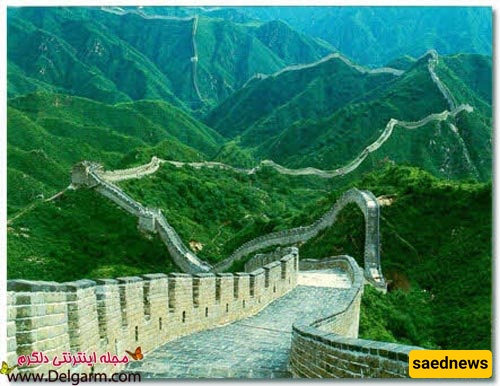
The Great Wall was constructed as a defensive military project, following mountain ranges and passing through deserts, grasslands, and marshlands.
Depending on the geographical conditions, ancient Chinese workers adopted different construction techniques and structural designs. These methods demonstrate the intelligence, ingenuity, and engineering skills of ancient Chinese civilisation.
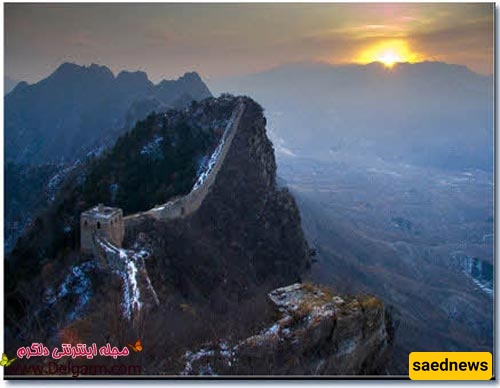
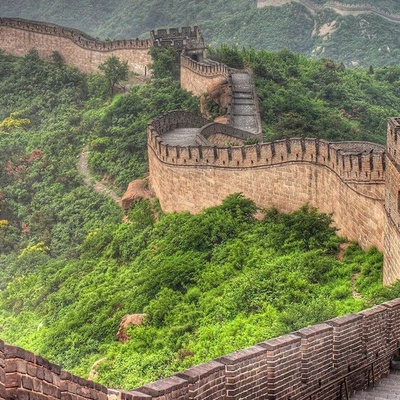
The wall follows the winding contours of steep and rugged mountains. Deep cliffs can often be seen beyond it, making the natural landscape and the wall appear as one continuous defensive system. This strategic design made it extremely difficult for enemy forces to penetrate the barrier.
The Great Wall was generally constructed using large bricks and rectangular stones, with soil and small stones filling its interior. Its average height was approximately 10 metres.
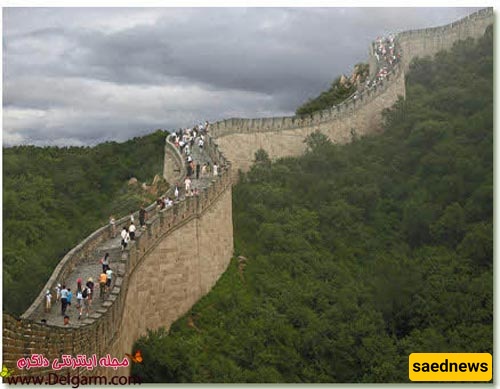
The width of the wall was sufficient for four horses to pass across it, while its roadway was generally around 4–5 metres wide. This provided enough space for transporting grain, weapons, and other military supplies.
On the inner side of the wall, stone railings and gateways were constructed to facilitate movement and access.
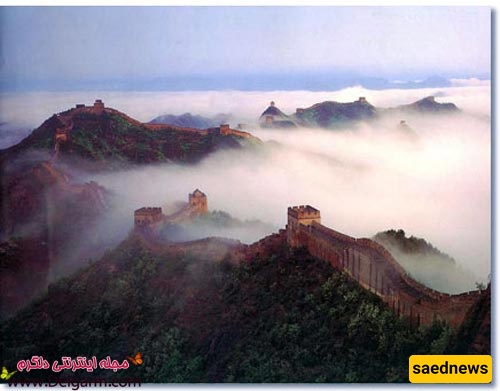
At regular intervals, platforms and signal-fire towers were built along the wall.
These platforms served several purposes, including storing weapons and food supplies, providing resting places for soldiers, and offering defensive positions during battles.
Whenever enemy forces launched an attack, signal fires were lit in the towers to warn surrounding regions. This system enabled news of an invasion to spread rapidly throughout the country.
Today, the Great Wall no longer serves its original purpose as a military defensive barrier. However, its extraordinary architectural beauty and historical significance continue to attract visitors from around the world.
The beauty of the Great Wall is both magnificent and awe-inspiring.
Viewed from a distance, its long, winding structure stretches across the mountain ranges like a gigantic dragon moving through the landscape, creating a breathtaking and majestic scene.
Up close, its imposing gates, massive walls, defensive platforms, watchtowers, and signal-fire towers blend harmoniously with the surrounding terrain, revealing remarkable artistic and architectural beauty.
The Great Wall of China holds immense historical and cultural significance and remains one of the world's most remarkable tourist attractions.
As a famous Chinese saying goes:
"He who has never climbed the Great Wall is not a true hero."