SAEDNEWS: Chabahar matters—not merely because it is one of Iran’s most thriving free trade zones, not simply because it is the country’s only oceanic port, and not just because it boasts some of the world’s most breathtaking landscapes. Chabahar matters because it is a paradise of...
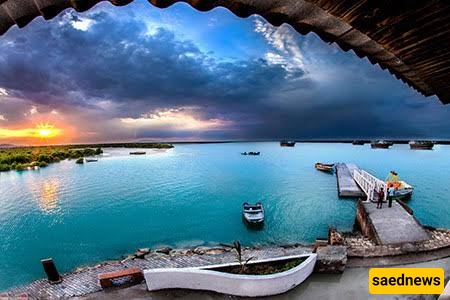
According to Saednews, Chabahar is important not only because it is one of Iran’s most prosperous Free Trade Zones, nor simply because it is the country’s only ocean port or home to some of the world’s most spectacular landscapes. Chabahar is special because it is a paradise of hidden wonders, captivating every traveller with its extraordinary natural beauty.
Spring is one of the best times to visit southern Iran, before the weather becomes excessively hot and humid. It is the perfect opportunity to explore one of the country’s most beautiful ports. Located in Sistan and Baluchestan Province, at Iran’s southeastern edge, Chabahar is home to a harbour capable of accommodating ocean-going vessels.
Chabahar covers an area of approximately 17,155 square kilometres and lies in southeastern Iran, along the warm waters of the Gulf of Oman and the Indian Ocean. It is bordered by Iranshahr and Nikshahr to the north, the Gulf of Oman to the south, Pakistan to the east, and Kerman and Hormozgan provinces to the west.
Its coastal location, proximity to the Tropic of Cancer, and exposure to seasonal monsoon winds from the Indian subcontinent and tropical weather systems give the region a warm, mild climate with relatively high humidity.
Interestingly, Chabahar is one of the warmest places in Iran during winter, yet it is also the coolest southern port in the country during summer!
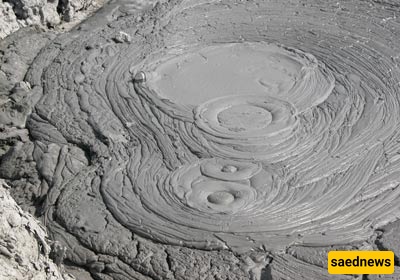
Beyond its beautiful coastline, Chabahar offers visitors a remarkable natural phenomenon: mud volcanoes. These unusual geological formations are among the region’s most distinctive attractions.
Between the Dasht-e Kahir and Tang plains, approximately 20 kilometres from Kahir Village along the Tang-Galak road, three small mud volcanoes can be found. Standing between 10 and 20 metres tall, two of them have been inactive for several years. The third remains active, resembling a volcano as cool, grey mud bubbles up from its crater.
Similar mud volcanoes can reportedly be found in only three other locations around the world.
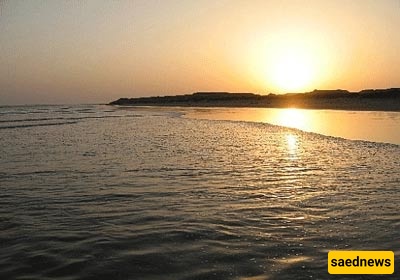
Visitors arriving in Chabahar may find themselves overwhelmed by the sheer number of natural wonders waiting to be explored.
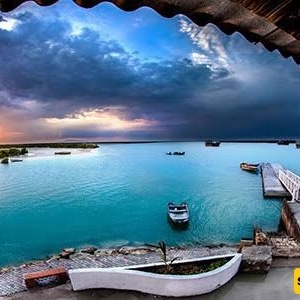
Chabahar’s coastline is among the most beautiful in Iran, offering breathtaking sunrises and sunsets. Large coastal cliffs, sculpted over time by advancing seawater and the erosion of sedimentary rocks, create spectacular scenery that leaves a lasting impression.
Located approximately 15 kilometres from Chabahar city, Lipar Lagoon is another remarkable natural attraction. It lies beyond Ramin Village, along the coastal road towards Gwatar Bay, overlooking a lush green valley.
The lagoon is essentially a natural reservoir formed between two mountains, collecting water from the surrounding areas.
Stretching approximately 14 kilometres, it is surrounded by various shrubs and small trees, including tamarisk and kalir vegetation.
Lipar Lagoon is also an important habitat for numerous bird species, including coots, flamingos, grebes, different types of herons, purple swamphens, sandgrouse, partridges, steppe eagles and teals.
Another attraction not to be missed is Chabahar’s magnificent sacred fig tree, locally known as Karg.
This large tree grows along the coastal areas of Chabahar and belongs to the rubber-tree family. Its branches contain a milky white sap, while its broad, spreading canopy and unusual aerial roots give it a distinctive appearance.
The tree produces orange-coloured fruits, approximately the size of hazelnuts, which are edible.
Many of these trees are believed to be more than a hundred years old. They are often found near religious shrines, and some were traditionally associated with places of worship.
Examples can still be seen in the villages of Ramin, Tis Koopan, Mashi, Lipar and Koopan Sar.
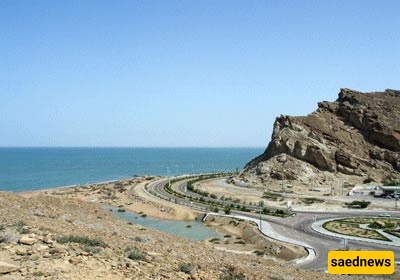
For those who wish to discover more of Chabahar’s lush natural landscapes, a visit to the coastal area of Gwatar Bay is highly recommended.
Near Bahu Creek, close to where the Bahukalat River flows into the Gulf of Oman, visitors can explore Chabahar’s beautiful mangrove forests.
Mangroves are trees and shrubs that thrive in the wetlands of tropical regions. Their seeds begin developing while still attached to the parent tree. Once the young seedlings mature, they detach, fall into the surrounding waters and eventually take root in the muddy wetlands.
These unique forests create a fascinating ecosystem and provide shelter for a variety of wildlife.
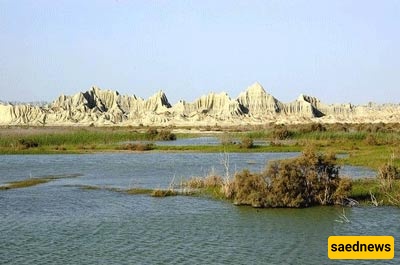
While exploring the Bahu region, make sure to visit the Bahukalat River, located approximately 90 kilometres east of Chabahar.
Flowing towards Gwatar Bay, this river is one of the natural habitats of the endangered Iranian mugger crocodile, locally known as Gando.
The short-snouted Iranian crocodile lives naturally in this region and is considered one of the most valuable and remarkable crocodile species in the world.
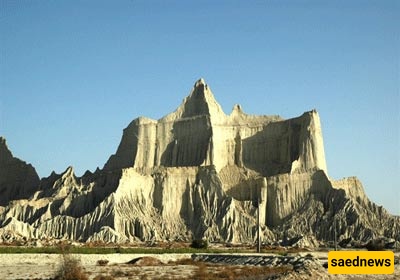
Chabahar’s Martian Mountains are among the region’s most famous natural attractions. Also known as Badlands, these extraordinary formations offer some of the most breathtaking scenery in Iran.
Their unusual shapes, colours and rugged surfaces create an almost otherworldly landscape, reminiscent of the surface of Mars.
The mountains stretch parallel to the coastline, extending from the Kachoo area towards Gwatar Bay.
For nature lovers, photographers and adventure seekers, the Martian Mountains offer an unforgettable opportunity to experience one of Iran’s most extraordinary landscapes.