SAEDNEWS: Journalism is built around observing events, but history has repeatedly shown moments when the observer becomes the story.
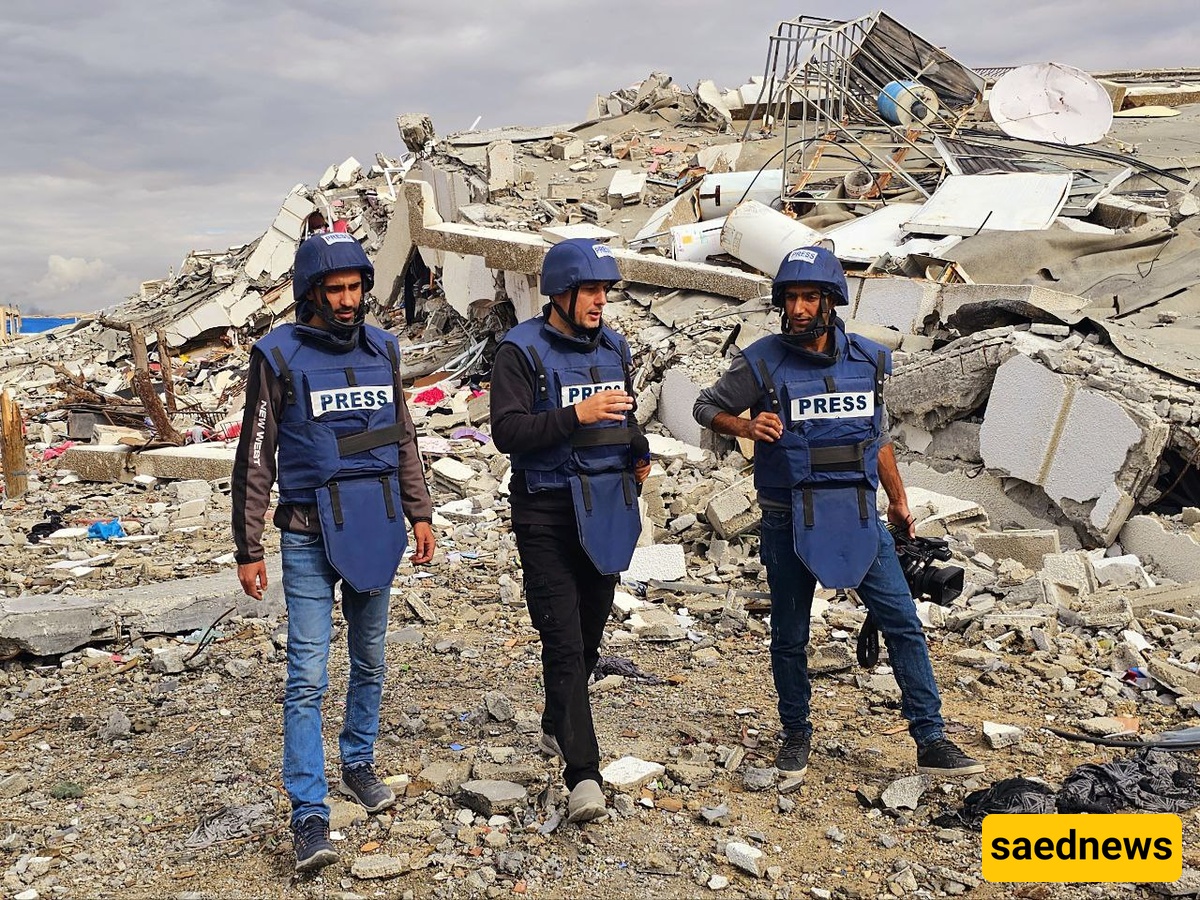
According to SaedNews: The journalist is traditionally supposed to stand just outside the story—watching, recording, questioning and explaining what happened to everyone else. But sometimes that invisible boundary disappears. The person holding the microphone becomes the person being discussed. The reporter behind the camera becomes the face on the front page. And the story they went out to tell becomes, tragically, the story the world tells about them.
That transformation has occurred in some of the most disturbing episodes in modern media history. Journalists have been killed while covering wars, lost their lives in transport disasters, disappeared during political crises, been targeted after investigating corruption and, in some cases, dramatically changed careers from reporting events to shaping them.
In Iran, this reality has a particularly powerful connection to August 8, known in the Iranian calendar as Journalist Day. The date commemorates Mahmoud Sarimi, the IRNA journalist killed in Mazar-i-Sharif in 1998 while reporting on the Taliban's capture of the city. His final communication was not a reflection on his own fate. It was a news report: Mazar-i-Sharif had fallen, and Taliban forces had entered the Iranian consulate.
Shortly afterward, communication with him was lost.
Sarimi was killed alongside eight members of the Iranian consulate. Their fate remained uncertain for weeks until their bodies were identified after a mass grave was discovered behind the damaged consulate building. In 1999, the anniversary of the incident became Iran's official Journalist Day, turning a journalist's death into a lasting national reminder of the risks attached to the profession.
But the story of journalists becoming news themselves did not end there.
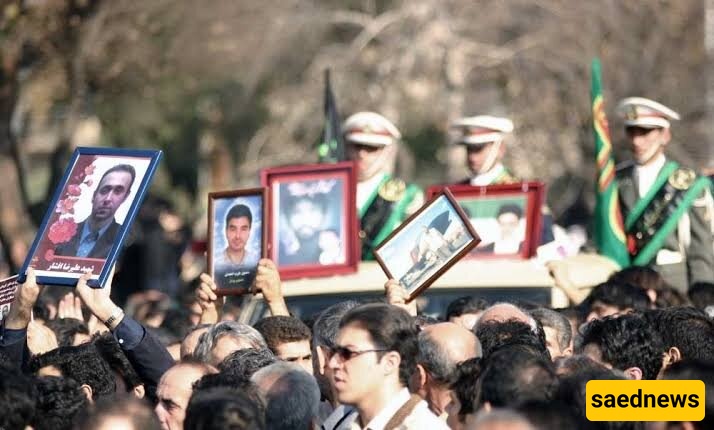
One of the deadliest events ever to strike Iran's media community occurred on December 6, 2005, when an Iranian Air Force C-130 transport aircraft crashed shortly after taking off from Tehran's Mehrabad Airport.
The aircraft was carrying journalists, photographers and television crews from several Iranian media organizations, along with military personnel and flight crew. They were traveling to cover a naval exercise in the Chabahar and Bandar Abbas region.
The flight departed at 1:24 p.m. About eight minutes later, the crew reported a loss of pressure and a technical problem involving the fourth engine and requested an emergency return to Mehrabad.
At around 2:10 p.m., during the approach, the aircraft crashed into a residential block in Tehran's Towhid Town area near the airport.
All 94 people aboard were killed, including 39 media professionals. Twelve residents of the building also died, bringing the total death toll to 106, while more than 90 people were injured.
The tragedy immediately became a national story and raised questions that extended far beyond the accident itself: the technical condition of aircraft, the use of military flights to transport civilian media personnel and the safety procedures surrounding high-risk assignments.
For the Iranian media community, it was not simply an aviation disaster. It was a collective loss on a scale rarely experienced by journalists in the country.
Sixteen years later, another tragedy demonstrated that the risks of journalism are not confined to aircraft or war zones.
On June 22, 2021, a bus carrying 21 environmental journalists overturned while traveling between Piranshahr and Naqadeh. The journalists had been sent to report on efforts to revive Lake Urmia.
The accident was attributed in the source account to a technical failure in the braking system of an aging bus.
IRNA journalist Reyhaneh Yasini and ISNA journalist Mahshad Karimi were killed. Several other journalists were seriously injured.
The deaths triggered criticism of how media assignments were organized, the responsibilities of institutions inviting journalists to field trips and the standards governing transportation for reporters.
Once again, the people who had been dispatched to document an environmental crisis became the center of a national debate over safety, accountability and working conditions.
Not every case of a journalist becoming a news subject begins with a death in the newsroom or on assignment.
The career of Gholamhossein Afshordi—better known by his military name, Hassan Bagheri—represents a striking transformation of professional identity.
Afshordi began working as a journalist for the Jomhouri Eslami newspaper after Iran's 1979 revolution. He reported on domestic political developments, traveled to Lebanon and covered international events.
When the Iran-Iraq War began in September 1980, he went to the southern front as a war correspondent.
His systematic approach to collecting information, mapping positions and analyzing battlefield developments gradually moved him away from conventional reporting. He helped establish an intelligence and operations structure and, under the name Hassan Bagheri, became an important military planner involved in major Iranian operations including Samen al-A'emeh, Fath al-Mubin and Beit al-Moqaddas.
He eventually rose to the position of deputy commander of the IRGC Ground Forces.
On February 9, 1983, while conducting reconnaissance near Fakkeh, he was killed by mortar fire.
The trajectory is remarkable: a journalist who entered the war to document events became a military figure whose own actions became part of the history he had once been assigned to report.
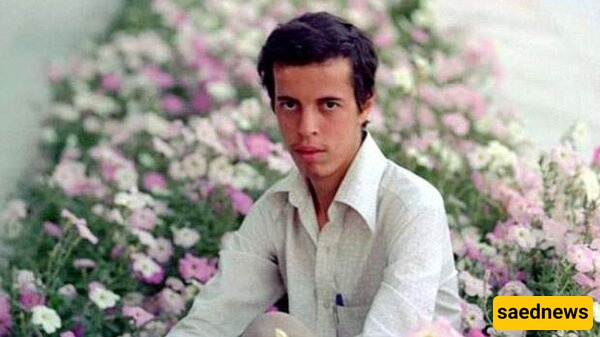
Another unresolved Iranian case is that of Kazem Akhavan, an IRNA photographer and journalist who disappeared in Lebanon in 1982.
During Israel's invasion of Lebanon, Akhavan traveled there with an Iranian diplomatic delegation to cover the conflict. On July 5, 1982, the vehicle carrying him and three others—Ahmad Motevaselian, Taghi Rastegar-Moqaddam and Mousavi—was stopped at the Barbarea checkpoint north of Beirut. The four men were abducted by Phalange-affiliated forces.
More than four decades later, Akhavan's fate remains unresolved in the source account.
He had traveled toward the front lines to document a conflict. Instead, he became part of one of Iran's longest-running unresolved political and diplomatic cases.
The danger is not limited to journalists working in active war zones.
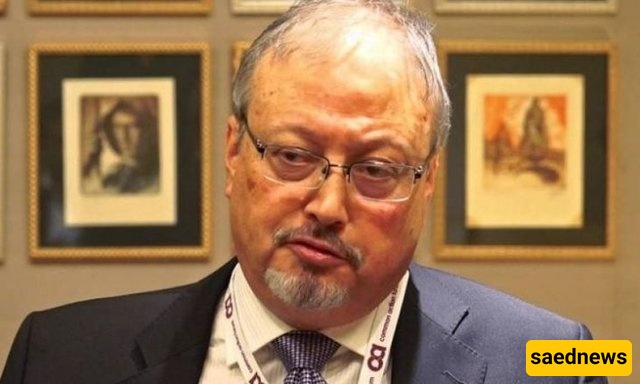
The killing of Saudi journalist and political commentator Jamal Khashoggi became one of the most closely watched international controversies involving the press in recent decades.
Khashoggi, a former editor of Al-Watan and a columnist for The Washington Post, entered the Saudi consulate in Istanbul on October 2, 2018, to obtain documents connected to his planned marriage.
He never emerged.
Saudi authorities initially disputed that he had been killed inside the building. Turkish investigations and evidence later pointed to a Saudi team that had traveled from Riyadh to Istanbul. Saudi state television eventually acknowledged that Khashoggi had been killed inside the consulate, while initially describing the death as the result of a confrontation.
The case rapidly expanded beyond a criminal investigation. It generated international pressure, congressional hearings in the United States, European political reactions and a United Nations investigation into the circumstances surrounding his killing.
A journalist who had spent years writing about politics had suddenly become the center of an international diplomatic crisis.
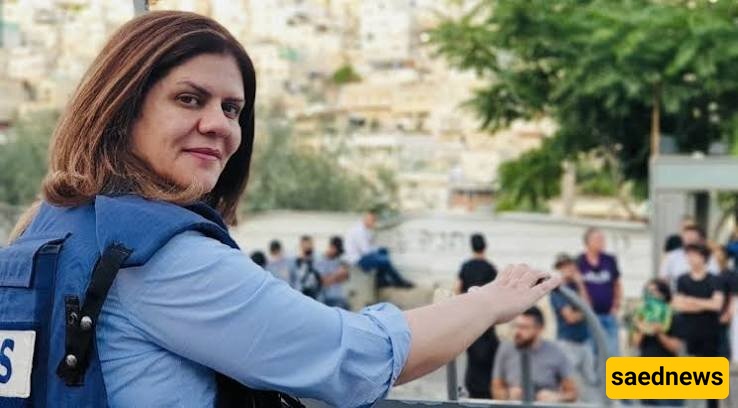
Few cases illustrate the risks of conflict journalism more starkly than the death of Al Jazeera journalist Shireen Abu Akleh.
Abu Akleh had spent more than 25 years reporting from the West Bank. On May 11, 2022, she was covering an Israeli military raid in Jenin when she was shot and killed despite wearing a helmet and protective vest clearly marked “PRESS.”
Her death generated international scrutiny. Investigations by international organizations, media outlets and ballistic analysts concluded that the fatal shot came from the direction of the position where Israeli forces were deployed, while Israel disputed aspects of the allegations.
Her funeral in Jerusalem also became a major news event after confrontations between police and mourners.
In Gaza, another journalist, Al Jazeera bureau chief Wael al-Dahdouh, became an emblem of the extraordinary personal cost of covering war. While reporting live during the 2023 conflict, he learned on air that his wife, children and grandchild had been killed in an Israeli airstrike.
The moment was no longer simply journalism about a war. The war had entered the journalist's own family.
The danger facing reporters is also visible in countries that are not formally at war.
Maltese investigative journalist and blogger Daphne Caruana Galizia spent years examining corruption, money laundering, the Panama Papers and alleged links between political figures and business interests.
On October 16, 2017, shortly after leaving her home in Bidnija, a bomb planted in her car was remotely detonated. She was 53.
Her assassination triggered protests in Malta and intense international scrutiny. A government-commissioned inquiry concluded in 2021 that the state bore ultimate responsibility for creating a climate of impunity that failed to protect her.
The political consequences were significant, eventually contributing to the resignation of Prime Minister Joseph Muscat, while several people were arrested and prosecuted in connection with the assassination.
A journalist investigating the country's power structures had become the catalyst for an even larger examination of those structures.
A similar shock followed the killing of Slovak investigative journalist Ján Kuciak, who was 27.
Kuciak worked for Aktuality.sk and was investigating alleged links between the Italian 'Ndrangheta organized crime network, Slovak political circles and the misuse of European Union funds.
On February 25, 2018, Kuciak and his fiancée were found dead at their home near Bratislava, both victims of gunfire.
His unfinished investigation was published after his death. Public anger grew into some of the largest demonstrations in Slovakia since the fall of communism, contributing to a political crisis that resulted in the resignation of Prime Minister Robert Fico, the interior minister and the police chief.
Once again, the journalist had become more than a victim. His death became a political event.
Technology has made the boundary between journalist and news subject even harder to define.
In recent regional conflicts and urban crises, smartphones and social media platforms have allowed people without formal press credentials to document events from places professional news organizations cannot easily reach.
These citizen journalists may become the only witnesses available in besieged or dangerous areas. But their proximity to the event also places them and their families at direct risk.
When citizen reporters are killed or targeted while documenting violence, the old distinction between professional journalist, eyewitness and civilian victim becomes increasingly blurred.
That shift raises difficult questions about protection, legal status and responsibility under international law.
The cases are different, but several patterns recur.
The first is targeted violence linked to investigative reporting. Journalists exposing corruption, organized crime or political wrongdoing can become targets even in countries that are formally at peace.
The second is the collapse of legal and diplomatic protections during political crises. The cases of Mazar-i-Sharif and Khashoggi demonstrate how offices and institutions normally associated with protection can become scenes of danger.
The third is the physical risk of reporting assignments themselves. The C-130 crash and the Lake Urmia bus disaster highlight the importance of transportation standards and safety protocols for journalists.
The fourth is the disappearance of any meaningful separation between the reporter's professional life and personal life in modern war zones. The experiences of Abu Akleh and al-Dahdouh illustrate how quickly professional risk can become personal tragedy.
Ultimately, when journalists become the headline, the consequences extend far beyond the individual.
Their deaths can expose failures in security systems, raise questions about political accountability, trigger international investigations or reshape public debate.
That is why Journalist Day carries a meaning far beyond a date on a calendar. The story of Mahmoud Sarimi, the journalists killed in the C-130 crash, Reyhaneh Yasini, Mahshad Karimi, Hassan Bagheri and Kazem Akhavan sits alongside the international cases of Khashoggi, Abu Akleh, Caruana Galizia and Kuciak as a reminder of an uncomfortable reality: sometimes the person whose job is to record history is pulled directly into it.
A journalist may enter a conflict carrying a camera, a notebook or a microphone. But when the line between observer and event disappears, the story can change forever.
And when that happens, the question is no longer simply what happened? It becomes: who will tell the story when the storyteller is gone?