SAEDNEWS: The Israeli army is struggling to address a manpower shortage of about 12,000 troops while expanding its forces across several fronts and relying heavily on reservists. A Hebrew report says prolonged service, military attrition and the financial burden of reserve duty continue to complicate efforts to rebuild the force.
According to SaedNews: Yossi Yehoshua, military affairs correspondent for Yedioth Ahronoth and the Ynet news website, reported Friday evening that the Israeli army is engaged behind the scenes in an intensive effort to tackle a major manpower shortage.
The immediate priority is to fill a gap of roughly 12,000 troops, including about 7,500 operational personnel. At the same time, the military is expected to deploy more soldiers to combat fronts and call up tens of thousands of additional reservists, despite repeated warnings that the exhaustion of troops makes continued deployment increasingly difficult.
According to the Hebrew-language report, the army now faces a striking contradiction. Senior military officials say that since October 7, the size of combat formations, both standing and reserve, has increased by tens of percent. That expansion has meant more battalions, brigades and reserve units, as well as larger numbers of troops stationed along borders and in operational areas.
Yet the military is simultaneously reporting a shortage of about 12,000 personnel. Yehoshua says the answer lies in a fundamentally different approach to managing available manpower: directing more soldiers into combat roles, dramatically expanding reserve mobilization and adopting a different approach toward exhausted troops, thousands of whom have left the military during the war.
The report argues that the army’s central challenge is not necessarily bringing in new personnel, but retaining them and making effective use of those already available, because its capacity to absorb additional troops is limited.
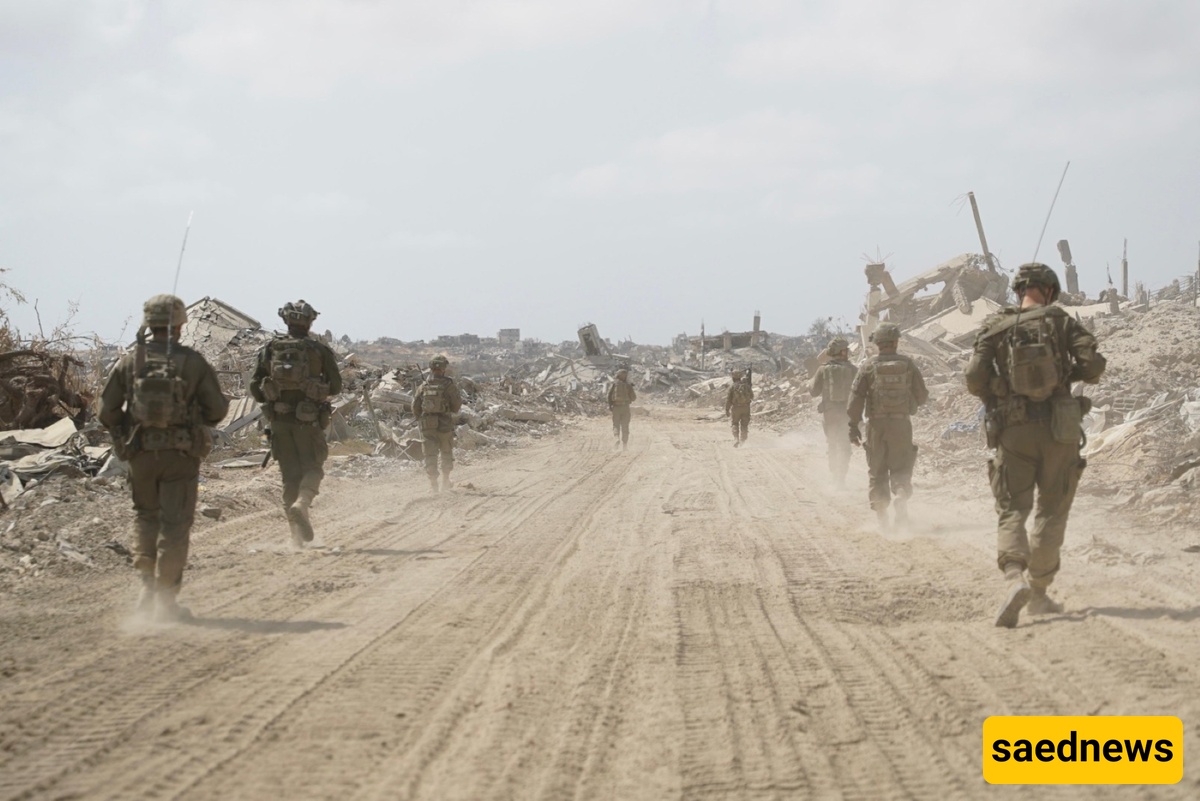
Before October 7, the Gaza Division consisted of two regional brigades and four battalions. Today, two division headquarters, five brigades and 16 battalions are operating along the border and inside the Gaza Strip.
In northern occupied Palestine, the Galilee Division had two regional brigades and four battalions on the eve of the war. Today, the area has two divisions, eight brigades and 15 battalions. Before the war, only one brigade was deployed along the Syrian border; today, three brigades are there, with forces operating both on the occupied side and deeper inside Syrian territory.
On the eastern border, the Gilead Division has been established with five new reserve brigades to protect a line in the Jordan Valley that is viewed as particularly vulnerable to infiltration.
The report also says that more than 100,000 reservists are currently serving in the Israeli army, allowing the military to establish and organize a number of additional units. But even these large figures have not resolved the problem of military exhaustion, according to the military affairs correspondent.
Before the war, reserve units were activated only periodically, sometimes for several weeks at a time over the course of several years. Today, however, some reservists in the “Iron Swords” battalions have accumulated as many as 600 days of service in less than three years, a figure described as extraordinary.
Such prolonged service affects reservists’ lives in numerous ways, from strain on their families to lost income and damage to their careers or education, in addition to the psychological and physical costs of extended duty.
The report also highlights a change in pre-draft psychological exemptions. After reaching roughly 10,000 young men and women in 2023 who were classified with a rating of 21, the figure fell to around 9,000 in 2024 and about 8,200 in 2025. At the same time, however, the army has seen an increase in soldiers leaving during their service: following months of prolonged warfare, around 8,000 permanent-service soldiers leave each year because they are deemed “unsuitable” for continued service.
The military is seeking to reverse that trend and reduce the broad wave of departures.
The report concludes that the Israeli army is rebuilding itself, but that it is still too early to say the manpower crisis has been resolved. The shortage, it says, will not be overcome simply through another program or a new recruitment campaign.
The economic dimension is also central to understanding the army’s expansion. The cost of reserve-service days since the beginning of the war has reached 100 billion shekels, and without enough permanent personnel, that expense is expected to continue.
At the same time, the army is being asked to expand its forces, deploy to new battlefronts, enlarge its infrastructure and renew its personnel. Yet its financial framework has not been adjusted accordingly. In other words, the Israeli military leadership has been asked to build the army after October 7 while operating with the budget it had on October 6.