SAEDNEWS: A reported Israeli drone strike on a vehicle near Nabatieh in southern Lebanon was followed minutes later by another attack targeting emergency teams who had arrived to assist the wounded, according to Lebanese media reports.
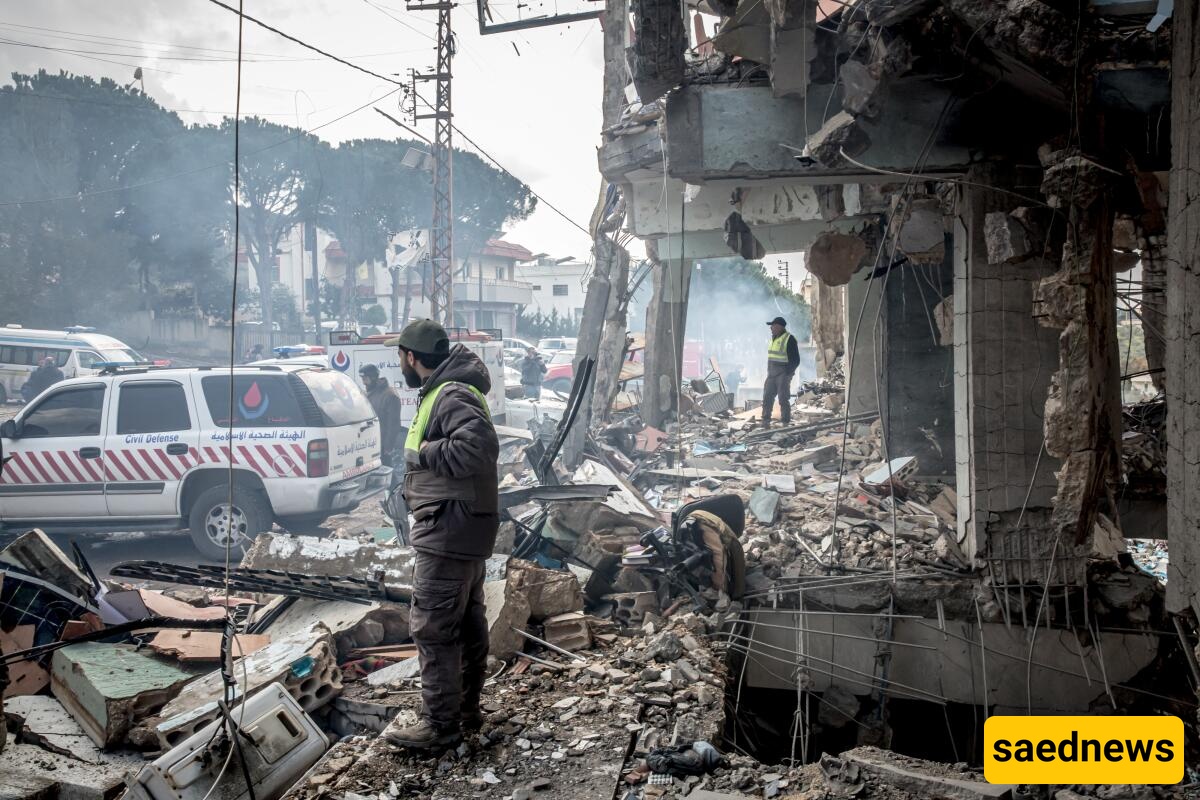
According to SaedNews: An Israeli drone strike in southern Lebanon has drawn fresh concern after Lebanese media reported that emergency teams responding to an initial attack were themselves targeted minutes after reaching the scene.
The incident was reported on Tuesday near the city of Nabatieh, close to the Hay al-Jamiat area. According to Lebanon’s Al-Manar television, an Israeli drone struck a vehicle in the area, prompting rescue teams to move toward the site to evacuate people who had been injured.
What happened next is at the center of the reports.
Lebanon’s National News Agency, which also confirmed the incident, said the Israeli drone returned to target the emergency teams at the scene several minutes after the initial strike. The sequence has intensified concerns over the safety of rescuers operating in southern Lebanon, particularly when they are responding to people injured in attacks.
The reported second strike is significant because rescue workers are expected to be able to reach wounded people without becoming targets themselves. If the reported account is confirmed, deliberately targeting emergency personnel would raise serious concerns under international humanitarian law, which provides protections for humanitarian and medical personnel carrying out their duties.
The reports did not provide a full account of the number of casualties from either the initial strike or the reported attack on rescuers. They also did not provide additional details about the identities of those inside the vehicle or the emergency personnel who were reportedly targeted.
That lack of detail means that the circumstances surrounding the incident remain subject to further clarification. However, the reported timeline—an initial strike on a vehicle followed shortly afterward by a second attack as rescue teams arrived—has made the incident particularly alarming.
For emergency workers, timing can be critical. Once an attack occurs, rescuers typically move toward the affected area to locate injured people and provide assistance or transport them to medical facilities. In an environment where further strikes are possible, that response can expose rescuers to additional danger.
The reports from Nabatieh therefore highlight a broader humanitarian concern: the risks faced by those attempting to provide assistance during armed conflict.
The incident also comes against the backdrop of continuing tensions in southern Lebanon, where Israeli military activity has repeatedly raised concerns over civilian safety and the ability of emergency services to operate in affected areas.
The reported targeting of rescue teams is especially sensitive because emergency personnel are not simply bystanders at the scene of an attack. Their role is to respond to casualties, evacuate the wounded and provide urgent assistance. Any threat against them can have consequences beyond the immediate incident, potentially making it more difficult for rescuers to reach people who need help.
International humanitarian law distinguishes between legitimate military targets and protected civilian and humanitarian personnel. Medical and humanitarian workers are generally afforded special protection while performing their duties, although the precise legal assessment of any individual incident depends on the facts and circumstances.
That is why independent verification of what occurred near Nabatieh will be important. Determining exactly what was struck, who was present, what happened between the first and second attacks, and whether the emergency teams were knowingly targeted would all be relevant to assessing the incident.
For residents of southern Lebanon, however, the immediate concern is much more direct: the safety of people living in areas where attacks can occur and the safety of those who arrive afterward to help.
The reported sequence near Hay al-Jamiat has therefore become more than another account of a drone strike. It has raised a difficult question about what happens when even the people responding to an attack may face danger at the scene.
As further information emerges, attention is likely to remain focused on the circumstances of the reported second strike and on whether additional evidence can establish what happened to the rescue teams.
The incident serves as a stark reminder that in conflict zones, the consequences of an attack can extend well beyond its initial target. When rescuers are also exposed to danger, the humanitarian response itself can become increasingly difficult—and the people waiting for help may be left facing an even more uncertain situation.