SAEDNEWS: The Niujie Mosque is one of the oldest and most beautiful mosques in Beijing, China. Built with a harmonious blend of traditional Chinese architecture and Islamic decorative elements, it stands as a remarkable example of cultural and architectural fusion.
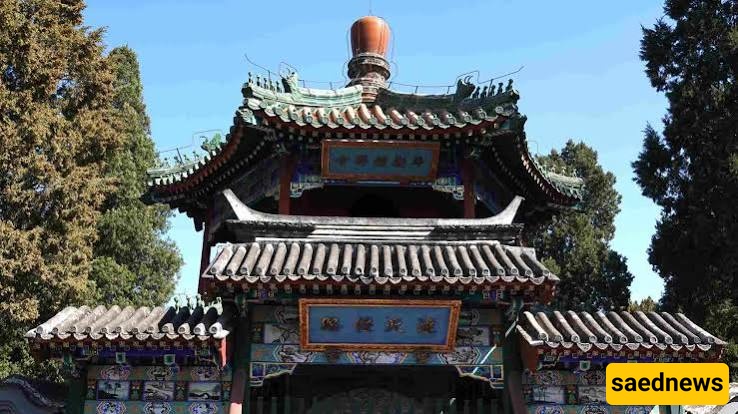
According to Saednews, The Niujie Mosque, also known as Niujie Masjid, is one of the oldest mosques in Beijing, China. It was originally built in 994 AD and was later renovated and expanded during the reign of the Kangxi Emperor of the Qing Dynasty in the 17th and 18th centuries.
The mosque is located on Niujie Street in Xuanwu District, an area traditionally regarded as the largest Muslim neighborhood in Beijing.
Among the many mosques in Beijing, Niujie Mosque is considered one of the city's oldest and most beautiful Islamic landmarks.
The mosque covers an area of approximately 6,000 square meters and combines elements of both Chinese and Islamic architectural traditions. Its exterior reflects traditional Chinese architecture, while the interior features Islamic decorations and designs.
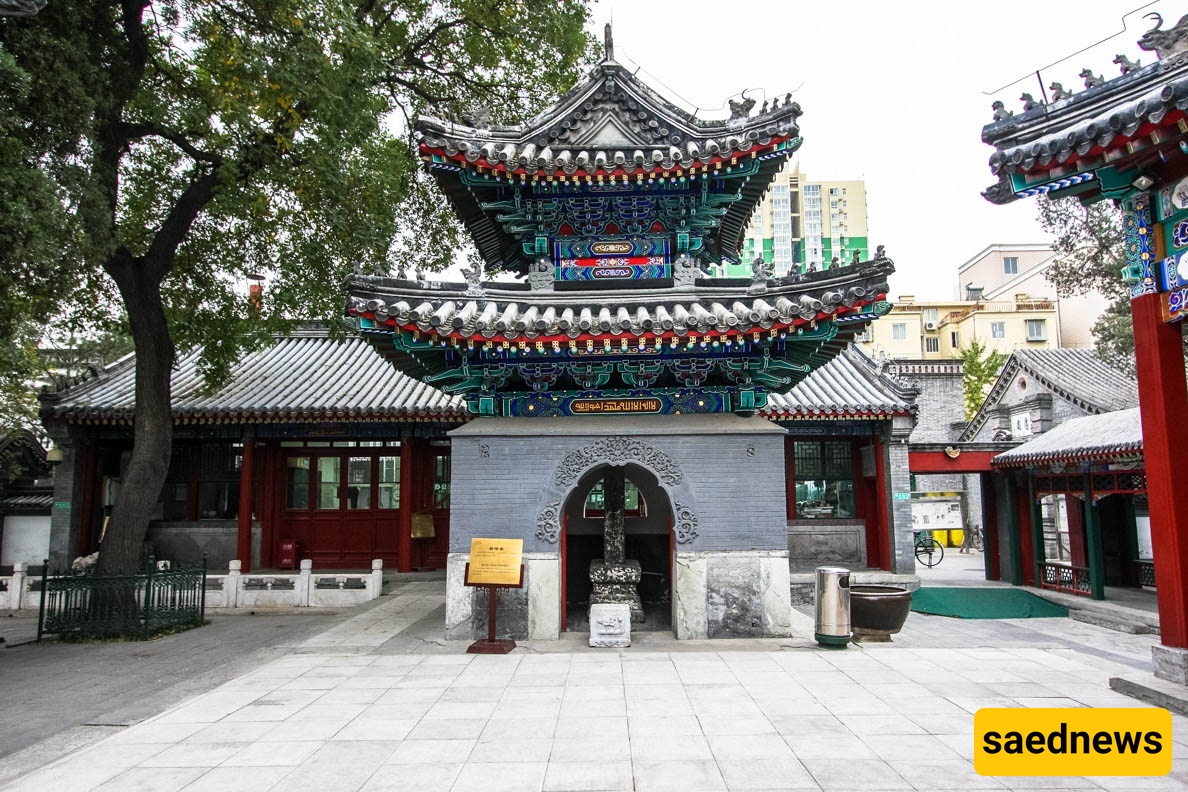
The mosque was constructed primarily with wooden elements. It houses a number of historical and cultural artifacts, including important stone inscriptions and imperial tablets, such as an imperial decree issued during the Qing Dynasty in 1696.
The courtyard of the mosque is traditionally filled with the pleasant fragrance of incense.
One of the most fascinating features of Niujie Mosque is the combination of Chinese and Arabic cultural elements. Announcements concerning prayer times are made in both Arabic and Chinese.
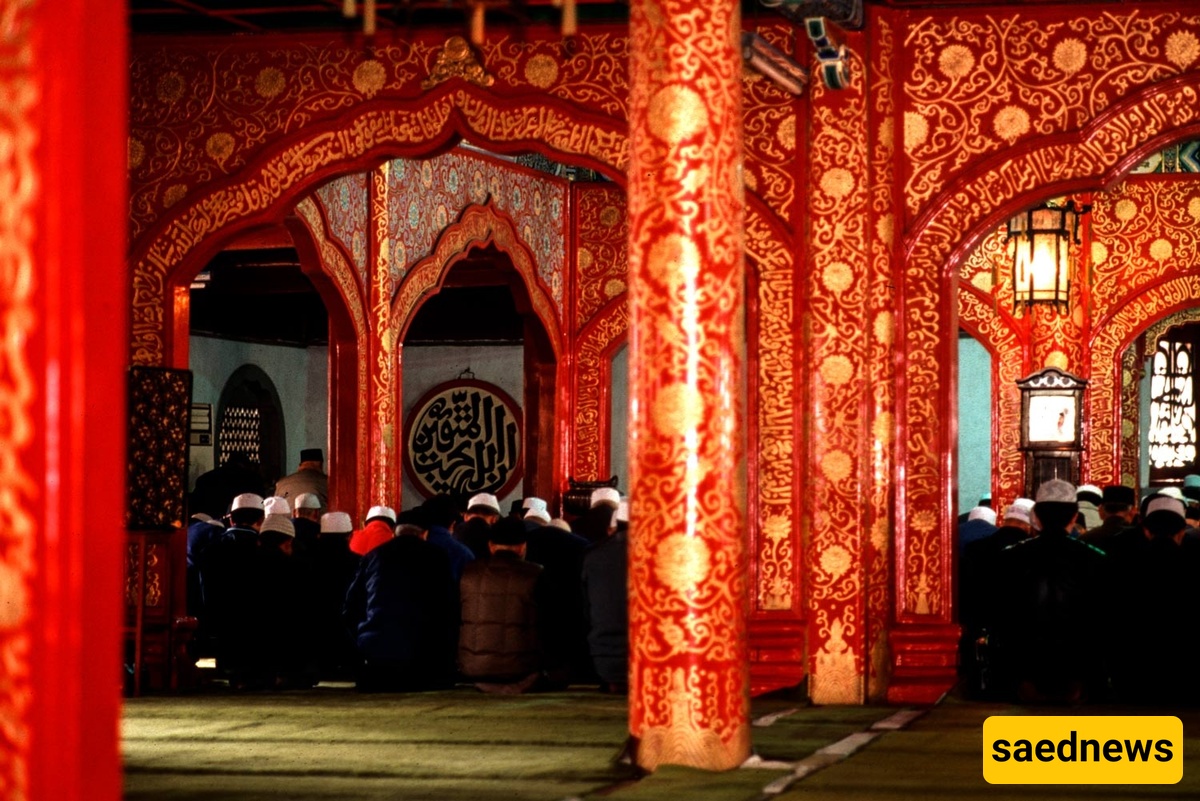
The mosque's minbar and mihrab are decorated with Quranic verses in Arabic. The imam recites prayers in Arabic and, after reciting Quranic verses, translates their meaning into Chinese.
The mosque has historically served a large Muslim community, and several imams have been involved in religious activities there. Hundreds of worshippers attend congregational prayers each day, while attendance can rise to more than 1,000 people on Fridays.
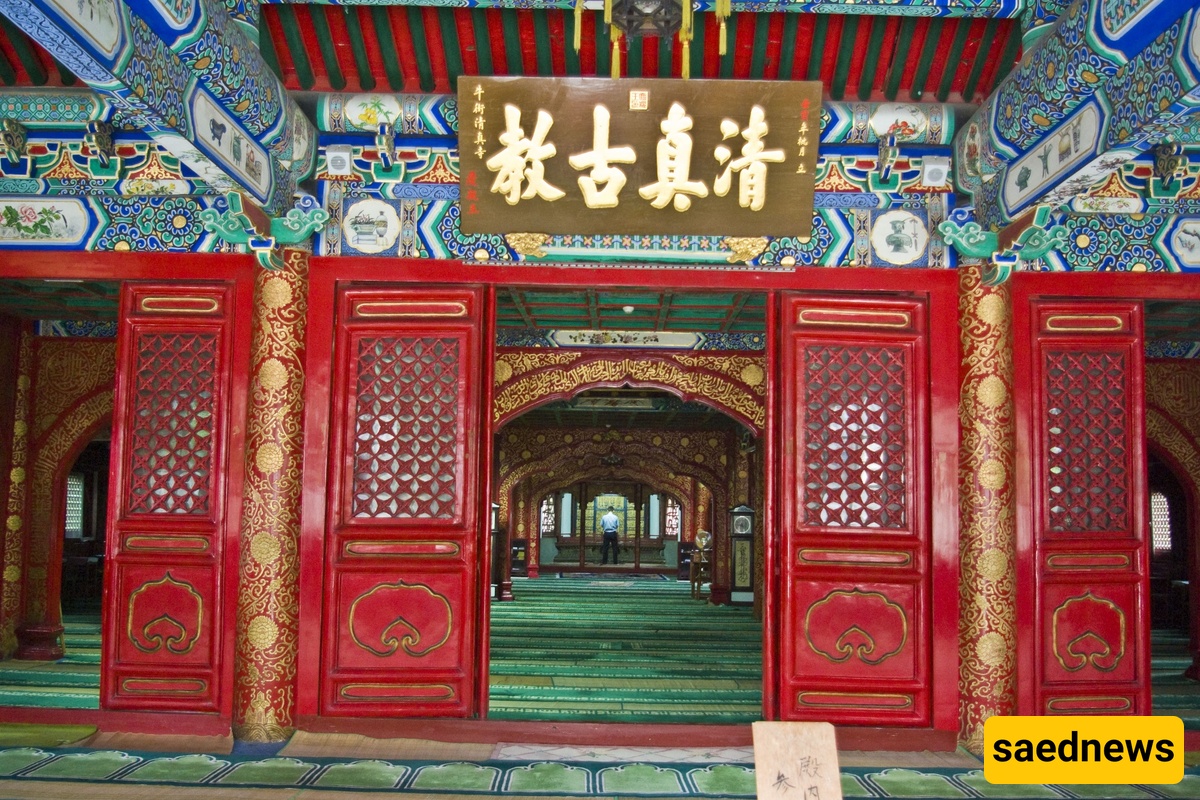
The architecture of the mosque is based on Islamic principles while incorporating traditional Chinese design. In accordance with Islamic artistic traditions, images of animals and human figures are not used as decorative elements inside the mosque.
Upon entering the mosque complex, visitors encounter a six-sided structure known as the Moon-Watching Tower, which was traditionally associated with observing the moon and determining the beginning of the Islamic lunar month.
Inside the tower are arched passageways, commemorative features, and walls decorated with paintings. Beyond it lies the main prayer hall, where congregational prayers are held.
Behind the main prayer hall are smaller halls and chambers decorated in an Islamic style, featuring Arabic calligraphy and geometric patterns.
A minaret stands in the central section of the mosque complex, from which the call to prayer is traditionally given.
Several buildings within the inner courtyard are dedicated to Islamic education and religious studies. A large ablution facility is located on the southern side of the mosque.
Although the mosque appears relatively simple and elegant, its architecture contains considerable detail and complexity. The interior carpets are traditional ceremonial carpets, characterized by soft blue tones and simple borders on both sides.
The entire floor is not covered continuously with carpet. Instead, the arrangement of the carpets indicates the rows where worshippers stand during congregational prayer, with spaces between the individual carpet sections.
Islam is believed to have reached China during the Tang Dynasty (618–907 AD) and gradually spread among several ethnic communities throughout the country.
The history of Islam in China dates back to approximately 650 AD. According to traditional accounts, Muslim envoys were sent to China during this period by Sa'd ibn Abi Waqqas, a companion of the Prophet Muhammad, to meet Emperor Gaozong of the Tang Dynasty.
Another historical view connects the development of China's Muslim communities with the period of the Mongol invasions, when large numbers of Muslims from Central and Western Asia entered China.
Today, China has a large Muslim population, with significant Muslim communities concentrated in regions such as Xinjiang, Gansu, Ningxia, and Qinghai.
The Uyghurs and Hui are among China's principal Muslim ethnic groups.
The Hui people, sometimes described historically as Muslims of Persian and other West Asian ancestry, are believed to have arrived in China over many centuries and gradually integrated with the Han Chinese population while maintaining their Islamic faith and cultural traditions.
Niujie Mosque therefore represents a remarkable meeting point between Chinese architectural heritage and Islamic culture, reflecting the long history of Islam and Muslim communities in China.