SAEDNEWS: A cat that sleeps at your feet is sending several signals about its body temperature, sense of security, territorial instincts, trust, and even its individual personality. In this article, we explore the science and behavioral psychology behind this common feline habit and uncover the different meanings behind it.
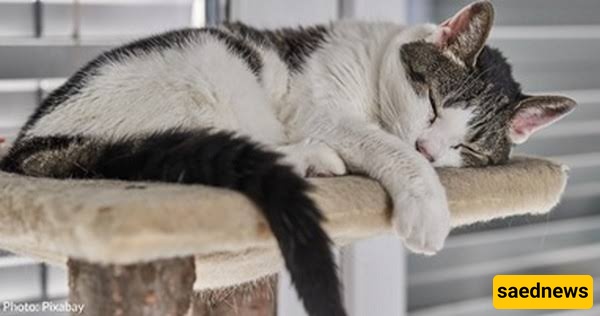
According to Saednews, It is 11 p.m. You put your book aside, turn off the light, and lie down. A few minutes later, you hear the familiar sound of soft paws on the mattress. Your cat emerges from the darkness, looks at you for a moment, turns around, and curls up at the foot of the bed, right where the blanket rests heavily over your legs. Then it closes its eyes. Millions of cat owners around the world experience this scene every night, yet few understand what it really means.
The question “Why do cats sleep at the foot of the bed?” is one of the most frequently searched topics among cat lovers online. The answer cannot be summed up in a single sentence. This behavior reflects a complex combination of instinct, physiology, habit, emotional bonding, and strategic positioning. A cat that sleeps at your feet may be responding to body temperature, security, territory, trust, and even its own individual personality.
In this article, we explore the different layers of this behavior through the lens of science and animal behavior. From international research on feline sleep patterns to practical interpretations of everyday behavior at home, the goal is to help you understand more than just a familiar nightly routine. By the end, you will have a better understanding of the hidden signals behind it.

Before examining where cats sleep, it helps to understand their general sleeping patterns. According to information published by reputable veterinary organizations, including Cornell University's College of Veterinary Medicine and International Cat Care, adult domestic cats typically sleep between 12 and 16 hours a day. Kittens and senior cats may sleep as much as 18 to 20 hours.
Cats are crepuscular animals, meaning they are most active around dawn and dusk. This pattern is inherited from their wild ancestors. As a result, many cats wake up in the middle of the night or near sunrise before returning to their owners for company. Sleeping at the foot of the bed during these hours is part of their natural sleep-wake cycle, rather than necessarily being a sign of unusual behavior or restlessness.
Another important point is that cats spend much of their resting time in light sleep. During these periods, they are not fully alert, but they can wake up in response to the slightest sound or movement. Choosing a spot at the foot of the bed allows them to remain close to you while maintaining quick access to an escape route. This arrangement fits perfectly with their tendency to remain partially alert while resting.
Cats are naturally drawn to warmth. Their normal body temperature is approximately 38–39°C (100.4–102.2°F), around one to two degrees Celsius higher than that of humans. During sleep, however, their body temperature can decrease slightly, encouraging them to seek external sources of warmth.
The area around your feet can provide a comfortable sleeping environment. Your feet are often covered by a blanket or duvet that retains heat, while the end of the bed may experience less exposure to cold air. A cat may instinctively recognize this area as a warm and comfortable place to rest.
This behavior can be especially noticeable during colder months. If your cat sleeps at your feet in winter but prefers a cool floor or a spot near the window in summer, temperature regulation may be an important factor.
Choosing between the warmth of your body and cooler areas of the room helps your cat maintain comfort. However, this behavior is not necessarily a deliberate decision in the human sense; it is often a natural response to environmental conditions.
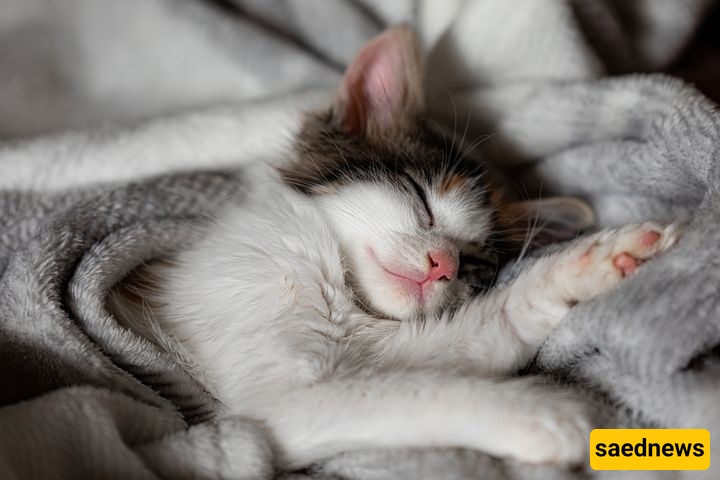
Cats are vulnerable while sleeping. In the wild, resting can leave them exposed to larger predators, so survival instincts encourage them to choose their sleeping locations carefully.
When your cat sleeps at the foot of your bed, it may be treating you as a source of security. Your familiar scent, the rhythm of your breathing, and the quiet sounds you make can help create an environment that feels safe.
There is another subtle advantage to this location: it allows for a quick escape. If your cat hears an unexpected noise or senses a potential threat, it can jump off the bed almost immediately.
This combination of closeness for security and distance for escape is one possible explanation for why many cats prefer sleeping at their owners' feet rather than directly beside their faces.
Many cat owners wonder, “If my cat loves me, why doesn't it sleep on my face?”
The answer is that cats express affection in their own ways. Sleeping on your face may be uncomfortable for the cat or expose it to excessive warmth and movement. Curling up at your feet, on the other hand, allows it to remain close while maintaining some personal space.
Research published in animal behavior journals, including a 2019 study conducted by researchers at Oregon State University, suggests that cats can form attachment bonds with humans, much like dogs do. In that study, approximately 64% of the cats displayed what researchers classified as secure attachment to their caregivers, indicating that they felt more secure in their presence.
A cat sleeping at your feet may be expressing a message along the lines of: “I trust you, but I also need my own space.”
This can reflect a balanced relationship between a cat and its owner, one in which closeness and independence coexist.
Cats are both small predators and potential prey. This dual role makes their behavior more complex than it might initially appear. Even when sleeping, cats need to rest while remaining ready to respond to changes in their surroundings.
The foot of the bed may offer a useful balance. From this position, your cat can remain aware of nearby sounds and movements while keeping an accessible route off the bed.
Your body may also provide a partial barrier between the cat and other parts of the room, depending on the bed's layout. Meanwhile, the open space near the foot of the bed can make it easier for the cat to move away quickly.
These instincts can persist even in domestic cats that have never faced a serious threat. Although life at home is generally much safer than life in the wild, many ancestral behaviors remain part of feline sleeping habits.

Cats are territorial animals. They organize their surroundings into familiar areas and mark them through scent, scratching, and rubbing. Your bed may be one of the most important shared spaces in your cat's territory.
When your cat sleeps at your feet, it may leave its scent on the bedding and reinforce its familiarity with the area. Scent-producing glands around a cat's paws, cheeks, and other parts of its body help establish a recognizable scent profile.
To your cat, the bed is not simply a place where you sleep. It may also be part of its own familiar territory, shared with a trusted human.
This does not necessarily mean your cat is trying to dominate you. Scent marking is a normal part of feline communication and environmental familiarity.
Cats are creatures of habit. If your cat sleeps at your feet once and finds the experience comfortable, warm, and secure, it may return to the same spot the following night.
After several repetitions, the location can become part of its regular bedtime routine.
In behavioral psychology, rewarding an action by providing a pleasant outcome is known as positive reinforcement. In this context, the warmth, comfort, and sense of security associated with the foot of the bed may encourage your cat to repeat the behavior.
Once a routine becomes established, your cat may return to the same location even when other sleeping spots are available. Familiarity itself can be rewarding, making habit one of the strongest influences on the sleeping preferences of domestic cats.
Cats have individual personalities. Some are highly social and affectionate, while others are more independent or reserved. These differences can influence where they choose to sleep.
Social cats may prefer sleeping very close to their owners, sometimes on their chests or beside their heads. More independent cats may choose the foot of the bed or a spot farther away. Cats that feel anxious may prefer enclosed spaces, such as underneath the bed or in a quiet corner.
However, sleeping location alone cannot reliably determine a cat's personality or emotional state. The same cat may choose different locations depending on the temperature, household activity, its mood, or its physical comfort.
The best way to understand your cat's preferences is to observe its sleeping habits alongside its overall behavior.
Breed, age, and sex may also influence where a cat prefers to sleep, although individual differences are often more important than breed stereotypes.
Breeds such as Maine Coons and Ragdolls are commonly described as sociable and people-oriented, and some individuals may prefer resting near their owners. British Shorthairs are often characterized as more independent, although many enjoy close companionship too.
Kittens may seek warm spots near their owners' heads or on their bodies, partly because warmth and physical contact are important during early development. As cats grow older, their preferences can change.
Senior cats may favor familiar, easily accessible sleeping locations because of reduced mobility or joint discomfort. The foot of the bed may be appealing if it provides a comfortable place to rest, although some older cats may find jumping onto the bed increasingly difficult.
Some differences in sleeping behavior have also been reported between male and female cats, but these patterns are not definitive. Individual temperament, early experiences, health, and the cat's relationship with its owner can all play a role.
Ultimately, there is no single sleeping position that applies to every breed, age group, or sex.

When your cat curls up at the foot of your bed, the behavior may reflect several overlapping needs rather than one specific reason. Warmth, security, affection, territorial familiarity, personal space, and habit can all contribute to the choice.
Most importantly, sleeping at your feet does not mean your cat loves you any less. Your cat may simply find this position the most comfortable way to remain close to you while preserving its independence and ability to move freely.
If your cat consistently chooses this spot and otherwise eats, plays, moves, and behaves normally, there is usually no reason to worry. If its sleeping habits change suddenly, especially alongside signs of pain, restlessness, or reduced mobility, consider consulting a veterinarian.
The next time you feel those soft paws climbing onto your mattress at night, remember that your cat may be choosing a place that offers just the right balance of comfort, familiarity, and closeness.