SAEDNEWS: Vinegar and baking soda are two common household cleaning ingredients. This article explores their practical uses, limitations, and safety tips based on scientific evidence.
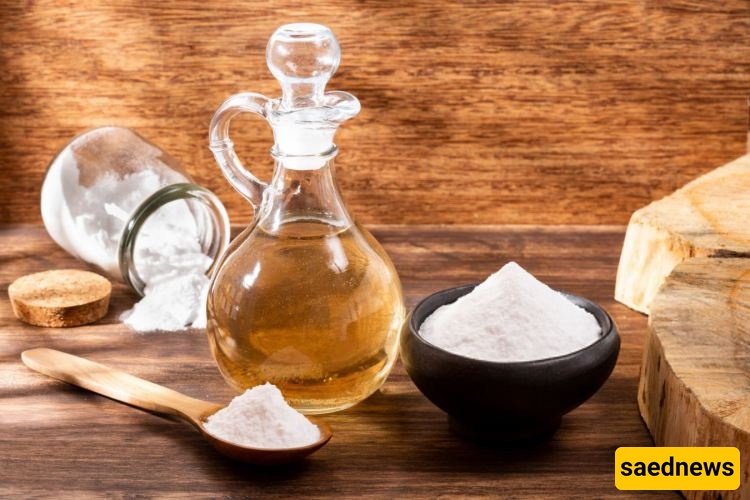
According to Saednews, In recent years, the use of natural ingredients for household cleaning has attracted the attention of many families. Among these ingredients, vinegar and baking soda are two affordable, widely used options frequently recommended for household cleaning, stain removal, limescale removal, and odor control.
But how do these two ingredients actually work, and how much can we rely on them?
Vinegar contains acetic acid, which helps dissolve mineral deposits and remove certain types of grease. Baking soda, on the other hand, is mildly alkaline and mildly abrasive, making it useful for removing greasy dirt, absorbing odors, and cleaning various surfaces.
Combining these two ingredients produces a chemical reaction that can be useful for certain cleaning tasks. However, it should not be considered a universal cleaning miracle.
This article takes a practical, evidence-based approach to examining the role of vinegar and baking soda in household cleaning. It explains their real-world applications, limitations, and safe methods of use.
The goal is to help readers use these affordable household ingredients effectively while avoiding damage to household surfaces.
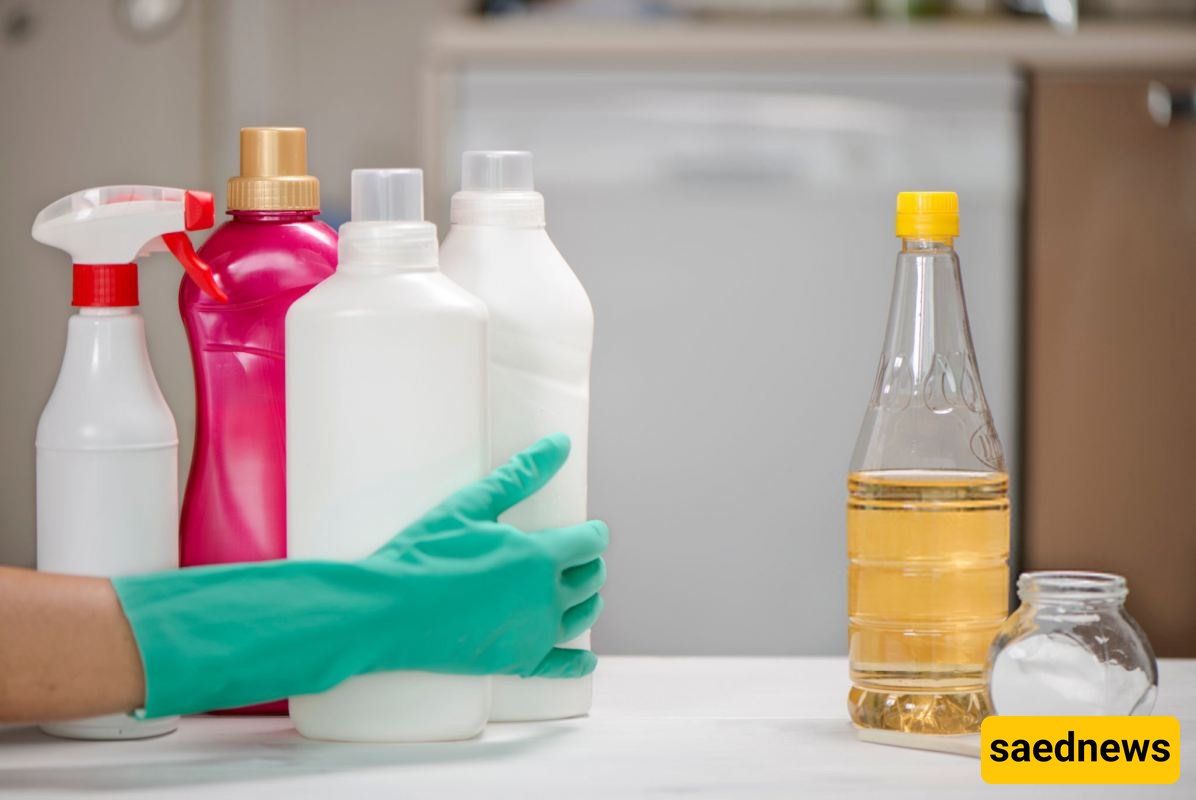
Distilled white vinegar, which is commonly recommended for household cleaning, typically contains about 5% acetic acid. Its acidic properties allow it to soften and dissolve limescale, hard-water stains, and certain mineral deposits.
For this reason, vinegar is often used to descale kettles, faucets, showerheads, and glass surfaces.
Vinegar can also help remove light grease and neutralize certain alkaline odors. However, it is not a hospital-grade disinfectant and should not be considered a complete substitute for appropriate products designed to eliminate harmful microorganisms.
Vinegar's antimicrobial effectiveness is limited and varies depending on the type of microorganism, its concentration, and the duration of contact.
It is also important to remember that vinegar is not suitable for every surface. Natural stones such as marble, granite, and travertine, as well as aluminum, cast iron, and untreated wood, can be damaged by acidic substances.
Before using vinegar, identify the surface material and test the solution on a small, inconspicuous area.
Baking soda, also known as sodium bicarbonate, is a white, mildly alkaline substance commonly found in kitchens. It acts as a gentle abrasive and can help remove stuck-on dirt without causing excessive scratching when used appropriately.
This makes it useful for cleaning sinks, stovetops, cookware, and certain tiled surfaces.
Baking soda can also help absorb unpleasant odors. Placing a small open container of baking soda in the refrigerator or freezer may help reduce unwanted smells. It can also be used in trash cans, shoes, and enclosed spaces.
However, baking soda does not eliminate every odor completely; it can absorb or neutralize some odor-causing substances.
Its mild alkalinity is useful for removing light grease and certain stains. Nevertheless, baking soda has limitations. Because it is abrasive, using it on delicate surfaces, glass, screens, and some sensitive finishes may cause scratches or damage.
It should therefore be used carefully and according to the type of surface being cleaned.
One of the most common household cleaning myths is that vinegar and baking soda create a powerful, all-purpose cleaning solution.
In reality, mixing these two ingredients triggers a chemical reaction that releases carbon dioxide gas. The resulting fizz and bubbles can provide some mechanical assistance in loosening dirt.
However, the reaction also neutralizes much of the vinegar's acidity and the baking soda's alkalinity. In other words, if your primary goal is removing limescale, vinegar alone is generally more effective.
If you want mild abrasion or odor absorption, baking soda alone is usually more useful.
Combining the two ingredients is mainly helpful for short-term mechanical effects, such as helping loosen some debris in a sink drain or assisting with the removal of certain stains.
For this reason, it is often better to use vinegar and baking soda in separate stages rather than routinely mixing them together.
For example, sprinkle baking soda over a suitable surface, add a small amount of vinegar, allow the reaction to occur, and then rinse thoroughly with water.
This approach may be useful for certain stains and odors, but it is generally preferable to storing a premixed solution. Never keep a vinegar-and-baking-soda mixture in a sealed container, as the gas produced can increase pressure inside the container.
To remove limescale from a kettle, mix equal parts white vinegar and water, pour the solution into the kettle, and bring it to a boil. Empty the kettle and rinse it thoroughly with clean water.
For faucets and showerheads, place a cloth soaked in vinegar over the deposits for several minutes.
This method is suitable for compatible, acid-resistant materials but should not be used on natural stone or aluminum.
To clean a kitchen sink drain, pour half a cup of baking soda into the drain opening, followed by one cup of vinegar. Allow the reaction to take place for a few minutes, then flush the drain with warm water.
This may help reduce unpleasant odors and loosen light deposits.
For persistent odors or serious blockages, use an appropriate drain-cleaning method or a suitable drain-cleaning product.
To remove baked-on grease from an oven, prepare a paste by mixing baking soda with enough water to create a thick consistency.
Spread the paste over the dirty areas and leave it for several hours or overnight, if appropriate for the appliance.
Wipe it away with a soft sponge. If residue remains, a small amount of diluted vinegar may help loosen the remaining baking soda paste and make wiping easier.
Always follow the appliance manufacturer's cleaning recommendations.
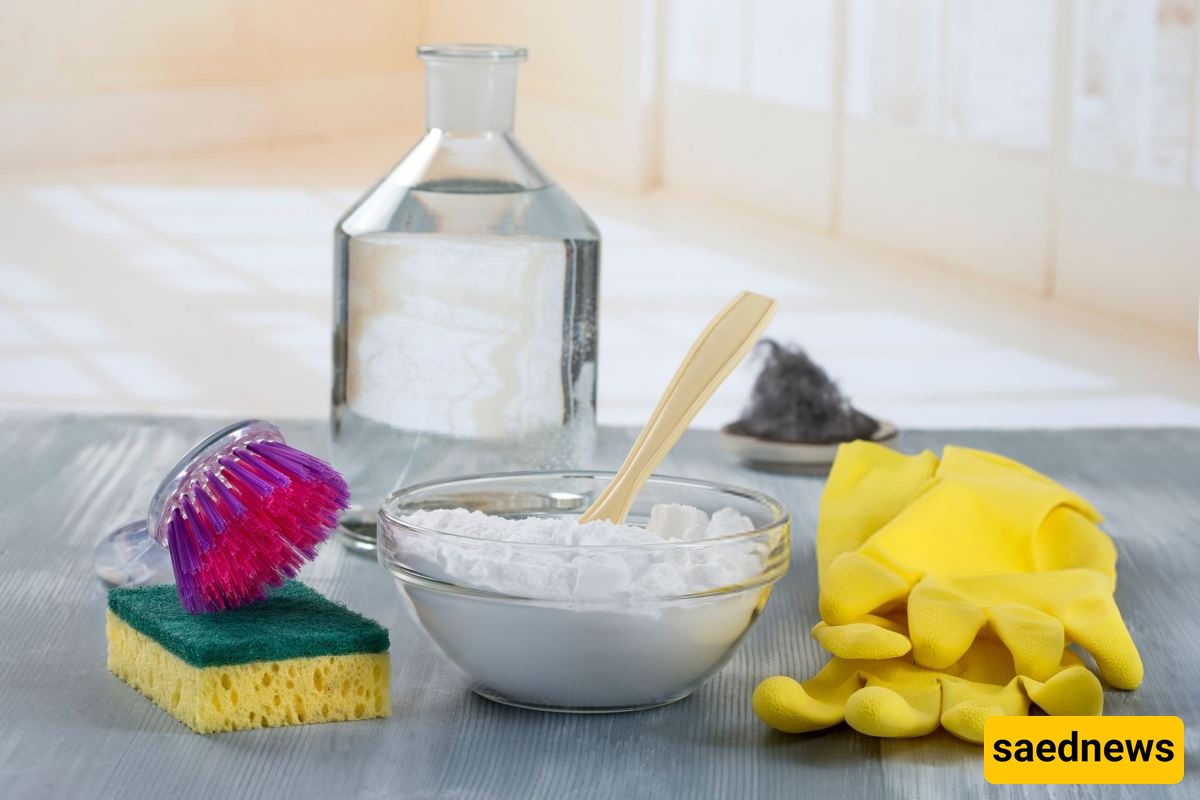
Place a small, open container of baking soda inside the refrigerator or freezer and replace it every few weeks. This simple method may help absorb unpleasant odors.
You can also clean refrigerator shelves with a diluted vinegar-and-water solution. After cleaning, rinse the surfaces with clean water and dry them thoroughly.
Rinsing is important to prevent acidic residue from remaining on the surfaces.
For glazed ceramic tiles, a diluted vinegar-and-water solution may help remove light dirt and restore the surface's appearance.
For tile grout, apply a paste of baking soda and water with a soft brush. Leave it for a few minutes, then rinse thoroughly.
This method can help remove surface stains, but it should not be expected to restore heavily stained or deeply discolored grout completely.
Repeated use of vinegar on cement-based grout and other sensitive grouting materials may gradually cause deterioration. Avoid applying concentrated vinegar for extended periods, and rinse the surface with water after cleaning.
Diluted vinegar is a simple, inexpensive option for cleaning glass and mirrors.
Mix one part white vinegar with one or two parts water, spray it onto the surface, and wipe with a microfiber cloth.
Avoid using baking soda on glass and mirrors because its abrasive properties may cause scratches or leave a cloudy appearance.
White vinegar may help reduce unpleasant odors in laundry and washing machines. Some people add a small amount to the fabric-softener compartment, but this should only be done if the washing machine manufacturer permits it.
Vinegar is not a complete substitute for laundry detergent. Heavy stains and specific types of contamination require an appropriate cleaning product.
Never mix vinegar with bleach or chlorine-containing products.
Baking soda can also help control odors in trash cans, shoes, and enclosed spaces. Sprinkling a small amount into the bottom of a trash can before washing it may help reduce unpleasant smells.
For pots with burnt-on food or grease, mix baking soda with water to form a paste and apply it to the affected area. Leave it for several hours, then clean it with a soft sponge or gentle brush.
For limescale inside kettles and compatible cookware, diluted vinegar may be useful.
Use caution with nonstick cookware and delicate finishes, and avoid abrasive brushes that could damage the surface.
Vinegar is acidic and is unsuitable for many natural stones, including marble, granite, and travertine. It may also damage aluminum, cast iron, certain plated metals, and untreated wood.
Using vinegar on electronic screens, sensitive glass, and specialized coatings is also not recommended unless the manufacturer explicitly approves it.
Baking soda is a mild abrasive. Using it on glass, glossy finishes, delicate coatings, and some nonstick surfaces may cause scratches or other damage. Always test it on a small, inconspicuous area first.
Mixing vinegar and baking soda should also be done carefully. The reaction produces carbon dioxide gas, so the mixture must never be stored in a sealed container. Furthermore, the resulting mixture is not a reliable substitute for a properly formulated disinfectant.
For bathroom surfaces, areas contaminated with blood or raw food, and places where effective disinfection is necessary, use an appropriate, approved disinfecting product.
Important safety warning: Never mix vinegar with bleach, chlorine-containing products, or ammonia, as dangerous gases or vapors may be produced. Do not combine baking soda with strong acids. Ensure adequate ventilation while cleaning, and wear gloves if you have sensitive skin.
Cleaning task | Recommended method | Safety tip |
|---|---|---|
Descaling a kettle | Equal parts white vinegar and water; heat, then rinse | Use only on compatible materials and rinse thoroughly |
Cleaning a sink drain | Half a cup of baking soda followed by one cup of vinegar, then warm water | Never store the mixture in a sealed container |
Removing stains | Baking soda mixed with a small amount of water | Test on delicate surfaces first |
Cleaning glass and mirrors | One part vinegar to one or two parts water | Avoid baking soda on glass |
Reducing refrigerator odors | Place a small container of baking soda inside | Replace every few weeks |
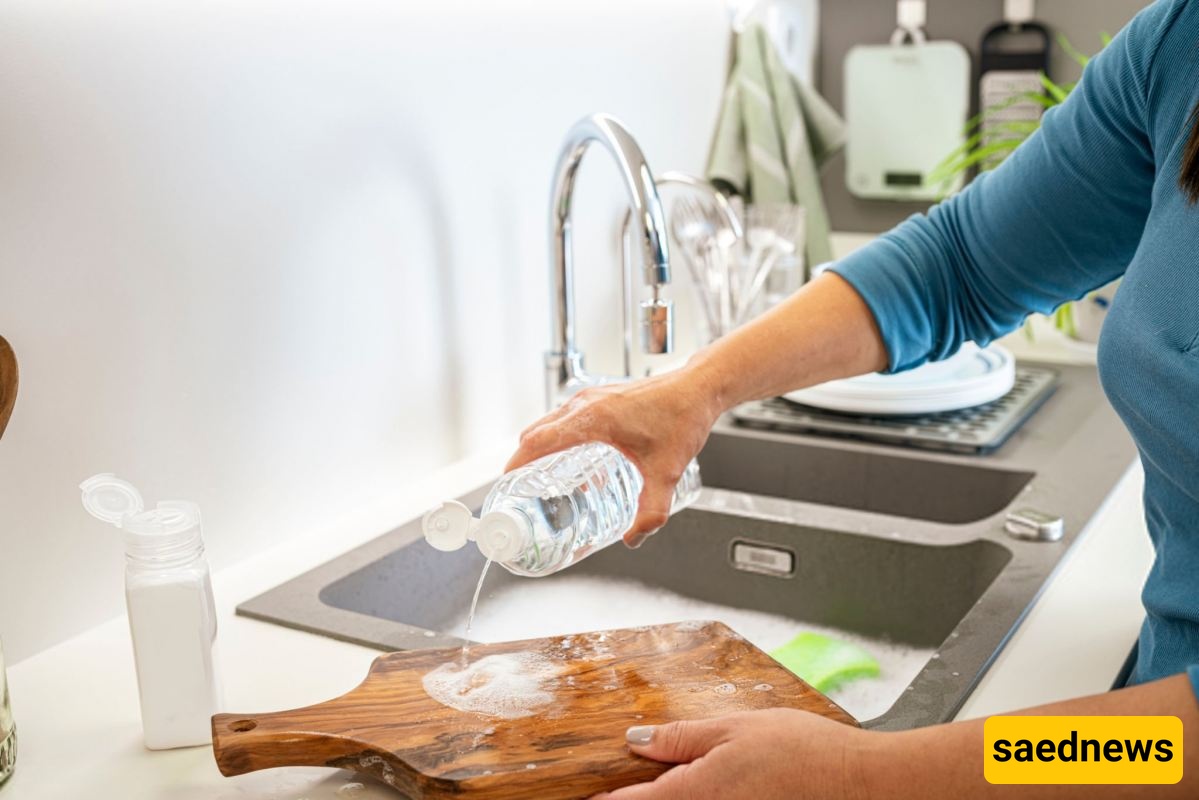
Vinegar and baking soda are two affordable, widely available household ingredients with useful applications in home cleaning. However, they should not be treated as universal replacements for commercial cleaning products and disinfectants.
Vinegar is particularly useful for removing limescale and certain mineral deposits, while baking soda is better suited to gentle scrubbing, odor absorption, and removing light grease.
Combining the two generally produces a short-lived mechanical cleaning effect. Because the reaction neutralizes much of their individual chemical properties, mixing them is not always the most effective approach.
Using these ingredients safely requires understanding the material being cleaned, testing products on small areas, maintaining proper ventilation, and avoiding dangerous chemical combinations.
With these precautions, vinegar and baking soda can serve as economical, practical additions to a household cleaning routine.