SAEDNEWS: The stepped villages of Hawraman/Uramanat seem to climb directly out of the Zagros Mountains. Their dramatic form is not a visual trick but the result of a long relationship among steep slopes, stone construction, farming, herding, water, and Hawrami cultural life.
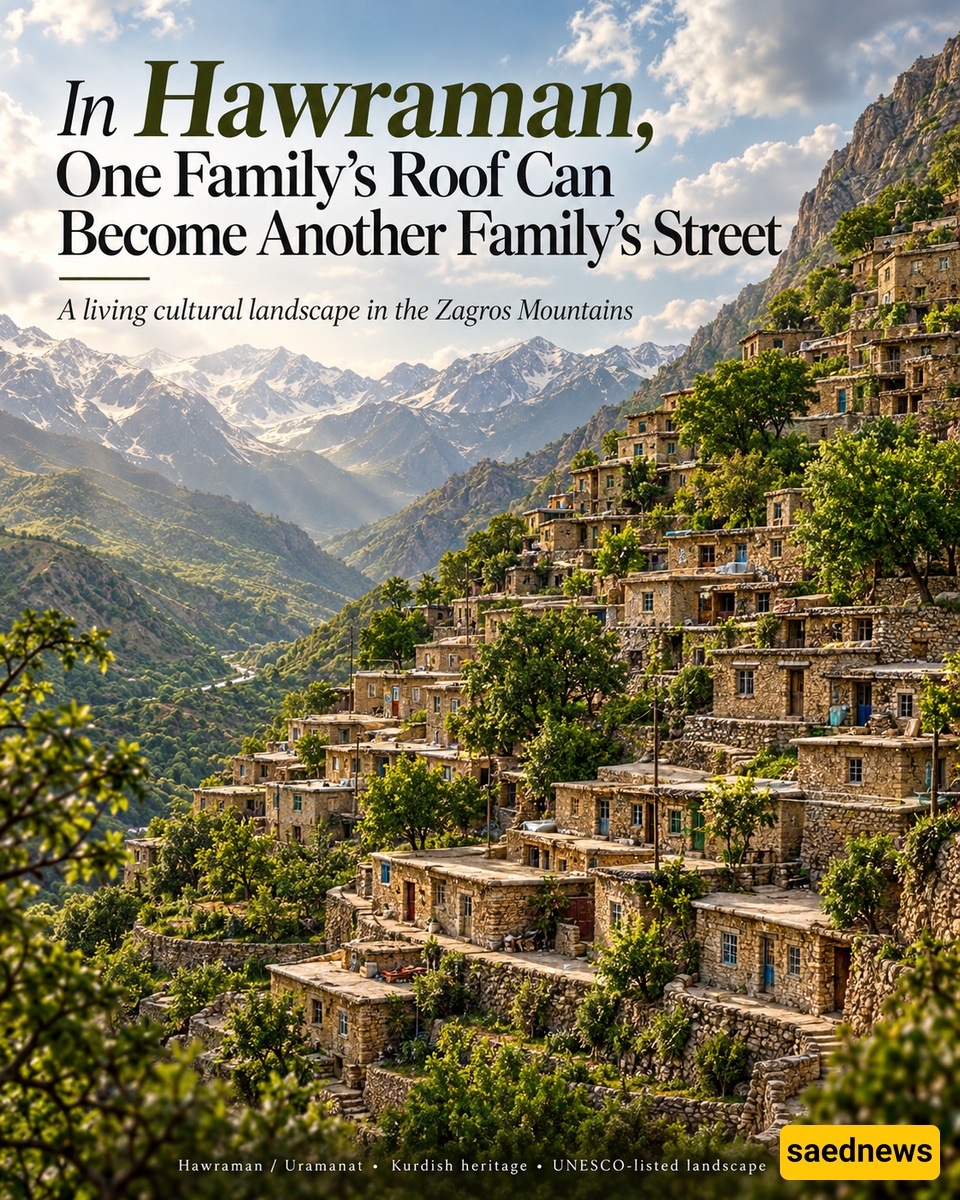
According to SAEDNEWS, In parts of Hawraman, the mountain is so steep and the villages so tightly terraced that the roof of one home may sit near the path or usable space of the house above it. From a distance, the settlement looks almost impossible: houses appear stacked into the slope, creating layers of stone, windows, roofs, paths, and retaining walls.
The pattern is beautiful, but beauty was not the original problem being solved. The villages developed in rugged terrain where flat building land is limited. Building with the contours allowed communities to use the slope rather than erase it. Roofs, paths, walls, terraces, and courtyards became part of a connected public and domestic environment.
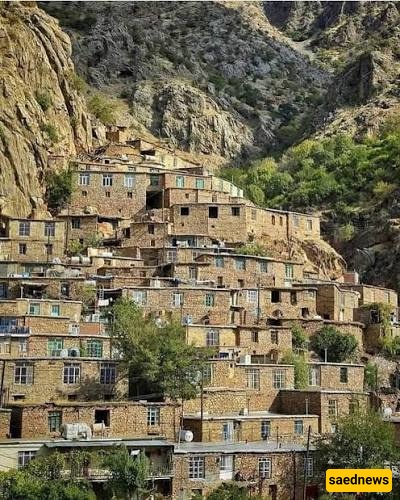
The UNESCO-listed Cultural Landscape of Hawraman/Uramanat lies in the Zagros Mountains across parts of Iran’s Kurdistan and Kermanshah provinces. It bears witness to the traditional culture of the Hawrami people and to an agropastoral way of life shaped by mountains, seasonal movement, agriculture, and animal husbandry.
Dry-stone construction is one of the landscape’s most visible features. Stone gathered from the surrounding environment becomes walls, terraces, and buildings. Terraced fields make cultivation possible on slopes that would otherwise be difficult to farm. Orchards, livestock routes, water sources, and compact settlements create a landscape where architecture and livelihood are inseparable.
Yet Hawraman cannot be understood through stone alone. Language, music, clothing, oral traditions, rituals, foodways, agricultural knowledge, and seasonal practices give meaning to the physical setting. The villages are not stage sets designed for visitors; they are places where people live and where cultural identity is continually practiced.
That distinction matters because spectacular landscapes are easily reduced to images. A photograph of stacked roofs may travel widely online while leaving out the people whose daily lives created the pattern. Modern pressures also shape the region: roads, education, communications, tourism, employment, migration, and climate conditions all influence what residents need and how settlements change.
Living heritage has to make room for that change. Protecting the landscape does not mean asking residents to give up safe infrastructure or modern opportunities. The challenge is to allow adaptation without destroying the relationships among slope, stone, agriculture, water, and settlement that make Hawraman distinctive.
The most memorable feature may be a roof that becomes someone else’s path. The deeper lesson is larger: in Hawraman, architecture is a long-term negotiation between community and mountain.