SAEDNEWS: Shushtar’s hydraulic landscape combined dams, canals, bridges, mills, irrigation, transport, and defense into a single water-management system. Its most astonishing feature is not one spectacular structure but the way the entire network worked together.
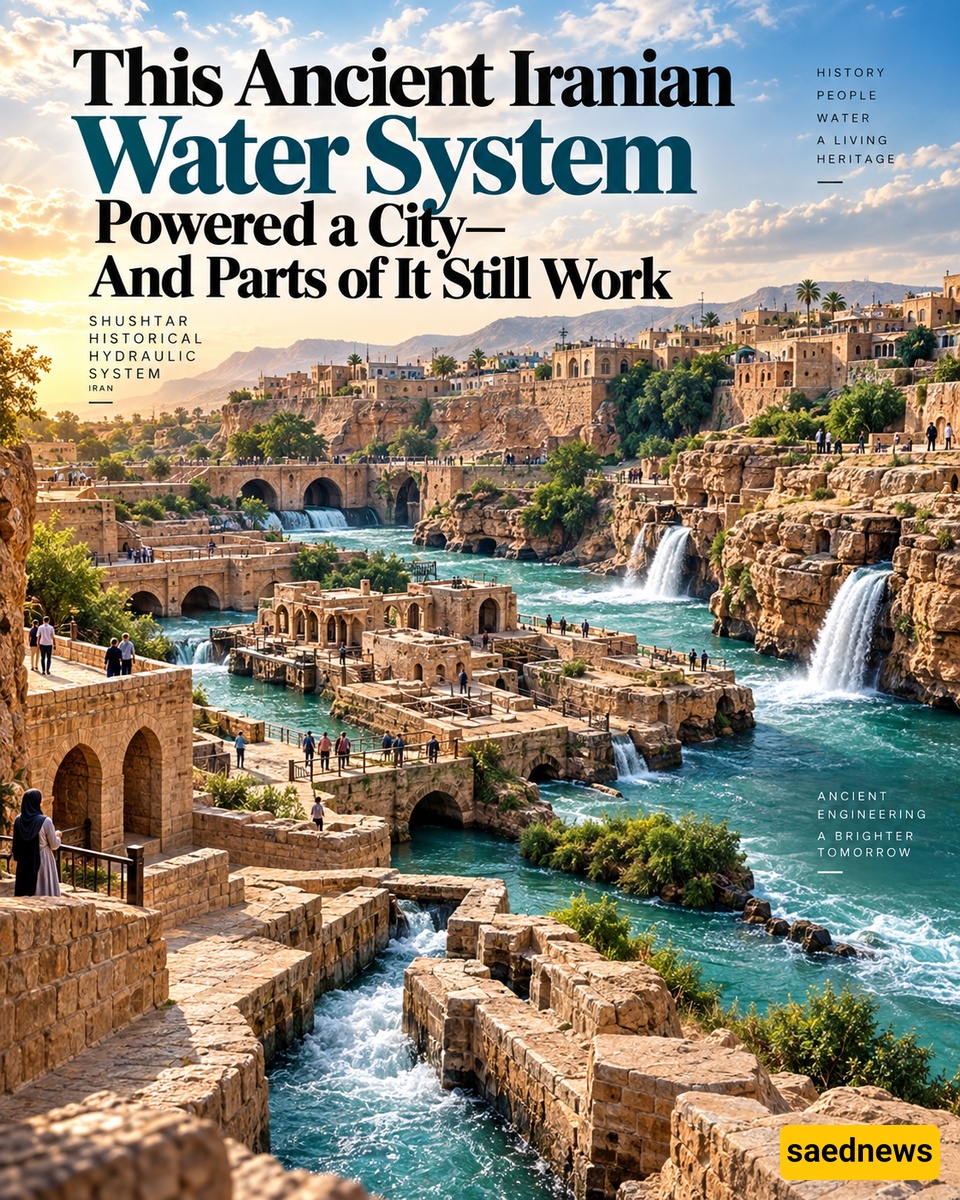
According to SAEDNEWS, At Shushtar, water was never treated as something that simply flowed past the city. It was intercepted, redirected, divided, accelerated, slowed, channeled through tunnels, used to turn mill machinery, and sent onward toward fields and settlements. The result is one of the most remarkable surviving hydraulic landscapes of the ancient world.
The Shushtar Historical Hydraulic System in southwestern Iran is sometimes presented online as an “ancient power plant,” usually alongside dramatic images of rushing water and mill channels. The comparison is understandable, but it is too narrow. The mills did harness moving water, yet Shushtar was not designed around one mechanical purpose. It was an integrated system that managed a river landscape for urban life, agriculture, transport, industry, and protection.
UNESCO dates much of the system in its present form to around the third century CE while acknowledging older foundations. Its history reflects layers of knowledge associated with the region, including Elamite and Mesopotamian traditions and later influences connected with Roman engineering. That complexity matters. Shushtar was not the product of a single flash of invention; it grew through accumulated expertise, adaptation, and maintenance.
One of its central elements is the Gargar canal, an artificial watercourse that helped divide and redirect river flow. Bridge-dams and weirs controlled water levels and movement. Tunnels carried water toward milling areas, where differences in elevation and flow could be turned into useful mechanical energy. From there, water continued through the wider landscape, supporting agriculture and settlement.
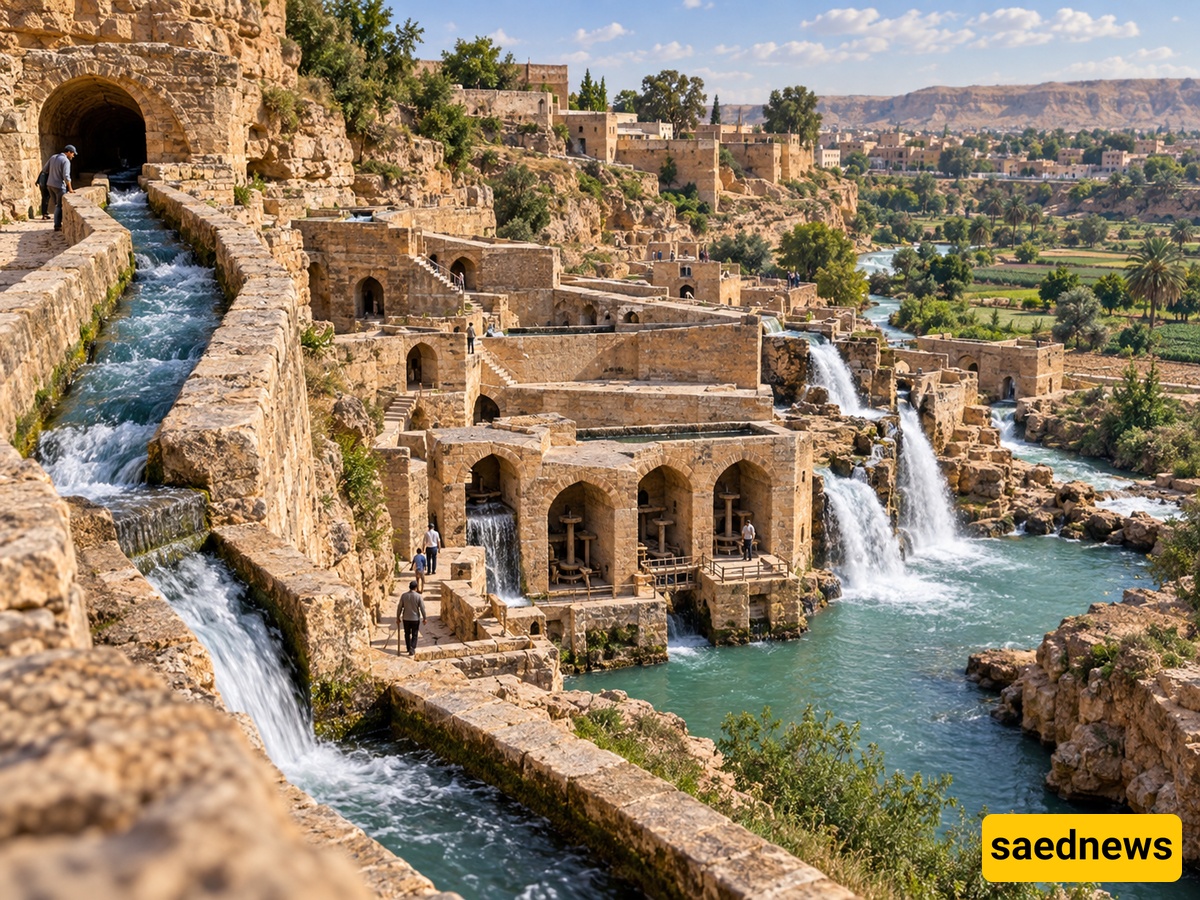
The famous cascades are therefore only the visible end of a much larger process. What appears to be a spectacular waterfall scene is actually part of a carefully organized hydraulic network. The beauty comes from function: water drops because engineers needed to control elevation; channels converge because flow had to be distributed; structures sit where they do because the system depended on the river’s geography.
Shushtar also reveals an important truth about ancient infrastructure: sophisticated systems survive only when people keep repairing them. Sediment builds up. Channels become blocked. Masonry weakens. Water changes course. A network can fail even if each individual component once worked perfectly. The continued operation of parts of Shushtar makes the site especially valuable because it links archaeology with the practical reality of long-term maintenance.
Nothing about the system requires mysterious “lost technology.” Its builders used observable principles of gravity, flow, pressure, elevation, and channel design. Their achievement lies in applying those principles at a scale and level of integration that still commands respect.
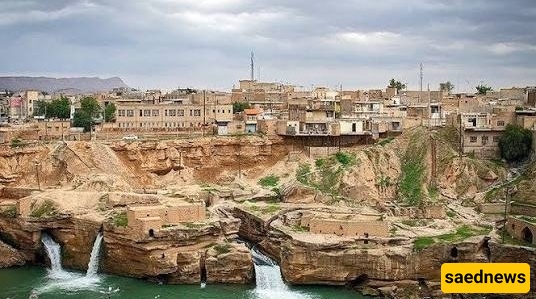
The more clearly Shushtar is explained, the more impressive it becomes. It is not a monument to a vanished secret. It is evidence of what careful planning can achieve when a city learns to work with water as a connected system.