SAEDNEWS: Maymand’s cave-like homes draw the camera, but the village is not simply a collection of rooms carved into rock. Its heritage lies in a wider seasonal system connecting winter shelter, pasture, gardens, farming, animals, water, and movement across the landscape.
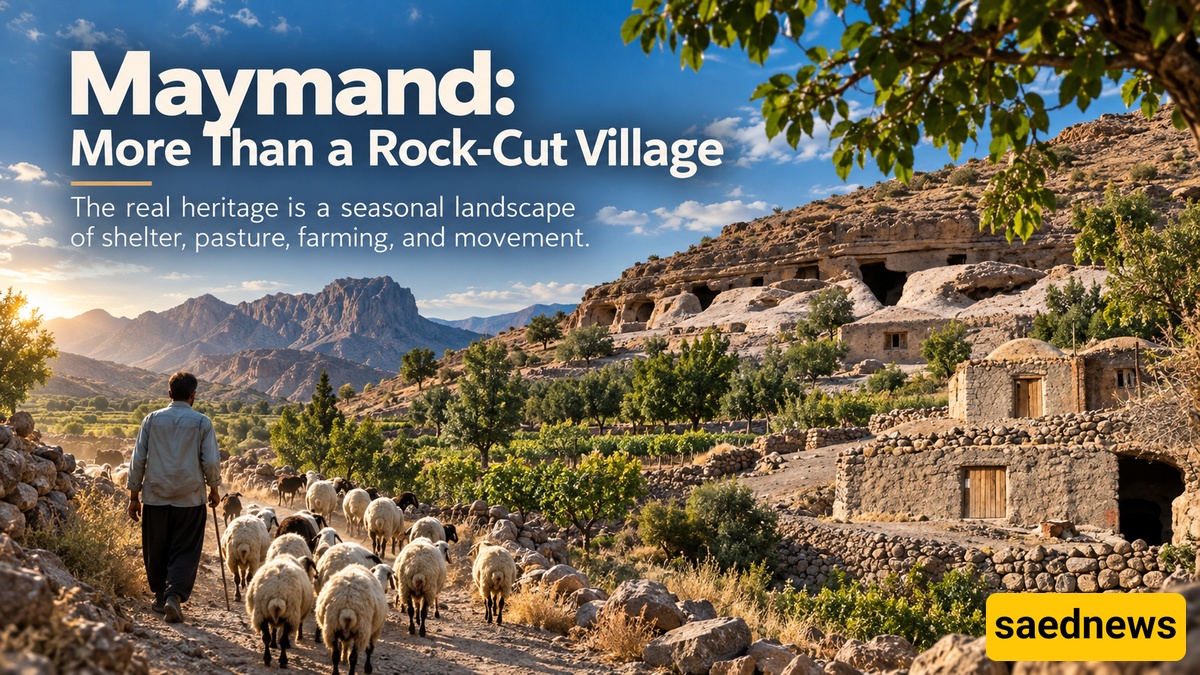
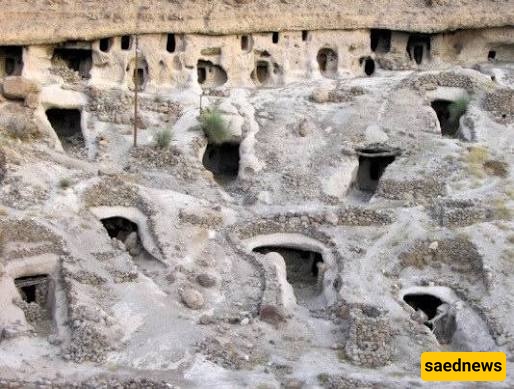
According to SAEDNEWS, The first photographs most people see of Maymand show dark doorways cut directly into the mountain. The image is instantly memorable: homes appear to emerge from the rock itself, creating the impression of a village hidden inside the earth. Yet focusing only on the winter dwellings misses the larger idea that makes Maymand exceptional.
UNESCO describes the Cultural Landscape of Maymand as the product of an agro-pastoral way of life in Iran’s central mountains. Families traditionally moved between different places during the year according to climate, livestock needs, agriculture, and available resources. The rock-cut dwellings were associated particularly with winter occupation, when shelter and thermal stability became especially valuable.
This seasonal movement turned geography into a calendar. Rather than expecting one location to provide everything in every month, people distributed their lives across different parts of the landscape. Pasture mattered when animals needed grazing. Gardens and fields mattered in their own seasons. Sheltered rock-cut spaces became useful when cold weather arrived. Home, work, food production, and movement were therefore parts of one connected system.
The dwellings themselves also deserve more respect than the old idea of “primitive cave living” allows. Carving usable spaces into rock requires knowledge of material strength, drainage, ventilation, access, storage, and long-term maintenance. Excavated rooms can benefit from the relatively stable temperature of the surrounding earth and stone, but only if moisture and structural problems are properly managed.
Maymand also demonstrates why living heritage can be difficult to preserve. A deserted village can be protected as an archaeological site, but a community where people still make choices about housing, work, education, transport, and income cannot be frozen in one historical moment. Roads improve access. Tourism changes opportunities. Younger generations may want different forms of work or comfort. Conservation therefore has to protect the cultural landscape without turning residents into performers of a lifestyle outsiders expect to see.
That tension is part of what makes Maymand so compelling. The village is not remarkable because nothing has changed there. It is remarkable because generations developed a flexible relationship with a difficult environment—and because that relationship has continued to evolve.
The rock-cut rooms may be the most photogenic part of Maymand, but they are only one season of the story. The real heritage is the knowledge of when to move, where to shelter, how to use limited resources, and how to make an entire landscape function as home.