SAEDNEWS: Qara Kelisa is a religious monument belonging to the Armenian community. It is located south of Maku, approximately 20 kilometres northeast of Chaldoran, near a village of the same name. On July 7, 2008, the Qara Kelisa complex, consisting of three main churches, was...
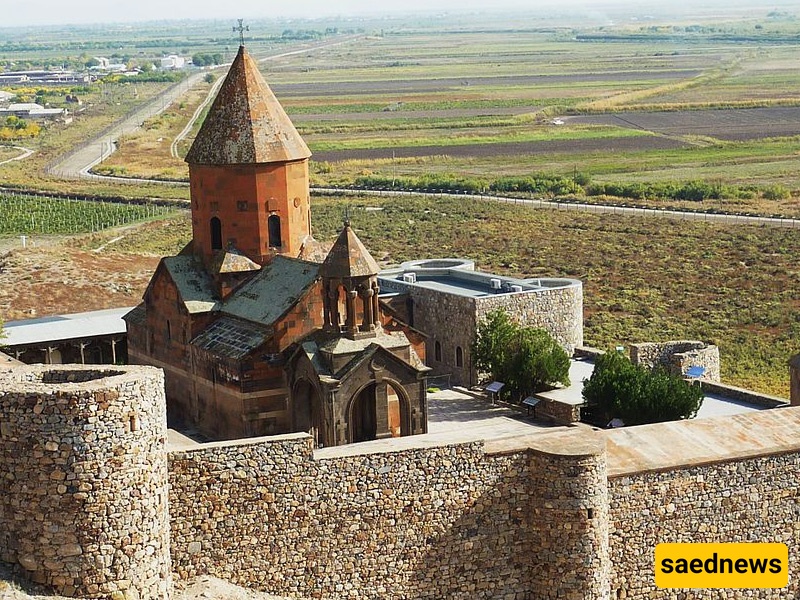
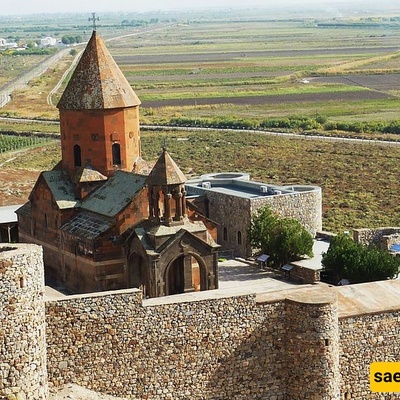
According to Saednews, Qara Kelisa, also known as the Church of Saint Thaddeus, is one of the most important religious monuments of the Armenian Christian community. It is located south of Maku and approximately 20 kilometres northeast of Chaldoran, near a village bearing the same name in West Azerbaijan Province, northwestern Iran.
On July 7, 2008, the Qara Kelisa Monastic Ensemble, comprising three main churches—Qara Kelisa (Saint Thaddeus), Saint Stepanos, and Dzordzor Chapel—was officially inscribed on the UNESCO World Heritage List.
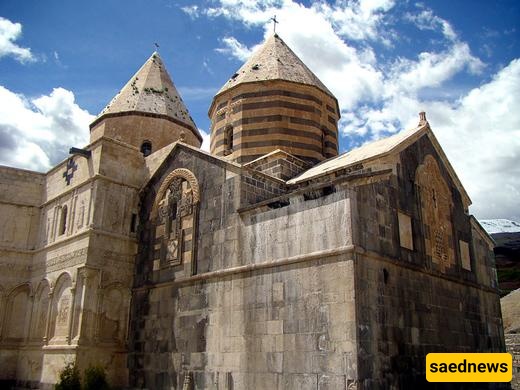
Qara Kelisa, also known as the Church of Saint Thaddeus, is situated northeast of Chaldoran County and south of Maku in West Azerbaijan Province. According to Armenian historian Movses Khorenatsi, its history dates back to the early centuries of Christianity.
It is considered one of the most prestigious and artistically decorated Armenian churches in Iran and enjoys international recognition. Every year, on July 26 (June 26 according to the Gregorian calendar, as stated in some historical accounts), Armenians from around the world travel to Iran to visit the sacred Church of Saint Thaddeus. Several ambassadors from Christian countries based in Iran also attend the pilgrimage ceremonies.
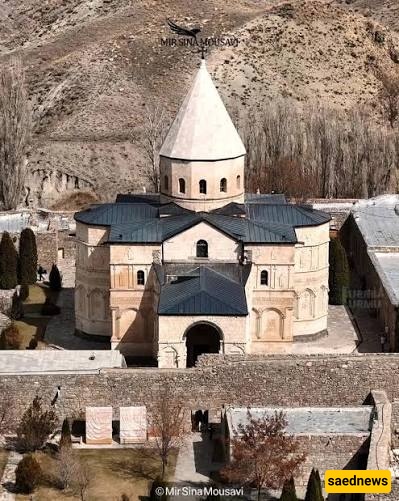
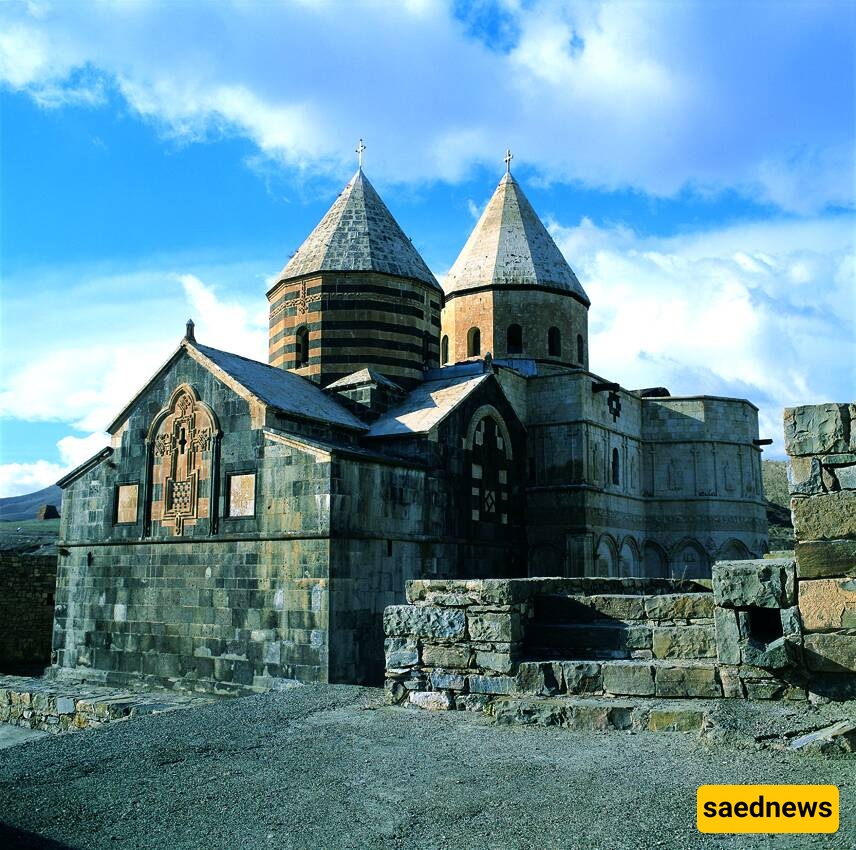
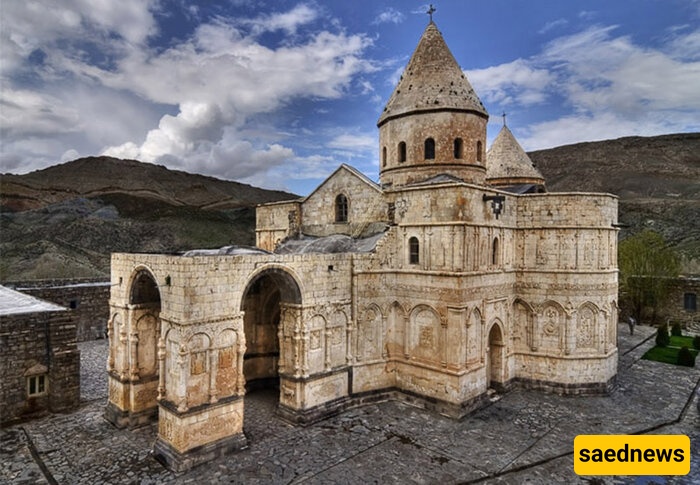
In the Azerbaijani language, Qara means "black". The church acquired its name because part of its structure is made of black stone. Apparently, the original building was constructed entirely from black stones. During later restoration work, some of these stones were replaced with white ones. It is believed that this was done deliberately so that future generations could distinguish the church's original appearance from its restored sections.
Throughout different historical periods, the church was destroyed and reconstructed several times for various reasons.
In 1230 AD (616 AH), during the Mongol invasion led by Genghis Khan, a large section of the church was destroyed. However, during Hulagu Khan's residence in Azerbaijan, the renowned Persian scholar and statesman Khajeh Nasir al-Din Tusi undertook efforts to restore it.
The church was also damaged by an earthquake in 1319 AD. According to Andranik Hovian, a historical document records its restoration by Saint Zakaria in 1329.
Further restoration projects took place in different periods:
1691: The church was restored using black stones.
1810: Bishop Simon Bezouni of Maku renovated the structure, incorporating white stones.
Qajar Period: Abbas Mirza, the Qajar prince, also contributed to its restoration.
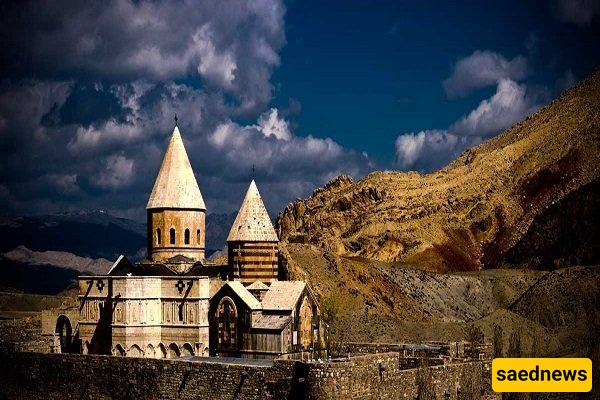
Qara Kelisa features distinctive Armenian architectural characteristics. Its impressive scale and construction techniques make it one of Iran's most valuable historical monuments. It is internationally renowned and attracts Armenian pilgrims from Iran and abroad who visit to participate in religious ceremonies.
Saint Thaddeus, also known as Tatavous or Tadeus, was one of the apostles of Jesus Christ. According to Armenian Christian tradition, he arrived in Armenia in 40 AD and began preaching Christianity.
Many people embraced the Christian faith, including Sanatruk, King of Armenia, and his daughter Sandukht. However, the king later changed his mind, opposed the new religion, and ordered the execution of Thaddeus, his daughter Sandukht, and approximately 3,500 other converts.
In 302 AD, during the reign of King Tiridates III of Armenia, Christianity became the country's official state religion.
Armenian Christians preserved the memory of the martyrdom of Saint Thaddeus and Sandukht through generations. Churches were subsequently constructed at locations associated with their escape and martyrdom, and Qara Kelisa became one of these sacred sites.
According to Armenian belief, the Church of Saint Thaddeus was the first church in the world built under the direction of Christ's apostles and missionaries.
Since martyrdom is regarded in the Christian faith as one of the greatest forms of spiritual devotion, special religious ceremonies are held at Qara Kelisa every year in late July and early August, commemorating the martyrdom of Saint Thaddeus and his followers.
Today, the church serves as the gathering place for an annual religious celebration that attracts Armenian communities from across Iran and neighbouring countries during the summer.
During the first week of August, Armenian families and groups travel to Qara Kelisa from cities such as Tabriz, Urmia, Tehran, Isfahan, and Qazvin. Assyrian families and, occasionally, Catholic families also participate in the celebrations.
One of the most meaningful traditions during the three-day pilgrimage is the baptism of Armenian children and teenagers.
Some families believe that baptising their children in one of the earliest churches associated with Jesus Christ, and at a site connected with the martyrdom of one of His apostles, brings divine blessings and good fortune. Other families arrange baptisms as part of personal religious vows. Consequently, some individuals undergoing baptism are as old as 15 or even 20 years.
The length of each family's stay varies.
Traditionally, pilgrims are expected to remain at the church for three days, from August 1 to August 3. However, visitors travelling from distant cities sometimes stay longer, while families from nearby towns may attend only on the second day before returning home.
Despite the large number of visitors during the annual celebration, there are no permanent accommodation buildings around the church.
The approximately 10 to 12 houses belonging to Muslim farming families in Qara Kelisa village, located about 300 metres from the church, are not generally available to visitors.
Instead, the Armenian Diocese arranges temporary tents around the church during the festival, making them available to pilgrims. Many visitors also bring their own camping equipment to avoid accommodation difficulties.
For Armenian communities, the Qara Kelisa festival represents a combination of religious beliefs, ethnic identity, cultural traditions, family connections, emotional attachments, recreation, and travel.
Enjoying the pleasant summer climate, preparing meals, sharing food, and meeting relatives and friends are important aspects of the three-day gathering.
Throughout the day and night, families prepare meals and arrange communal dining areas inside or in front of their tents. These gatherings provide opportunities for social interaction and reconnecting with relatives and acquaintances.
For some Armenians, the annual pilgrimage is the only occasion on which they meet certain friends and family members.
Church services are held in the mornings and evenings on August 1 and 2.
On August 3, however, only one special religious ceremony takes place. It is conducted by the Archbishop arriving from Tehran, together with the Bishop of Tabriz, as part of the special feast-day observance.
Participation in church services during the festival is not compulsory, and some visitors choose not to attend the religious ceremonies.
Approximately two kilometres northwest of the main church, on elevated ground, stands a small chapel traditionally believed to mark the location of the martyrdom of Saint Sandukht, regarded as one of the earliest female Christian martyrs.
According to local accounts, the chapel is believed to be as old as Qara Kelisa itself.
The main church is located at the end of a road constructed specifically to provide access to the church and a nearby small village.
The Church of Saint Thaddeus was officially registered as a national heritage monument of Iran under registration number 405, dated November 2, 1955 (11/11/1334 in the Iranian calendar).
In 2004 (1383 in the Iranian calendar), Iran's Cultural Heritage Organization prepared and submitted documentation concerning several Armenian churches to UNESCO for consideration as World Heritage Sites.
The submitted documentation included:
The Church of Saint Thaddeus (Qara Kelisa).
The Church of Saint Stepanos.
The Church of the Holy Mother of God.
Saint Gudak Church.
The Shepherd's Chapel.
The Church of the Holy Mother of God at Dzordzor.
The documentation contained historical records, old and contemporary photographs, management plans prepared by the provincial authorities of East and West Azerbaijan, conservation and restoration proposals, tourism infrastructure plans, and other relevant materials.
The nomination process encountered several difficulties:
2005: The initial nomination of the Church of Saint Thaddeus was not accepted because of shortcomings in the submitted documentation.
2006: UNESCO reviewed the church nominations again, but the application was rejected because of technical deficiencies.
February 2007: Following the completion and resubmission of the documentation, the nomination of the Church of Saint Thaddeus successfully passed the preliminary evaluation stage.
Subsequently, UNESCO experts and consultants travelled to Iran, inspected the church, and included their professional assessments in the nomination dossier.
Finally, on July 7, 2008, the Qara Kelisa Monastic Ensemble, consisting of three principal monuments—the Church of Saint Thaddeus (Qara Kelisa), the Church of Saint Stepanos, and Dzordzor Chapel—was officially inscribed on the UNESCO World Heritage List.
Qara Kelisa is far more than an ancient religious building. It represents centuries of Armenian Christian history, faith, cultural identity, architectural achievement, and religious tradition in Iran.
Its historical significance, distinctive stone architecture, annual pilgrimage, and enduring spiritual importance make it one of the country's most remarkable cultural and religious landmarks.
Today, as part of the UNESCO-listed Armenian Monastic Ensembles of Iran, Qara Kelisa remains an important symbol of the historical presence and cultural heritage of Armenian Christians in the region.