SAEDNEWS: Parallel Worlds: Creatures That Went Extinct in This World Evolved and Now Live in Another Realm
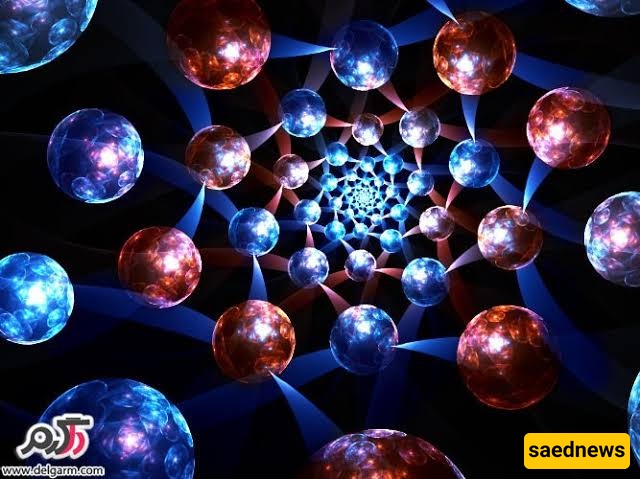
According to Saednews, Creatures that have become extinct in this world may have evolved and now live in another universe. On the other hand, in other universes, it is possible that we humans have also become extinct.
According to the many-worlds interpretation of quantum mechanics, when a physicist measures an object, reality splits into different worlds corresponding to the possible outcomes. Thus, a scientist in one world may measure an object according to its wave-like behavior, while the same scientist in another world measures it as a particle.
This helps explain how a particle can be measured in more than one state. Everett’s many-worlds interpretation, however, may have implications beyond the quantum scale. If an action has more than one possible outcome, then when that action occurs, the universe branches into different worlds. The same idea could apply when a person decides not to do something.
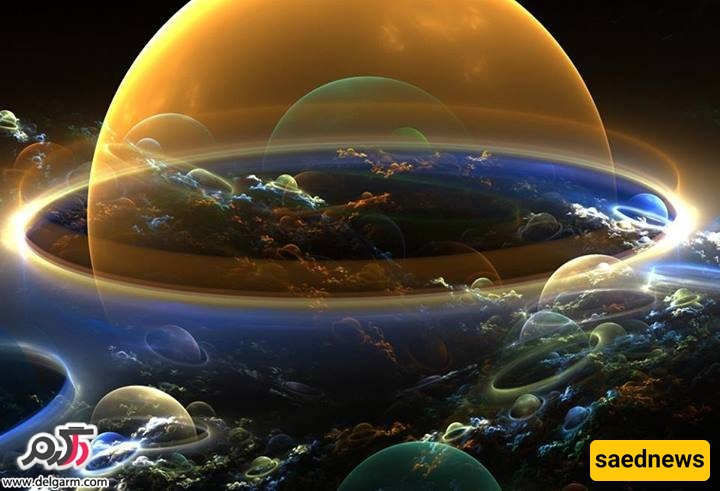
A parallel universe, or alternate reality, is a theory proposing that separate realities may exist alongside our own. A particular collection of parallel universes is often called a multiverse. The term can also be used more broadly to describe the collection of parallel realities that make up existence.
Although the terms “parallel universe” and “alternate reality” are sometimes used interchangeably, “alternate reality” can carry a slightly different implication, suggesting a different version of our own reality.
The term “parallel universe” is broader and does not necessarily imply a connection with our own universe. Universes in which many laws of nature are different—for example, a universe without relativistic limitations where the speed of light could be exceeded—could be considered parallel universes, although they would not necessarily be alternate versions of our own reality.
In quantum mechanics, one definition of parallel universes is “universes that are separated from one another by a quantum event.”
To understand an idea that seems almost impossible, we have to think on an extremely small scale—even smaller than atoms. Electrons orbiting an atomic nucleus can exist in multiple possible states at once, although directly demonstrating these states is extremely difficult.
In simple terms, imagine a person traveling to Oklahoma to visit their mother. In a parallel universe associated with another possible state of that person's matter, the same person might instead be at home watching television.
Scientists may find this phenomenon difficult to visualize, but the idea is based on genuine physical theories. According to one interpretation of quantum mechanics, when a phenomenon is observed in one particular state, reality effectively branches into different possibilities.
The many-worlds interpretation suggests that what we perceive as the current universe represents only one of the possible outcomes. For example, we might see a football flying through the air, while in another branch the same ball may be falling at that exact moment—or perhaps nobody is playing football at all.
Many prominent physicists have considered the scientific foundations of the many-worlds interpretation, even though it has not been experimentally confirmed as a description of reality. Physicist Sean Carroll of the California Institute of Technology has discussed the idea and argued that humans may find the concept difficult to accept without imagining highly advanced civilizations that have discovered evidence for it. He has also suggested that it may never be possible to build a device capable of communicating between separate branches of reality.
Understanding the concept of parallel universes is also closely connected to our understanding of time. According to Carroll, we do not experience time as a physical substance; instead, we experience the passage of time. For example, time can seem to pass very quickly during an exciting competition and extremely slowly during a boring class. When someone is trying not to arrive late at work, the minutes may seem to disappear incredibly quickly, while the final few minutes of a workday can feel much longer.
The idea that another version of ourselves might exist may initially seem strange or unreasonable. However, some cosmological models suggest that such a possibility cannot simply be dismissed.
According to a prediction based on a simple and widely studied cosmological model, each of us could have a counterpart living in a galaxy roughly (10^{280}) meters away from Earth.
This distance is so enormous that it is completely beyond the reach of astronomical observation. Nevertheless, the enormous distance does not by itself eliminate the possibility of another version of ourselves. This estimate is based on basic probability and does not even require some of the more speculative assumptions of modern physics.
If space is infinite and matter is distributed approximately uniformly throughout it—as observations suggest—then even extremely unlikely events could eventually occur somewhere.
In an infinite universe, there could be countless other habitable planets. Some of them might contain people who look exactly like us and have the same names, memories, and personal histories.
There could also be inhabitants experiencing every possible variation of the choices available in our lives. You and I would probably never be able to meet these other versions of ourselves.
The greatest distance we can observe is related to the amount of time light has had to travel since the Big Bang and the beginning of cosmic expansion. The most distant observable objects are currently billions of light-years away from Earth, defining the limits of our observable universe.
Similarly, the observable universe surrounding another version of ourselves would be centered on the planet where that version lives. This provides one of the simplest examples of parallel universes: each universe is merely a small part of a much larger multiverse.
With this definition of the universe, you might think that the concept of a multiverse will always remain within the realm of metaphysics. However, the distinction between physics and metaphysics is not simply whether a theory contains strange ideas or entities that cannot be directly observed. A more important question is whether the theory can, in principle, be tested through observation or experiment.
The boundaries of physics have gradually expanded over time. Scientific theories now encompass concepts that were once considered highly abstract or difficult to imagine, including the spherical Earth, invisible electromagnetic fields, time dilation at high speeds, quantum superposition, curved spacetime, and black holes.
In recent decades, the concept of a multiverse has also entered scientific discussions. The idea is connected to theories that have successfully passed numerous tests, including relativity and quantum mechanics. Proponents argue that the concept is consistent with fundamental principles of scientific reasoning because such theories can make predictions and, at least in principle, be subjected to testing.
Scientists have proposed several different types or levels of parallel universes. The key question is therefore not simply whether a multiverse exists, but how many levels or types of parallel realities might exist.
One important result of modern cosmological observations is that parallel universes are no longer merely a fictional or abstract concept in scientific discussion. If the extent of space is truly infinite, then somewhere within it, every physically possible event could eventually occur, regardless of how improbable it may be.
Beyond the observable limits of our telescopes, there could be regions of space that are extremely similar to the region surrounding us. These regions represent one possible type of parallel universe.
Scientists can even use cosmological models to estimate how far away such regions might be. However, the existence of these regions remains a theoretical possibility rather than an experimentally confirmed fact.
Some cosmological theories also suggest that other universes could have completely different physical properties and even different laws of physics. Such possibilities raise fundamental questions about the nature of time, reality, and whether the physical universe can ultimately be understood through science.
The concept of parallel universes remains one of the most fascinating and debated ideas in modern cosmology and quantum physics. Some versions of the multiverse arise naturally from established physical theories, while others remain highly speculative.
At present, there is no direct experimental evidence confirming that other universes exist or that alternative versions of ourselves are real. Nevertheless, the question continues to challenge our understanding of reality and the limits of scientific knowledge.