SAEDNEWS: Washing vegetables with salt or dishwashing liquid is the worst possible practice when cleaning vegetables, because using these substances for washing vegetables is ineffective.
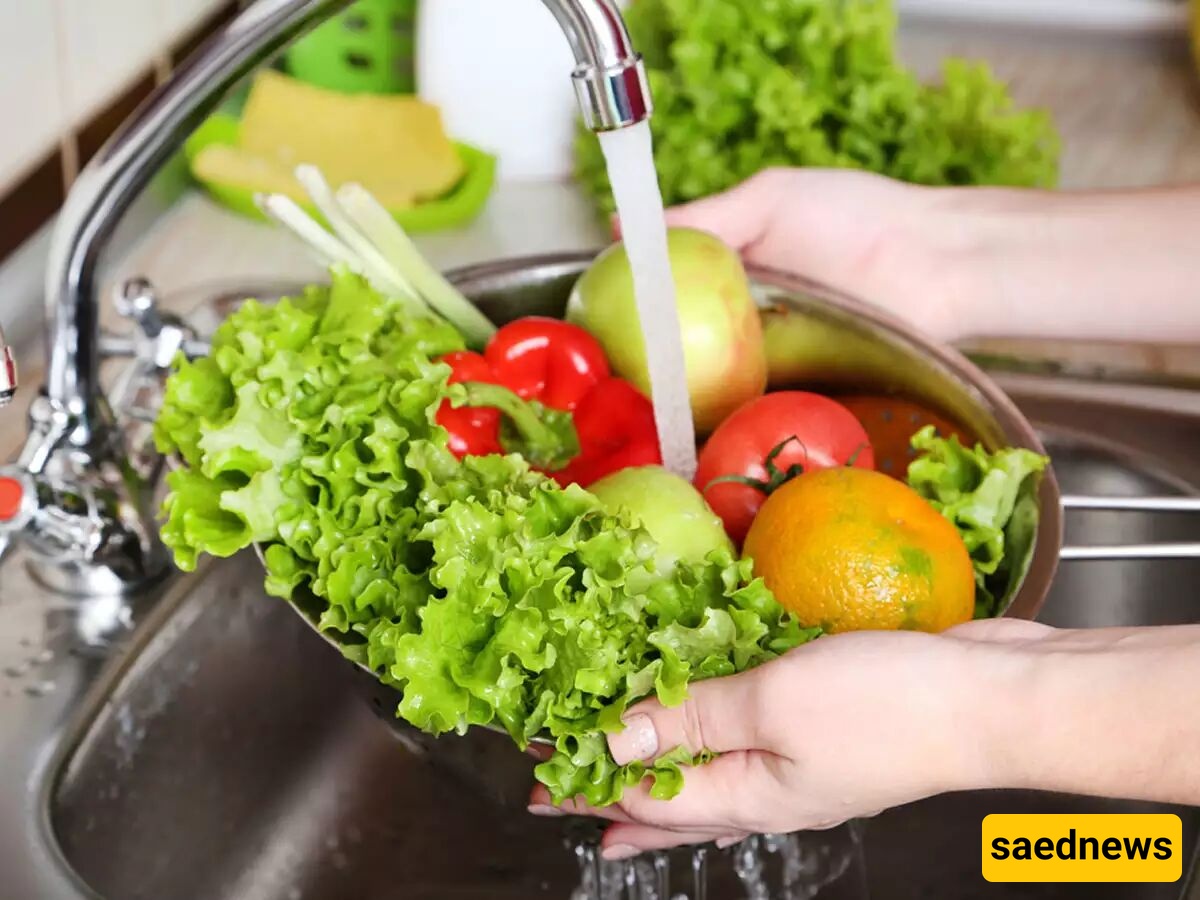
According to SAEDNEWS, Consuming unwashed and contaminated vegetables can lead to various diseases; therefore, proper washing and disinfecting of vegetables is very important for the health of family members. Some people use incorrect methods to wash and disinfect fruits and vegetables, putting their own and their families’ health at risk.
Some people use dishwashing liquid to wash and disinfect vegetables. Washing vegetables with dishwashing liquid can increase the risk of carcinogenic effects due to residue sticking to the vegetables and may also cause poisoning in family members. Using dishwashing liquid can make the surface of vegetables slippery and slimy, which may allow parasite eggs and cysts to survive and grow.
Not all poisonings are fatal; they may be accompanied by symptoms such as nausea, vomiting, abdominal pain, fever, and diarrhea. Pregnant and breastfeeding women, people with cancer, those taking immune-suppressing medications, the elderly, and diabetic patients are more sensitive to poisoning; therefore, fruits and vegetables must be washed thoroughly.
As mentioned in this section, some people use salt to wash vegetables; however, salt does not have anti-parasitic or antimicrobial properties. It may, however, help remove surface pesticides from fruits and vegetables because salt increases the polarity of water, allowing pesticides to dissolve more easily in the saltwater solution and separate from fruits and vegetables.
To disinfect fruits and vegetables, you can use the following substances:
Use disinfectant solutions or chlorine-based compounds
For disinfecting vegetables, use so-called disinfectant liquids or chlorine-based compounds. There is no need to worry, as the chlorine in disinfectants dissolves in water and separates from it.
Sodium bicarbonate (baking soda)
Sodium bicarbonate has strong disinfecting properties and can be used for washing and disinfecting fruits and vegetables. To do this, add one tablespoon of baking soda to one liter of water, soak the fruits and vegetables in the solution for 10 minutes, and then rinse them thoroughly.
Vinegar
Vinegar is a very strong and effective disinfectant with antimicrobial properties, and its use does not cause any dangerous side effects. To disinfect fruits and vegetables, add one cup of vinegar to one liter of water, soak the fruits and vegetables in the solution, wait for 20 minutes, and then rinse them with water.
Lemon
The citric acid in lemon gives it antibacterial and disinfectant properties. Lemon can help remove contamination from fruits and vegetables. For disinfection, mix equal amounts of water, vinegar, and lemon juice, then soak the fruits and vegetables in the mixture for 10 minutes, and finally rinse them thoroughly with plenty of water and dry them.
Baking soda
Baking soda can also be effective for disinfecting fruits and vegetables. To use it, dissolve a few tablespoons of baking soda in one or two cups of water, mix it well, and pour the solution into a spray bottle. Spray it onto the fruits or vegetables, then after a few minutes, rinse them thoroughly under strong running water so that parasites and contaminants are completely removed.