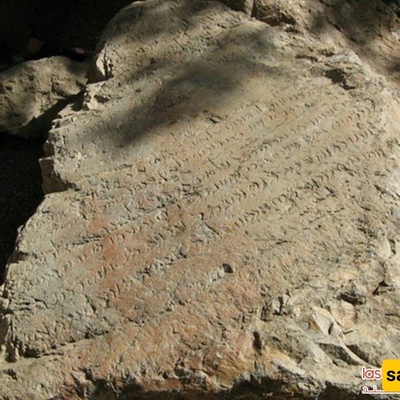
SAEDNEWS: A 2,700-year-old stone relief depicts Assyrian soldiers underwater using objects that resemble modern diving tanks. But were the ancient Assyrians truly equipped with technology that allowed them to breathe beneath the water, or does this intriguing image conceal a very different explanation?
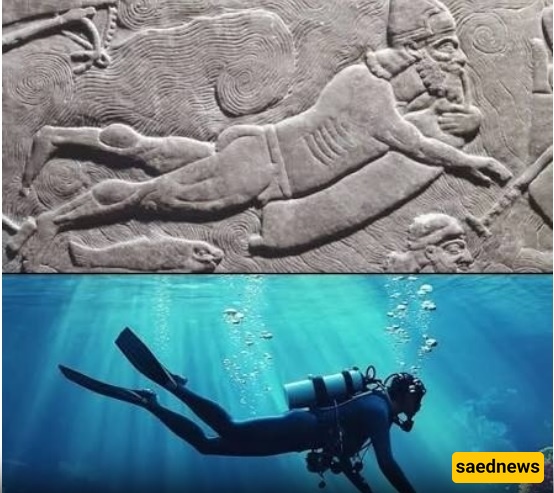
According to the Society Desk of Saed News, when it comes to ancient technologies, the line between historical fact and legend can sometimes be remarkably thin. One of the most intriguing examples is found in the stone reliefs of the Assyrian Empire, dating from approximately the 9th to the 7th centuries BCE. These carvings depict individuals swimming and moving beneath the water while carrying objects that resemble air-filled bags—an image that has sparked debate for decades.
Some have suggested that these bags represent the earliest form of diving equipment or even primitive breathing devices. However, archaeological evidence does not support this interpretation. Most researchers agree that the bags were made from inflated animal skins and were primarily used as flotation aids. Their purpose was to help soldiers cross rivers, transport equipment, and improve buoyancy during military operations rather than provide breathable air underwater.
Even so, these remarkable reliefs reveal that more than 2,700 years ago, people already understood the importance of underwater operations, buoyancy engineering, and the practical use of simple tools to overcome natural challenges. Rather than serving as evidence of advanced diving technology, the carvings highlight the ingenuity, technical knowledge, and engineering skills of one of the ancient world's greatest civilizations.
The story of these Assyrian reliefs reminds us that history becomes even more fascinating when it is interpreted through scientific evidence. In many cases, the truth is more extraordinary than the myths that grow around it.