SAEDNEWS: The Avicenna Mausoleum is one of Hamadan's most famous attractions. It is the final resting place of the renowned Persian physician and philosopher Avicenna (Ibn Sina) and is a must-visit landmark for anyone exploring the city.
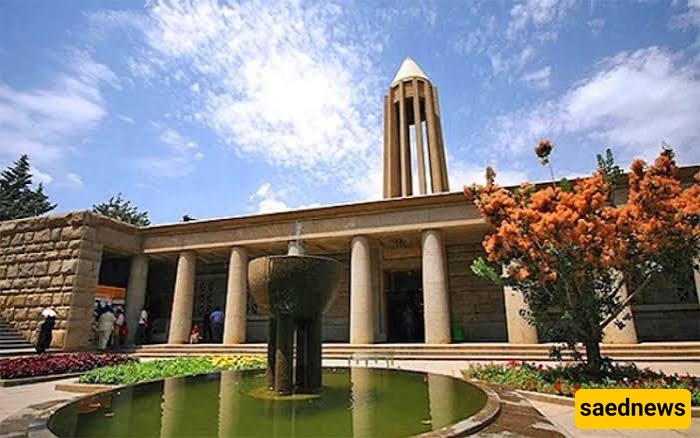
According to Saednews, The Avicenna Mausoleum in Hamadan is much more than a simple burial site. It is one of Iran's most iconic cultural landmarks, combining a museum, a library, beautiful Persian gardens, and impressive architecture in one location. Dedicated to the renowned Persian philosopher and physician Avicenna (Ibn Sina), the monument attracts visitors interested in history, science, and architecture.
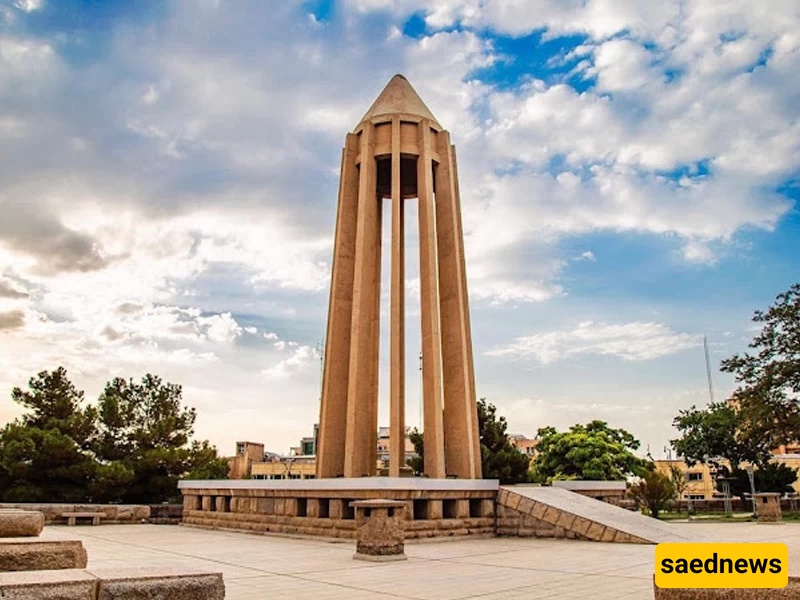
The Avicenna Mausoleum is one of Hamadan's most recognizable attractions. Its tall, elegant columns have become a symbol of the city. The monument was officially added to Iran's National Heritage List on May 11, 1997, under registration number 1869.
The complex features two spacious halls:
The southern hall, which serves as a museum.
The northern hall, home to a large library.
Built on a site covering 3,090 square meters, the mausoleum itself occupies 1,792 square meters. Its architectural design was inspired by the famous Gonbad-e Qabus Tower, blending traditional Persian elements with modern design. The grounds include decorative fountains, Persian gardens, traditional pools, and extensive use of granite and marble.
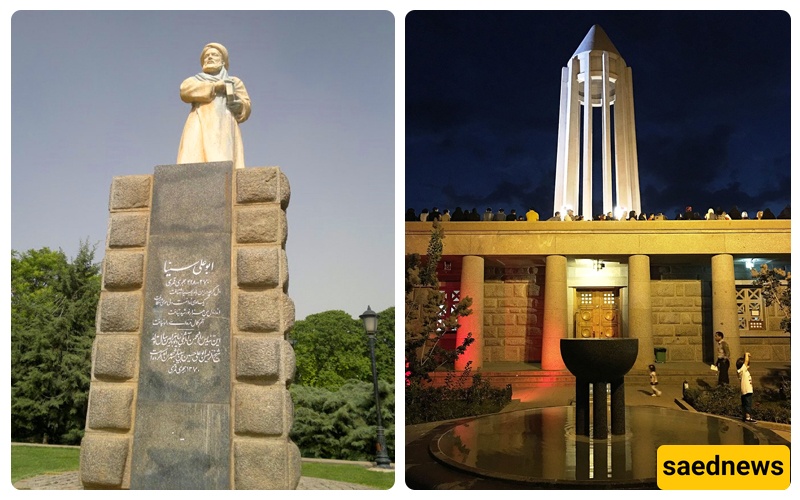
Architect Houshang Seyhoun incorporated influences from ancient Egyptian, Greek, and Persian architecture into the lower sections of the monument. These design elements symbolize Avicenna's worldwide influence and his lasting contribution to medicine and the Islamic world. The rough stone base reflects his strength and enduring legacy, while the monument's ten columns represent the ten centuries between Avicenna's lifetime and the construction of the memorial.
During his lifetime, Avicenna traveled extensively across Persia. While journeying from Isfahan to Hamadan, he became seriously ill and spent his final 40 days at the home of his friend, Abu Sa'id Dakhduk.
Avicenna passed away there and was buried in the courtyard of his friend's house. After Abu Sa'id's death, he was buried beside Avicenna. As a result, the present-day mausoleum stands on the site of Abu Sa'id Dakhduk's former residence. Initially, only a small four-arched structure marked their graves.
Over time, the original monument deteriorated. During the Qajar era, a royal princess named Negar Khanom ordered its restoration. The old four-arched structure was replaced with a brick dome, and the original gravestones were exchanged for new ones. The historic gravestones were preserved and placed inside the entrance hall as historical artifacts.
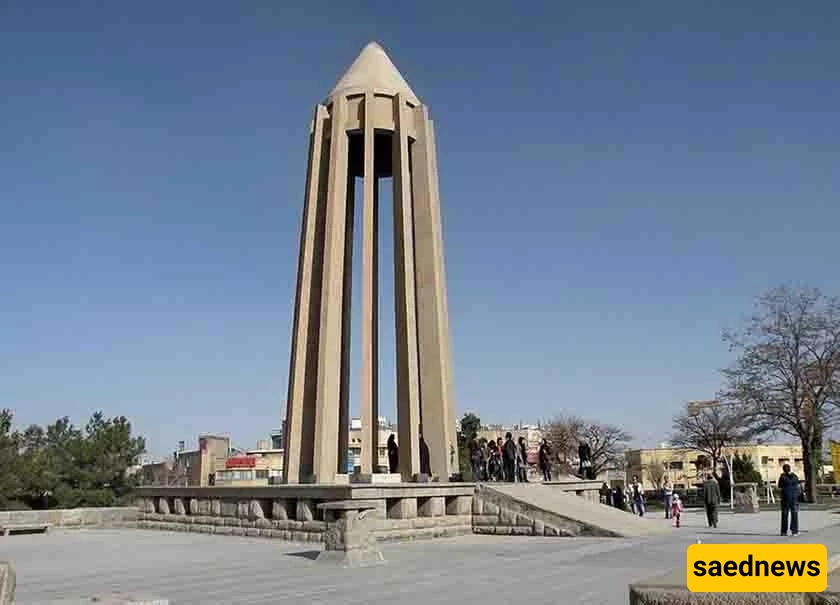
During the reign of Mohammad Reza Pahlavi, the National Heritage Society of Iran approved the construction of a new memorial dedicated to Avicenna.
In June 1945, a design competition was held, and architect Houshang Seyhoun's proposal was selected. Construction was completed in 1951, and the finished monument was officially handed over to the National Heritage Society.
On May 1, 1952, a special box containing casts of the skulls of Avicenna and Abu Sa'id Dakhduk was placed inside the new mausoleum.
The mausoleum consists of several important sections that reflect Avicenna's legacy as both a scholar and physician.
The northern hall houses the Avicenna Library, which contains approximately 8,000 books. Among its collection are:
Around 30 handwritten manuscripts
More than 590 books in French, English, German, and Arabic
The library serves as an important resource for researchers and visitors interested in philosophy, medicine, and Persian history.
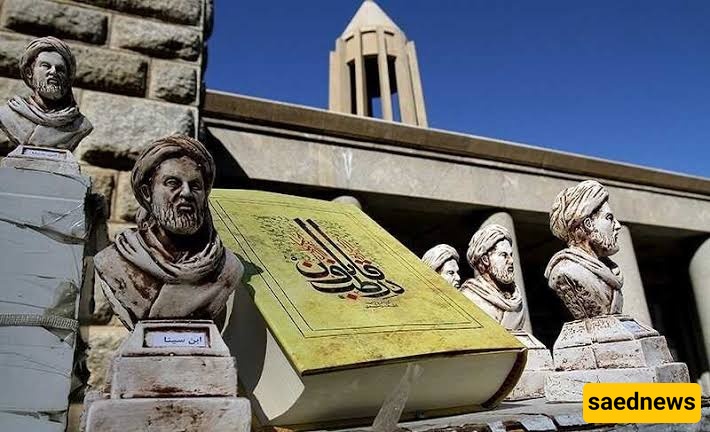
The southern hall functions as the mausoleum's museum. Its exhibits include:
Bronze artifacts dating back to around 1000 BC
Ancient medical instruments
Displays on traditional medicine
Information about medicinal plants and herbal remedies
These collections highlight both Iran's ancient civilization and Avicenna's remarkable contributions to medical science.
One of the site's most impressive features is the monumental marble statue of Avicenna located in the center of Avicenna Square.
The statue measures 3.1 meters in height, 90 centimeters in width, and weighs approximately 4 tons. It was sculpted by the renowned Iranian artist Abolhassan Sedighi from a single block of white marble sourced from Qom. The sculpture is widely regarded as one of the most accurate artistic representations of Avicenna.
The mausoleum is open throughout the year, although spring and summer are generally considered the best times to visit due to Hamadan's cold winters.
Spring and Summer: 8:00 AM – 8:00 PM
Autumn and Winter: 9:00 AM – 5:00 PM
Visitors must purchase an entrance ticket, as admission is not free.
The complex is closed during several major religious observances in Iran, including:
28 Safar
21 Ramadan
The anniversary of Imam Khomeini's passing
The martyrdom of Imam Ja'far al-Sadiq
Tasu'a
Ashura
The Avicenna Mausoleum is one of Iran's most significant historical and cultural landmarks. Combining remarkable architecture, a rich museum collection, an extensive library, and beautifully landscaped gardens, it honors the enduring legacy of one of the world's greatest physicians and philosophers. Whether you are interested in history, architecture, medicine, or Persian culture, the Avicenna Mausoleum offers a memorable and educational experience in the heart of Hamadan.