SAEDNEWS: The Matenadaran Museum holds great importance among the people of Armenia. It is often said that it would be unusual for a traveler to leave the country without visiting this remarkable museum. If you are also looking for more detailed information about the Matenadaran Museum, continue reading to discover more.
According to Saednews, Armenia is a country blessed with beautiful landscapes and an ancient history. A land of historic churches and museums, it presents a vivid and living picture of the journey, culture, and traditions of the Armenian people.
With a history spanning thousands of years, Armenia offers visitors an exceptional experience. Along with its remarkable nature and unique climate, the country allows travelers to explore not only its natural attractions but also the history and culture of a nation that was the first to adopt Christianity as its official religion.
The Matenadaran Museum is a priceless treasure of Armenia’s written heritage and the largest collection of Armenian manuscripts in the world. The name “Matenadaran” itself means “repository of books,” reflecting the true nature of this remarkable institution. Some historical sources suggest that the word originated from Middle Persian.
In medieval Armenia, the term was used to describe a library, and in many parts of the world it is still associated with the meaning of a book repository. To distinguish this museum from the general meaning of the word, it is sometimes referred to as the Yerevan Matenadaran or the Mesrop Mashtots Matenadaran.
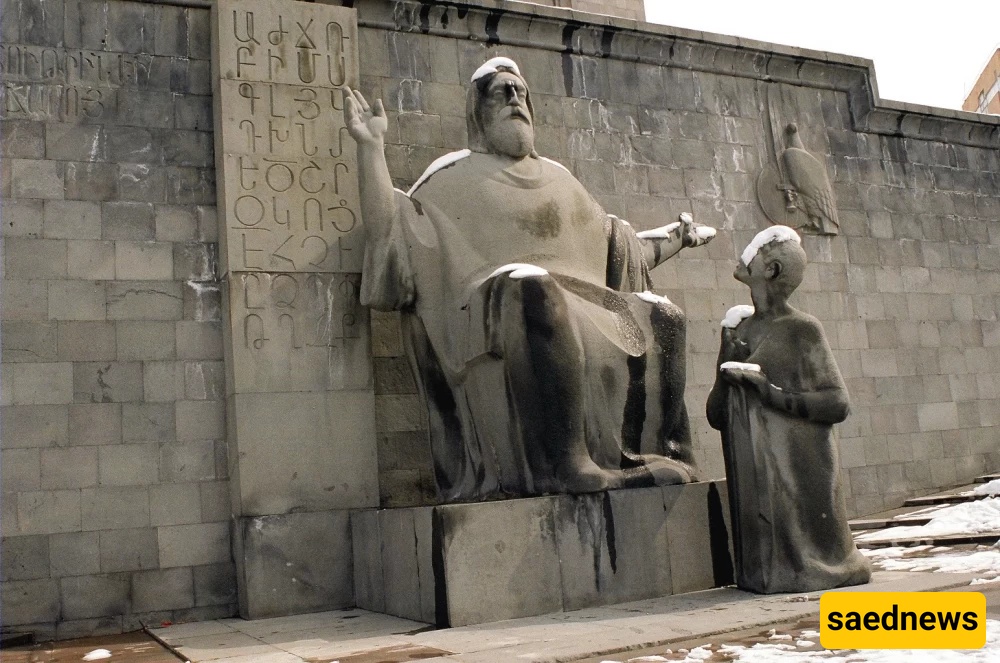
The museum was founded in 1959 based on a national collection of Armenian historical manuscripts and texts that had previously been preserved at the Etchmiadzin Cathedral. It was named in honor of Mesrop Mashtots, the creator of the Armenian alphabet.
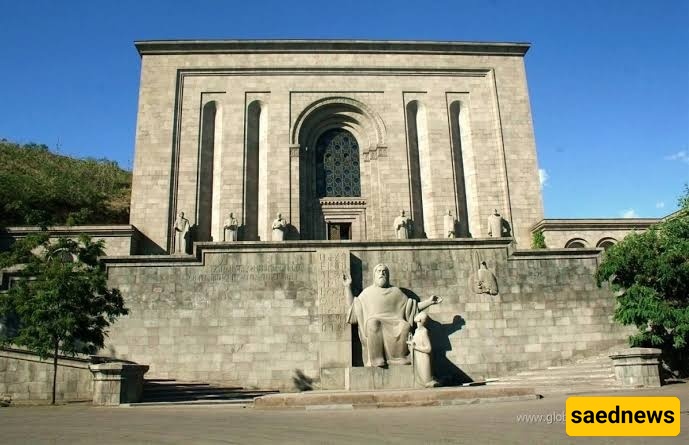
A statue of Mesrop Mashtots stands in front of the museum as a tribute to his contribution. In the statue, one hand points toward the Armenian alphabet behind him, while the other shows the path of knowledge and learning passed through Armenia’s history and civilization to a student kneeling before him.
Before entering the museum, visitors can also see statues of many prominent Armenian philosophers, scholars, and scientists, including figures such as Grigor Tatevatsi, Anania Shirakatsi, and Toros Roslin.
The manuscripts displayed in the museum today do not represent the entire written heritage of Armenia. Throughout history, Armenia was frequently a battlefield for regional powers, causing significant damage to its cultural and historical treasures. Many manuscripts were destroyed, particularly during periods of invasion, including attacks by the Ottoman Empire.
In 1920, the Armenian government nationalized educational institutions and declared the Etchmiadzin manuscripts the property of the entire Armenian nation. In 1922, manuscripts that had been sent to Russia or illegally removed from Armenia were returned. Around 1,730 manuscripts, along with 4,660 ancient texts, were collected.
By 1939, approximately 9,382 handwritten manuscripts were transferred to the National Museum, one of Armenia’s most important cultural institutions, which at that time was known as the Yerevan Library.
On March 3, 1959, the Matenadaran was officially established in a new building as a “scientific research institution with specialized departments for the preservation, study, translation, and publication of manuscripts.” In 1962, it was named after Mesrop Mashtots, the creator of the Armenian alphabet.
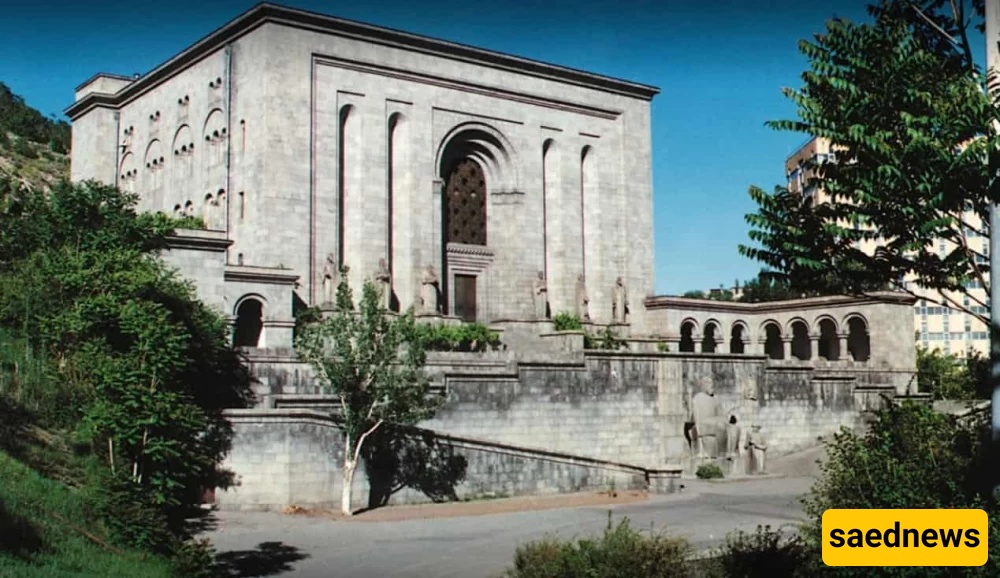
The construction of the museum building faced delays in its early stages but was gradually completed over time. Its architecture was inspired by medieval Armenian styles, while also incorporating elements reminiscent of ancient Egyptian temples. A large part of the entrance hall was designed in a style similar to Sanahin Monastery, one of Armenia’s famous historic churches.
After entering the museum, visitors can see an old painting by Vanik Khachatryan from 1960. Further inside, three famous paintings by the same artist represent three important historical periods of Armenia.
Over the years, the museum has undergone renovations and expansions. These changes have not reduced its historical grandeur; instead, they have added to its beauty and significance.
On December 20, 2011, a grand ceremony was held to celebrate the 20th anniversary of Armenia’s independence. During this event, the museum was officially reopened in the presence of Armenian state officials and religious leaders.
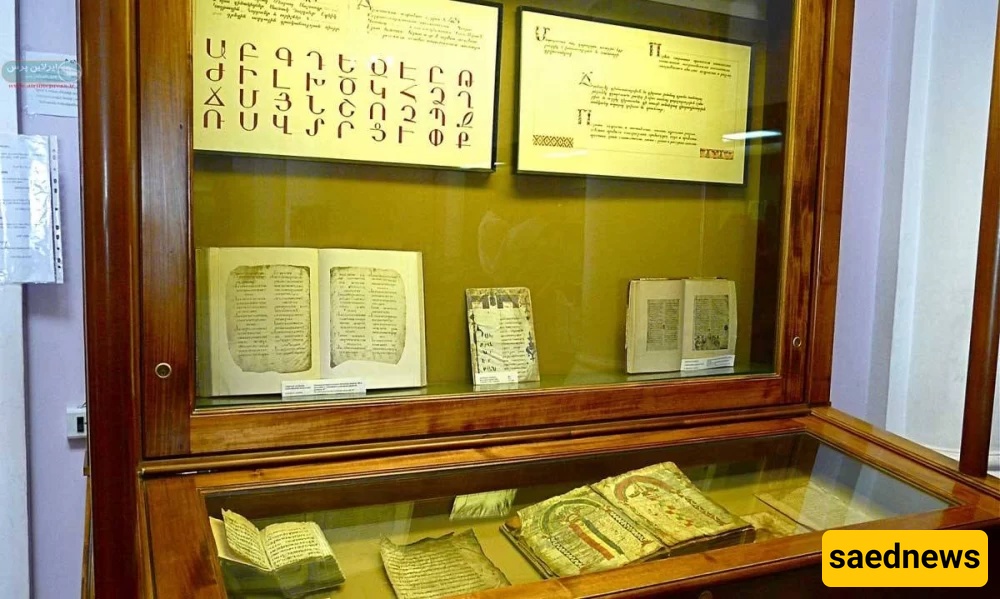
Today, more than 23,000 handwritten manuscripts are preserved in the Matenadaran. Only a portion of these works are displayed to the public across 15 exhibition halls.
Although many manuscripts are related to Armenian history and culture, the collection also contains texts in various other languages, including Arabic, Syriac, Greek, Indian, Georgian, Hebrew, and others.
The museum also publishes its own journal, providing information about ancient manuscripts and research related to them.
What attracts visitors to the Matenadaran is not only the manuscripts, sculptures, and ancient paintings, but also the history and culture hidden behind these priceless works.
Every year, thousands of people visit the museum, which is recognized as a symbol of Armenia’s cultural values and historical achievements. Many foreign officials and international visitors have visited this remarkable collection during their trips to Armenia.
In 1997, the Matenadaran collection was registered as a valuable heritage site on UNESCO’s Memory of the World Programme.
The museum is located on a hill in the northwestern part of Yerevan. The street where it stands is also named after Mesrop Mashtots, the inventor of the Armenian alphabet.
Reaching the museum is easy, as taxis and public transportation are available throughout the city. The museum welcomes visitors from 10:00 a.m. to 5:00 p.m., although it is closed on Sundays and Mondays.
Visitors need to purchase an entrance ticket before entering, with reduced prices available for children. Those visiting the Matenadaran can also explore other nearby cultural and recreational attractions in Armenia.
The Matenadaran is not only a place preserving Armenian history. It also contains valuable records about the history and culture of other civilizations and regions, including the Middle East, the Caucasus, Iran, and Russia.
For anyone traveling to Armenia, visiting this remarkable museum is an opportunity to discover centuries of knowledge, art, and civilization.
Because of its immense cultural value, plans have also been made to create a virtual exhibition of the Matenadaran, allowing people who cannot travel to Armenia to explore its collections and historical treasures online.