SAEDNEWS: Baklava cake is one of those desserts that instantly reminds you of the rich flavors of both traditional sweets and modern creations with every bite. In this article, you will discover how to prepare this delicious cake and achieve the best possible result.
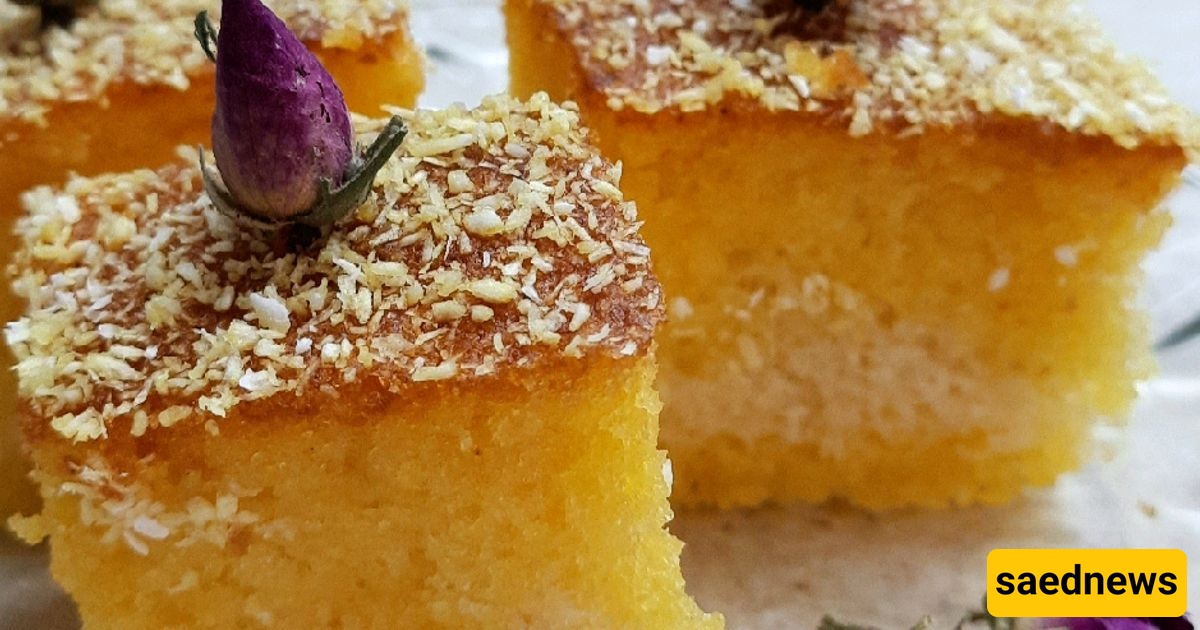
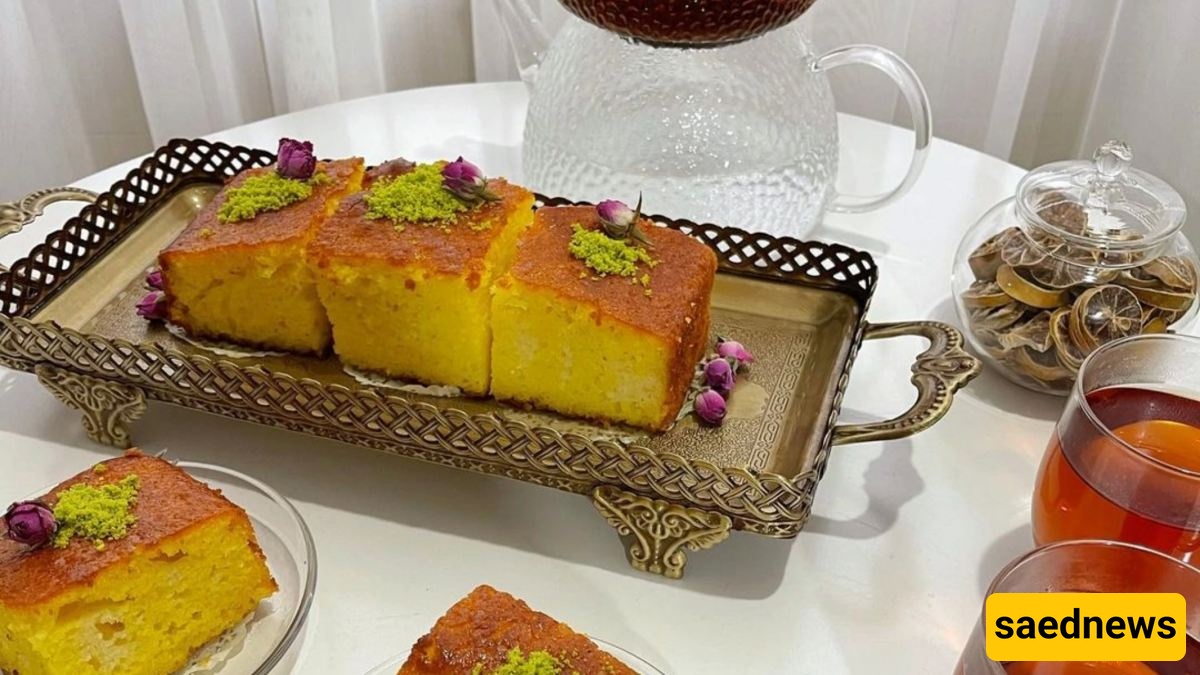
According to Saednews, Baklava-style cake, also known as Popak cake, is one of the most popular and aromatic desserts in Persian cuisine. With its soft, delicate, and airy texture, this cake combines the pleasant flavor of coconut or walnuts with the balanced sweetness of saffron syrup.
The secret behind the popularity of this cake lies in its unique texture, which becomes exceptionally light and fluffy through the use of warm milk and a special mixing technique. If you are looking for a distinctive dessert for gatherings or family tea times, baklava-style cake is an excellent choice. In this article, you will learn the complete step-by-step method for preparing this delicious cake, along with valuable tips for achieving the best results.
To prepare a cake with a perfect texture and wonderful flavor, you will need the following ingredients:
Cake flour (white pastry flour): 2 cups (250 grams)
Vegetable oil: ½ cup (about 120 ml)
Eggs: 4 (at room temperature)
Sugar: ½ cup (100 grams)
Vanilla or cardamom: ½ teaspoon
Baking powder: 1 tablespoon (sifted three times with the flour)
Desiccated coconut: 1 cup (about 120 grams)
Hot milk: 1 cup (warm the milk until it is comfortable to drink without burning your mouth)
Note: The recommended baking pan size for this recipe is 27 × 15 cm. Grease the bottom of the pan with oil or line it with parchment paper. Preheat the oven to 180°C (350°F) for 20 minutes before baking.
Sugar: 1 slightly less than full cup (about 200 grams)
Water and rose water mixture: ½ cup (you may use only rose water if preferred)
Brewed saffron: about 1 tablespoon (optional)
Lemon juice: 1 teaspoon
Crack the eggs into a stainless steel or porcelain bowl (preferably a metal bowl). Beat them with an electric mixer for 2 minutes until they become foamy. Add vanilla or cardamom, then continue mixing for another 5–6 minutes on medium to high speed until the eggs increase significantly in volume and become elastic. This step is essential for creating a light and fluffy cake.
Gradually add the hot milk to the egg mixture and continue mixing for another 2 minutes. The warm milk helps make the cake softer and airier. The milk should not be boiling; it should be warm and easy to tolerate.
Add the desiccated coconut and vegetable oil to the mixture. Mix for about 1 minute until everything is well combined. At this stage, the batter will become thicker.
Add the sifted flour and baking powder in three stages. Each time, mix with an electric mixer for about 7 seconds. Finally, use a spatula or wooden spoon for a few seconds until any flour lumps disappear. Avoid overmixing, as it can make the cake dense.
Pour the batter into the greased or parchment-lined pan and smooth the surface. Place the pan in the preheated oven at 180°C (350°F). Bake for 40–50 minutes until the edges of the cake become golden. Then turn on the top grill of the oven for about 5 minutes until the surface is also completely golden.
After baking, remove the cake from the oven and place it on a wire rack or cooling tray until it cools completely. Cooling is very important; otherwise, the syrup will not absorb properly and the cake may become soggy.
The syrup should be completely cool before pouring it over the cake. To prepare the syrup:
Add sugar and the water-rose water mixture (½ cup) to a small saucepan.
Place it over very low heat until the sugar completely dissolves.
Add the brewed saffron and stir well.
Once the sugar has dissolved, add lemon juice and allow the syrup to boil for 2 minutes.
Remove from heat and let the syrup cool completely.
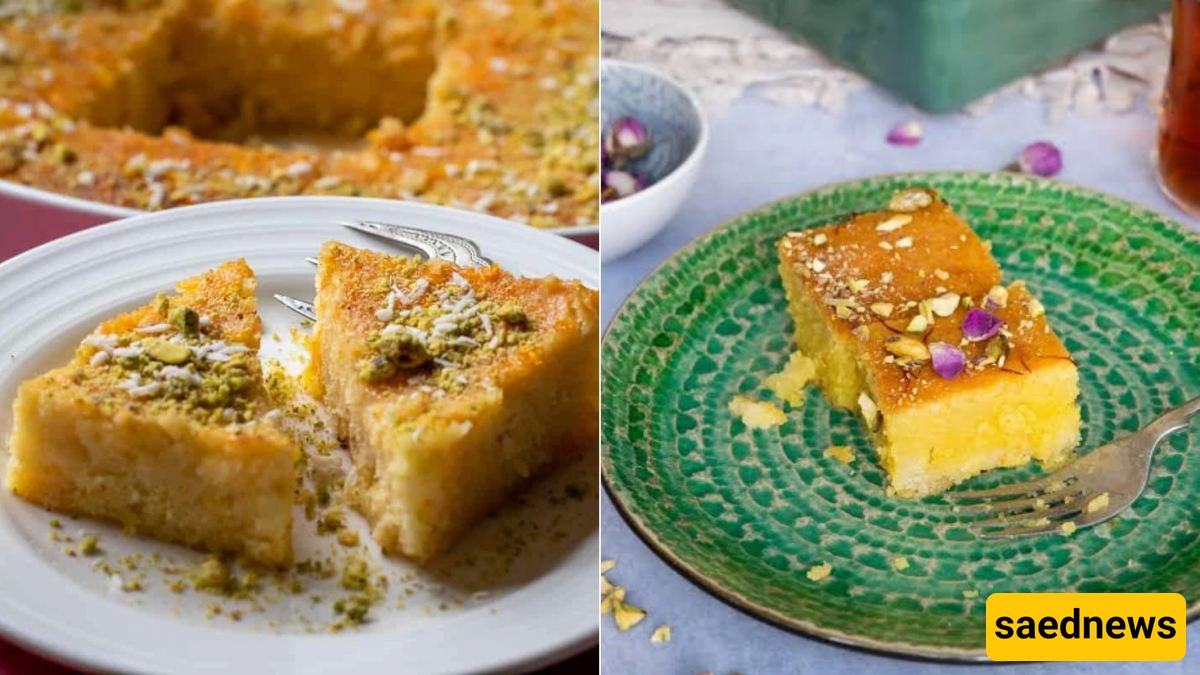
Slowly pour the cooled syrup over the cooled cake. Allow the cake to rest for 1–2 hours so the syrup can fully absorb. Then slice and serve.
Milk temperature: The milk should be hot but not boiling. Warm milk helps create a lighter and fluffier texture. Using cold milk may result in a dry cake.
Beating the eggs: Do not underestimate the importance of beating the eggs. The longer you beat them (up to 10 minutes), the softer and fluffier the cake will become.
Sifting the flour: Always sift the flour and baking powder three times to improve aeration and create an even cake texture.
Coconut alternatives: You can replace coconut powder with ground walnuts, almonds, pistachios, or hazelnuts. Each option creates a different and delicious flavor.
Syrup temperature: The syrup must be completely cool. Pouring hot syrup over a hot cake can make the texture loose and cause the cake to become mushy.
Baking time: Oven temperatures vary. Use a fork or toothpick to check if the cake is fully baked. If the toothpick comes out clean, the cake is ready.