SAEDNEWS: In the Iranian year 1309 (1930–1931), Colonel Reza Gholi Amir Khosravi, president of Bank Pahlavi, commissioned the Pierce-Arrow Company to build a unique automobile for Reza Shah Pahlavi. When the vehicle was unveiled, it created a great deal of excitement and attracted widespread attention in the United States.
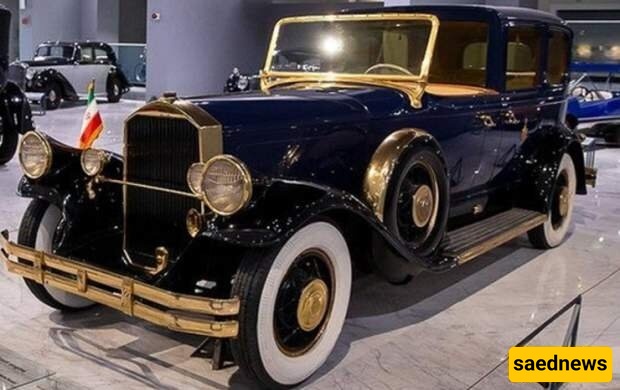
According to Khabar Online, as reported by Saed News, Nearly a century ago, Reza Shah Pahlavi commissioned one of the most luxurious automobiles ever built. The custom-made limousine, produced by the American luxury car manufacturer Pierce-Arrow, became one of the world's most expensive vehicles and attracted international attention for its extraordinary craftsmanship and lavish design. Today, the historic vehicle is preserved in Iran's Museum of Historic Cars.
In 1930 (1309 in the Iranian calendar), Colonel Reza Gholi Amir Khosravi, president of Bank Pahlavi, ordered a specially designed automobile from the American company Pierce-Arrow on behalf of Reza Shah Pahlavi.
When the limousine was unveiled in the United States, it generated widespread publicity due to its exceptional luxury and unprecedented price.
The custom vehicle reportedly cost approximately $30,000 (some historical sources estimate around $25,000), an extraordinary amount at the time. The purchase was financed through the treasury of Bank Pahlavi.
On April 20, 1930, The New York Times reported on the vehicle, describing it as "the most magnificent conveyance ever built for the masters of the Peacock Throne."
Pierce-Arrow was widely regarded as the "Rolls-Royce of American automobile manufacturers," specializing in high-end luxury vehicles.
The limousine built for Reza Shah was based on the company's Model A, a seven-passenger limousine that represented Pierce-Arrow's largest and most powerful model in 1930.
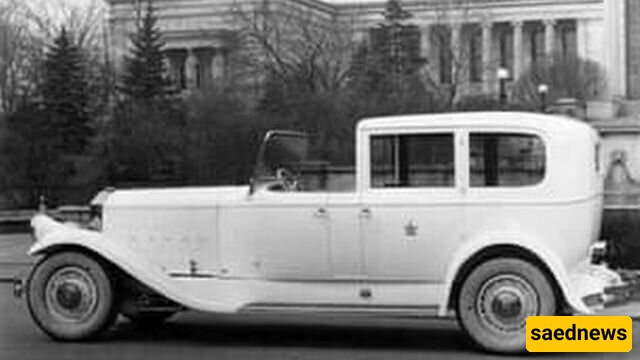
One of its advanced features for the era was a chauffeur-driven layout, with the driver's compartment completely separated from the rear passenger cabin.
The limousine was originally finished in white and featured two golden crowns mounted above the headlights.
Its interior showcased exceptional craftsmanship, including:
Premium silk upholstery embroidered with olive leaf patterns.
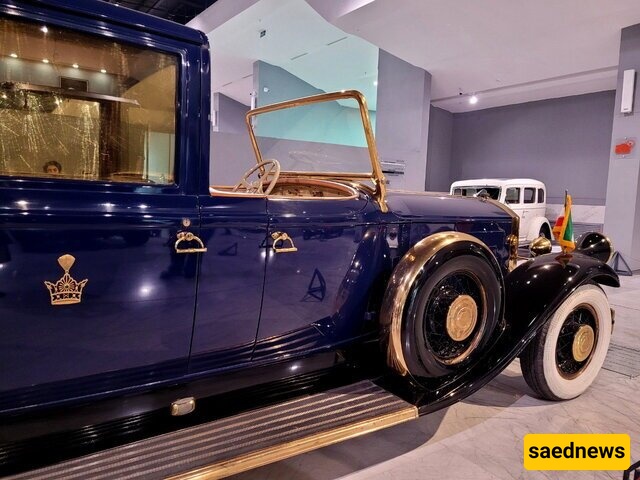
Gold-plated hardware, including door handles, window frames, headlight surrounds, and bumpers.
High-quality Russian wool carpeting.
A solid gold ashtray decorated with several diamonds.
Before being shipped to Iran, the vehicle was publicly displayed in the United States.
After the limousine arrived in Iran, Reza Shah reportedly ordered its exterior to be repainted in navy blue and black, replacing the original white finish.
Two golden royal crowns were also added to the vehicle's doors, giving it the appearance most closely associated with Iran's royal court during that period.
According to Curtis Powell, a representative of the Pierce-Arrow Society in the United States, most company records were lost after Pierce-Arrow ceased operations in 1938, leaving relatively little documentation about the Shah's custom automobile.
Powell noted that Reza Shah was considered one of the company's most significant and prestigious customers.
The gold-trimmed Pierce-Arrow limousine survives today and is preserved at the Museum of Historic Cars, operated by Iran's Mostazafan Foundation. It has been on public display since 2021.
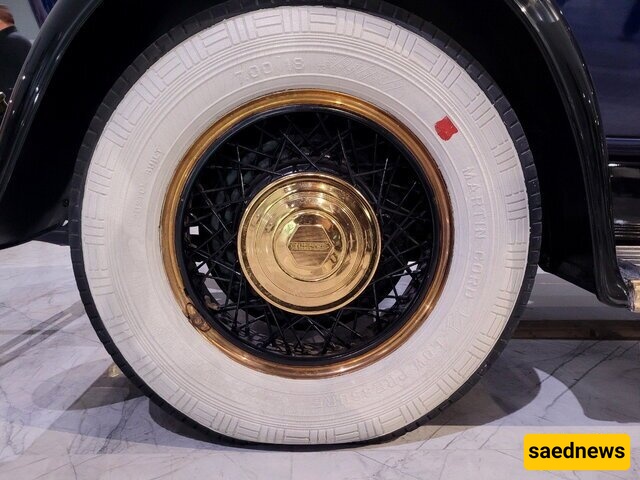
During its restoration, museum conservators found that the vehicle's paintwork had deteriorated. Restoration specialists first returned the car to its original white color before carefully recreating the historically accurate navy blue and black finish commissioned by Reza Shah, using restoration methods intended to preserve the vehicle's authenticity.