SAEDNEWS: International Affairs Expert: Trump Could Reconsider Attack on Iran at Any Moment Amid U.S. Opposition to Agreement
According to Saed News Agency’s political service, Amirali Abolfath, an international affairs expert, told ILNA that regarding his assessment of the signing of a memorandum of understanding between Iran and the United States, and the planned start of negotiations in Switzerland on Friday—which did not take place due to Israeli attacks and their continuation in Lebanon—when asked whether, given Israel’s non-compliance with agreements, negotiations could still begin or whether other developments might occur, he said: “Anything is possible. The first step is the end of the war on all fronts, including Lebanon, which has faced problems. However, there were some reports yesterday suggesting that Hezbollah in Lebanon and Israel have either established or are about to establish a ceasefire.”
He added: “It is still unclear whether Trump can withstand this pressure.”
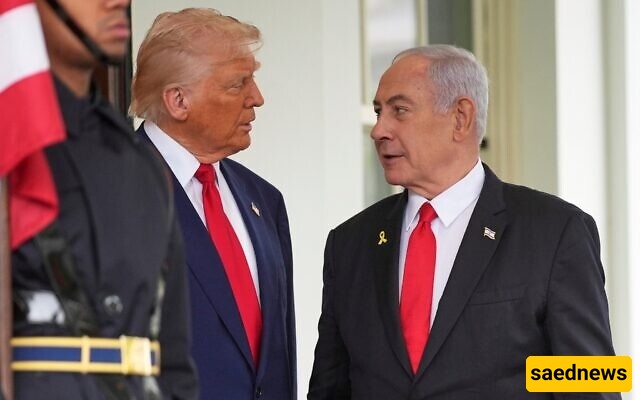
He continued: “However, the establishment of a ceasefire in Lebanon depends on the decision made in Israel and on how much pressure Trump can exert on Netanyahu to stop attacks on Lebanon. If this stage moves forward and the ceasefire remains stable, Iran–U.S. negotiations will begin in a 60-day period, but it is still far from certain that they will succeed. Donald Trump is under heavy domestic pressure in the United States, and significant pressure is being exerted on him. It is unclear whether Trump can withstand this pressure and whether he can protect the agreement he signed and to which he himself is a party.”
The international affairs expert said: “I hope this happens, but I am not very optimistic that at the end of 60 days—or even if it is extended—we will reach a document at the end of the Iran–U.S. negotiations that satisfies Iran, the Americans, and also the opponents of the agreement, wherever they are in the world, from inside Iran to the United States, Israel, and the region, so that they cannot disrupt it.”
Regarding the possibility of the agreement being long-term if reached, Abolfath said: “It is too early to talk about that, because it is not even clear whether a document will be reached. But any agreement can be broken. Even the strongest international agreements are usually border treaties. Defining borders is one of the most solid types of agreements between countries, yet we have seen countries attack others and disregard such treaties.”
He continued: “The Americans also did this once when they withdrew from the JCPOA. It is not known whether a future U.S. administration—Democratic or Republican—will avoid repeating what Trump did regarding the JCPOA agreement.”
Regarding statements by members of Netanyahu’s cabinet and the issue of Israeli withdrawal from occupied areas in Lebanon, he said: “In the agreement I understand, a cessation of hostilities on all fronts has been included. At present, the parties in Lebanon have not even reached a ceasefire, let alone a full cessation. In Israel, there is no consensus even on a ceasefire. The statements made by some ministers in Netanyahu’s cabinet are far removed from the idea of a ceasefire, let alone withdrawal.”
Abolfath said: “The United States is exerting significant pressure on Israel, especially JD Vance, who is using very threatening language, but this is not a unified or dominant voice. Israel has considerable influence in the United States. Netanyahu himself is not speaking much now, but he has mobilized senators against Trump, and both Democratic and Republican senators raise issues daily.”
He continued: “I do not think American pressure is strong enough—or that they are willing or able—to force Israel to withdraw. Even if the Americans put in a great deal of effort, they might only be able to maintain a partial ceasefire. I hope they can also achieve withdrawal, but given the Israeli mindset and the highly negative atmosphere in Washington on this issue, it does not seem likely.”
Regarding the possibility of a third attack and whether Trump might resort to military action again due to opposition to any agreement, he said: “It is possible at any moment. The Americans, together with Israel, have already entered into war with us twice. A third attack is also possible. If they do not achieve their objectives, this scenario remains on the table. Some speculate it could happen after the congressional midterm elections, meaning after November.”
He added: “Trump has also officially said that if we do not reach an agreement, bombing will resume. Whether the Americans will attack is one issue; whether they will achieve their objectives in a third attack is another. Many believe a third attack is possible, but even those people emphasize that it would not achieve its goals. However, in a third attack, the Americans might strike Iran’s infrastructure more extensively, causing significantly heavier human, infrastructural, and economic damage compared to previous attacks.”
He continued: “But evidence suggests that even in such a war, if Iran maintains its will to resist, the Americans would still not achieve their objectives—especially since the issue of the Strait of Hormuz has now emerged, and they know that in the event of another war, Iran may more extensively close the Strait, harming both the U.S. and global economies. Therefore, the main question is not whether the Americans will attack, but whether they will achieve their goals in the next attack.”