SAEDNEWS: AI Resume Creation: When Used Thoughtfully with Personal Editing, It Saves Time and Optimizes for Hiring Systems, Increasing Visibility and Interview Opportunities
According to Saednews, If you have chosen to read this article, you are likely someone who wants to navigate your career path more intelligently and easily, without reducing the quality of your work. In today’s job market, resumes are reviewed by systems before they ever reach a human recruiter.
For this reason, having a strong work history alone is not enough. What determines whether a resume is seen or rejected is how experiences, skills, and achievements are presented.
But the main question remains:
Can we really trust artificial intelligence to build a resume? Or do these tools only make the process faster without increasing the chances of success?
Artificial intelligence is no longer an abstract concept. It has entered our daily lives and plays a significant role in recruitment and job searching. Many companies use Applicant Tracking Systems (ATS), which evaluate resumes based on keywords, structure, and even writing tone.
But an important question is: Can these tools replace human judgment and analysis? Or should they be used as assistants? Let’s explore this further.
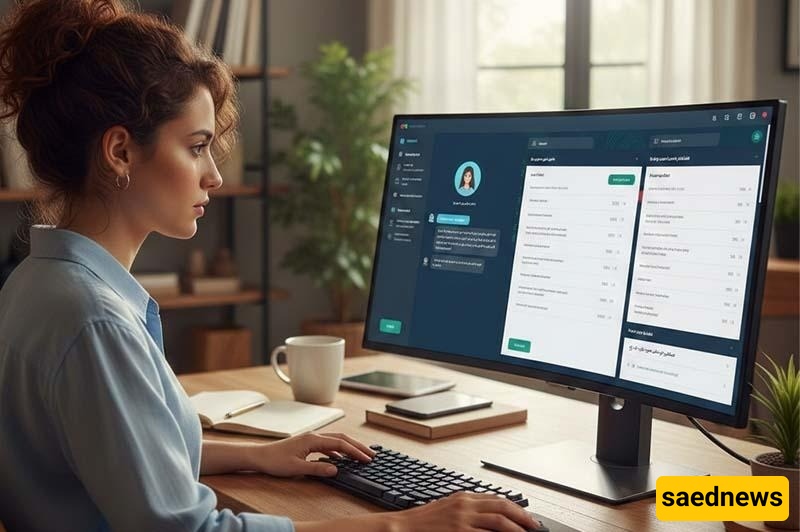
Contrary to what is sometimes assumed, AI resume builders do not just generate text. These tools usually analyze job descriptions, resume structure, and important keywords to produce output aligned with modern hiring standards.
When used correctly, an AI resume builder offers several real advantages:
Writing a professional resume can be time-consuming, especially when applying for multiple positions.
For example, if a programmer wants to apply for both Front-end Developer and Full Stack Developer roles, a single generic resume usually does not perform well. AI tools can create multiple targeted versions of a resume by making smart adjustments—something that is very time-consuming to do manually.
A significant number of resumes are never seen by humans because they fail ATS screening. AI resume builders are designed to solve this issue.
For instance, if a job description mentions “Digital Marketing and SEO,” but the resume only says “online marketing,” the chances of rejection increase. AI can detect this mismatch and suggest using more ATS-compatible terms.
Many people have valuable experience but struggle to present it properly. AI helps transform daily tasks into professional achievements.
Instead of writing:
“Managing the company’s social media”
AI may suggest:
“Managed social media channels with a focus on increasing engagement rate and audience growth.”
Same experience, but presented in a more professional way.
Even good content loses impact if it is not well structured. AI tools are typically designed based on international resume standards.
For example, if someone has extensive work experience, employment history should appear before education. AI can identify such priorities and suggest better structure.
Spelling mistakes, repetitive wording, and inconsistent tone are common issues in resumes. AI can reduce these errors before final submission.
A resume that repeats the same skill in multiple ways or uses inconsistent verbs can be standardized and improved by AI without changing its meaning.
Absolutely. Any powerful tool can produce negative results if used incorrectly. The biggest challenge with AI-generated resumes is that some users send the output without any editing. This can make the final resume too generic, similar to others, or even misaligned with the job role.
Common challenges include:
Lack of personalization for each job
Overuse of generic phrases
Mismatch between real experience and final text
The best results come when artificial intelligence and human decision-making work together. In other words, AI should create a professional structure, while you refine and personalize it based on your career goals.
More successful platforms are those that do not only generate text, but also allow editing, personalization, and step-by-step improvement. Tools like “Karli” are designed with this approach in mind, helping ensure your resume is both technically standard and reflective of your real experience.
If you want to get noticed faster, your resume must be professionally structured while still being personally accurate. Using suitable AI tools can be a smart starting point—one that, if done correctly, leads to more interviews rather than ending up in the “rejected” folder.