SAEDNEWS: Persian carpets communicate through structure as much as color. Knots, borders, materials, repetition, asymmetry, regional practice, and the choices of individual weavers all carry information. Learning to read those layers is more rewarding than searching for a single secret dictionary of symbols.
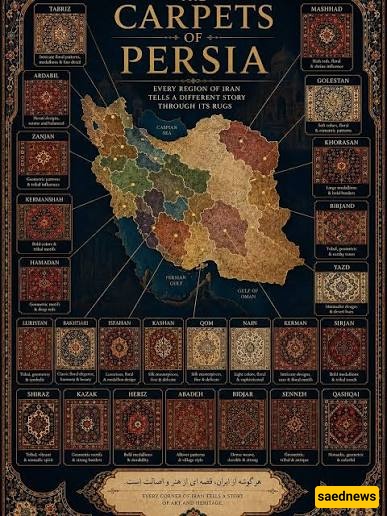
According to SAEDNEWS, Persian carpets invite interpretation. A field may be crowded with flowers, medallions, geometric forms, animals, vines, or repeating motifs, and online guides often promise that every shape has one fixed hidden meaning. The appeal is obvious: who would not want a key that turns a beautiful object into a coded message?
The reality is more complicated—and far more interesting. Carpet traditions differ across regions, workshops, periods, communities, and families. The same motif may appear in different contexts, and its meaning can shift or disappear altogether. A carpet is better approached as a material record of design, labor, technique, and local knowledge rather than a puzzle with one universal solution.
Start with construction. What forms the foundation? What fiber is used for the pile? How tightly is it woven? Is the composition organized around a central medallion, spread across a repeating field, or built from geometric bands? Borders are especially important. They do more than frame the center; they create rhythm and control how the eye moves between the edge and the main field.
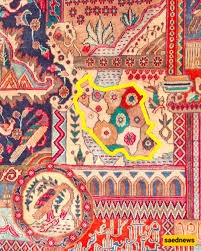
Color adds another layer. Natural and synthetic dyes, access to particular materials, workshop conventions, and later repairs can all affect appearance. A shift in tone may reveal a change in dye batch or working conditions. Wear can also alter the visual balance, softening some areas while leaving others intense.
UNESCO’s description of traditional carpet-weaving skills in Kashan emphasizes the importance of apprenticeship and family transmission. The craft includes far more than knotting. Preparing materials, dyeing, understanding patterns, finishing edges, washing, and repairing are all parts of a larger knowledge system. In many households, techniques were passed between generations through practice rather than formal written instruction.
Small irregularities deserve careful attention. They are not automatically mistakes, and they should not be romanticized without evidence. A change may reflect the weaver’s judgment, the availability of wool, a workshop decision, or the practical realities of long production. Popular stories claiming that every intentional flaw expresses religious humility are often repeated more confidently than the evidence allows.
Even the reverse side of a carpet can be revealing. It exposes knot structure and color transitions more clearly than the pile side and may help specialists understand construction or later intervention.
A Persian carpet is therefore not a frozen symbol chart. It is a layered object in which design, trade, materials, memory, craftsmanship, and individual decisions meet. The closer you look, the less it resembles a single message—and the more voices you begin to see.