SAEDNEWS: Isfahan has approximately 3,700 hectares (37 million square meters) of urban green space. With 24 square meters of green space per capita, the city ranks first among Iran’s major metropolitan areas.
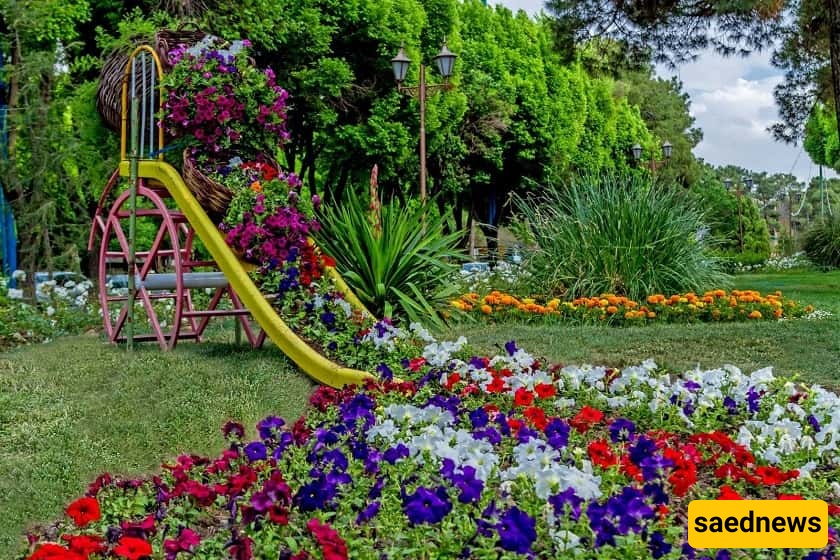
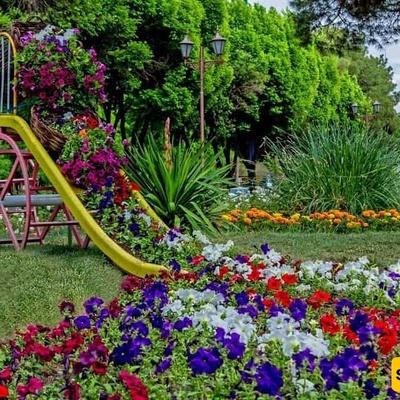
According to Saednews, Isfahan, the jewel-like blue city of Iran, shines beautifully at the heart of the Iranian plateau. Like an exquisite painting gallery and a rare pearl, the city is experiencing a new era of development, becoming even more beautiful and magnificent than in the past. Colorful flowers, lush green spaces, and attractive landscapes blend throughout its neighborhoods and mountains, bringing a fresh sense of beauty and vitality to the urban environment.
Isfahan has approximately 3,700 hectares (37 million square meters) of urban green space. With around 24 square meters of green space per capita, it has one of the highest levels among Iran's major metropolitan areas.
The green areas along the Zayandeh Rud River, commonly known as riverside parks, are among the city's most important recreational spaces.
Among Isfahan's green areas, Nazhvān Forest Park is considered one of the most distinctive. Located in western Isfahan beside the Zayandeh Rud, it combines extensive vegetation with recreational and tourist facilities.
Some of the city's major riverside and non-riverside parks include:
Riverside parks: Nazhvan, Saadi, Zayandeh Rud, Children’s Park, Mellat, Ayneh Khaneh, Abshar, Mushtaq, and Flower Garden
Non-riverside parks: Ghalamestan, Naqsh-e Jahan, Esteghlal, Fadak Garden, and Ghadir Garden
In western Isfahan, a large area of relatively natural vegetation known as Nazhvan still remains. The name is associated with the area's abundance of poplar and willow-like trees.
Covering approximately 1,200 hectares, Nazhvan is regarded as one of Isfahan's major recreational and tourist areas as well as an important green lung for the city.
Visitors can enjoy picnics, walking, cycling, volleyball, and other outdoor activities. The area also includes several attractions and recreational facilities, such as a chairlift, Bird Garden, Reptile Garden, Butterfly Garden, and ornamental Flower Garden.
There is also a children's water park in western Isfahan near the riverside road. The facility has been designed specifically for children, with a shallow play area and impact-absorbing flooring. The water is treated and disinfected for safe recreational use.
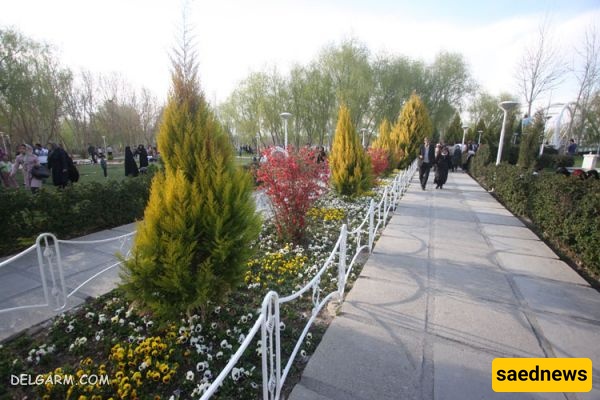
The name Nazhvan is formed from two elements: Nazh, referring to a type of poplar tree, and -van, a suffix associated with a place or location. Thus, Nazhvan can be understood as a place characterized by poplar trees.
The forest park extends along both sides of the Zayandeh Rud and is surrounded by agricultural land, gardens, and the expanding urban area.
Because of its vegetation and the presence of the river, Nazhvan has a milder climate than much of Isfahan. It can be accessed through major roads including Shahid Habibollahi Boulevard and Alfat Street, with access across the Zayandeh Rud near the Bird Garden.
Higher humidity, local breezes, and temperature differences compared with the city create favorable climatic conditions. Together with its attractive scenery, these characteristics make Nazhvan popular for walking, exercise, recreation, and spending leisure time.
Its location along the prevailing western and southwestern winds also gives it an important environmental function. Because many industrial areas are located west of Isfahan, Nazhvan acts as a natural filter for the city. For this reason, it is often described as the green lung of Isfahan, and significant changes to its natural structure could negatively affect the city's environmental conditions.
The main tourist and recreational attractions include:
Bird Garden
Butterfly Garden
Live Reptile Garden
Chairlift
Children's Water Park
The Live Reptile Garden in Nazhvan Natural Park was established in 2012 to introduce visitors to different species of reptiles.
One of its educational objectives is to explain the ecological importance of snakes, including their role in controlling agricultural and horticultural pests and the potential use of snake venom in pharmaceutical research.
The exhibition contains approximately 40 aquariums featuring Iranian and foreign snake species, both venomous and non-venomous, as well as a Komodo dragon, an Amazonian crocodile, one of Iran's largest boa skeletons, and other specimens.
The Bird Garden was established in 1996 by the Municipality of Isfahan in the Nazhvan woodland, approximately four kilometers west of Vahid Bridge. Covering more than 55,000 square meters, it is regarded as a distinctive bird facility in Iran.
The inner garden covers around 17,000 square meters and has been carefully landscaped to meet the environmental needs of the birds while creating an attractive setting for visitors.
A large overhead net, covering approximately 40,000 square meters, is supported by 16 metal columns ranging from about 25 to 32 meters in height.
The Bird Garden serves recreational, educational, scientific, and research purposes. It houses approximately 4,000 birds representing 130 species, with different habitats designed according to their natural living conditions.
For example, ponds accommodate waterfowl such as ducks and flamingos. Glass enclosures house birds that cannot naturally survive in Isfahan's climate, including various parrots and toucans. Rocky areas are provided for birds from mountainous and desert environments, such as partridges. Forest-like green spaces accommodate species such as pheasants, while metal enclosures are used for birds that cannot safely be released into the garden.
In recent years, Isfahan's green spaces have expanded through planning and efforts by the municipality and parks and green-space organizations. This development has significantly improved the city's landscape and contributed to its environmental quality.
The city's green spaces include the scenic areas along the Zayandeh Rud, local parks, mountain parks, and forested areas. Together, they contribute to the beauty, vitality, and partial purification of Isfahan's urban environment.
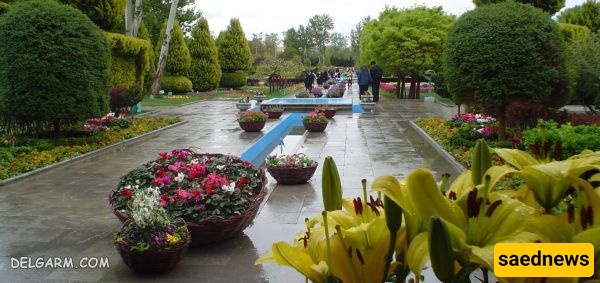
The Flower Garden is a large botanical and recreational complex containing numerous landscaped gardens. It also serves as an important link between several urban parks.
Its distinctive character comes from its combination of recreation, culture, education, and research. The garden is intended to strengthen Isfahan's tourism potential while providing students, researchers, families, and visitors with a place to learn about plants and enjoy nature.
The Zayandeh Rud Recreational Village is located beside the Zayandeh Rud Dam, approximately 15 kilometers from the reservoir.
The surrounding region offers several attractions, including Zaman Khan Bridge, historic villages, agricultural landscapes, and traditional sites. The historic home of Dr. Salehi is approximately five kilometers from the recreational village.
Other nearby attractions include the tomb associated with Kaveh the Blacksmith in Mashhad-e Kaveh and Oregan Bridge, one of the historic bridges built across the Zayandeh Rud.
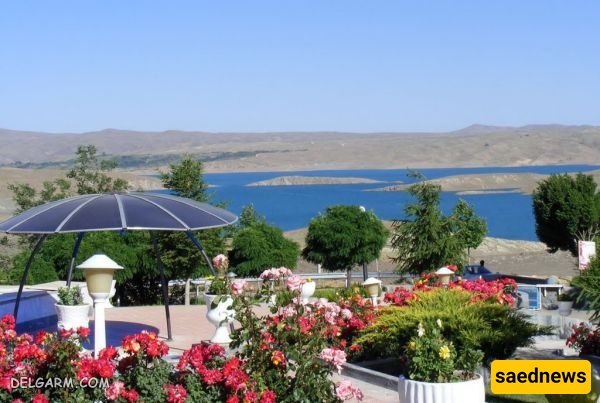
The cultural and tourist village provides facilities such as:
Boating
Indoor swimming pool
Restaurant and dining facilities
Billiards hall
Sports facilities
Carriage rides
Children's amusement area
Mosque
Other visitor amenities
Ghamishlu National Park and Wildlife Refuge is located approximately 45 kilometers northwest of Isfahan.
The national park covers about 29,886 hectares, while the wildlife refuge covers approximately 83,888 hectares. Ghamishlu is often described as one of the world's oldest protected areas.
Around 150 years ago, Zell-e Soltan, the eldest son of Naser al-Din Shah and governor of Isfahan, designated Ghamishlu as a private hunting reserve and restricted livestock grazing in the area.
In 1964, the Iranian Hunting and Nature Protection Association designated approximately 37,000 hectares as a protected area. In 1971, the adjacent Siah Kuh and Omar Kuh areas were also declared restricted hunting zones.
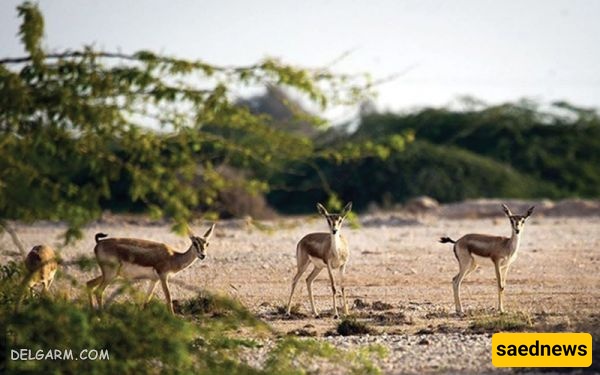
In 1995, the protected and restricted-hunting areas were combined to establish the Ghamishlu Wildlife Refuge. Finally, in 2008, three additional protected areas—Keraliyas, Kahuk, and Lasmian—were incorporated, and approximately 29,886 hectares were upgraded to national park status.
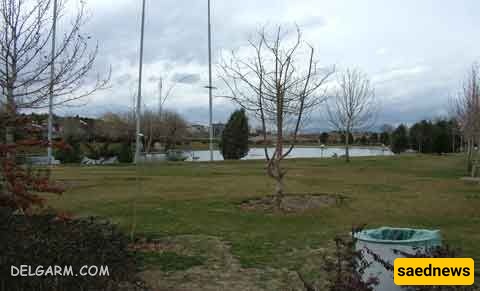
Mushtaq Park stretches along the Zayandeh Rud from Khaju Bridge toward Shahrestan Bridge. It is one of the city's major riverside green spaces.
The park is suitable for walking, jogging, exercise, and picnics. Its peaceful atmosphere makes it a popular place for relaxation and outdoor recreation.
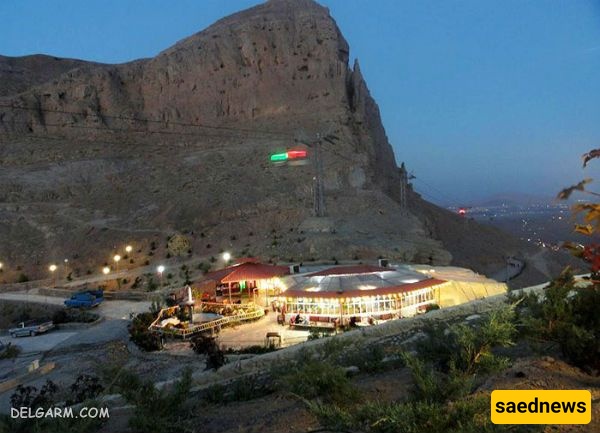
Sofeh Mountain is located close to Isfahan and offers excellent opportunities for outdoor sports because of its elevation and varied terrain.
Popular activities include:
Walking
Hill climbing
Hiking and mountaineering
Rock climbing
With the expansion of the city and the growing demand for recreational and sporting facilities, Sofeh Mountain has become increasingly important as a recreational destination.
One of its major features is the presence of large, high rock formations that provide excellent opportunities for technical climbing and rock-climbing training.
In recent years, improvements to climbing routes and the conversion of the Khachik Café into a mountaineering shelter and base have helped improve facilities for climbers.
The idea of creating the Ghadir Cultural Complex was discussed by Isfahan municipal officials between 1983 and 1990. In late 1985, following a proposal by the Isfahan Municipality, a competition was held for the design of a memorial to Allameh Amini within Ghadir Garden.
Initial designs were submitted to the municipality in March 1986. Construction of the cultural complex began several months later, and the complex was officially opened in 1993.
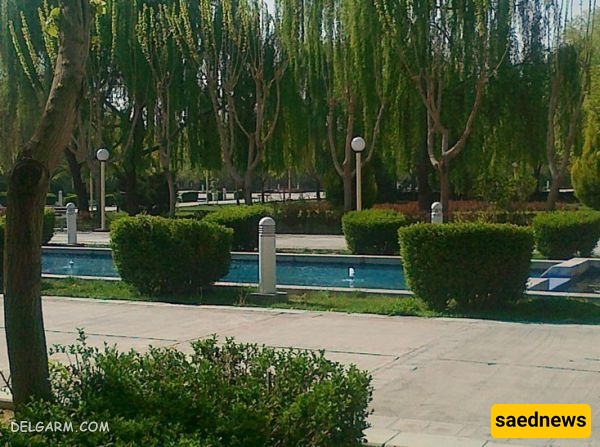
The complex was established in memory of Allameh Amini and includes the Allameh Amini Memorial Museum, which forms one of its principal components.