SAEDNEWS: The Library of Alexandria remains one of history’s greatest mysteries, not only because of what was lost, but because historians still debate how large its collection truly was and how it disappeared.
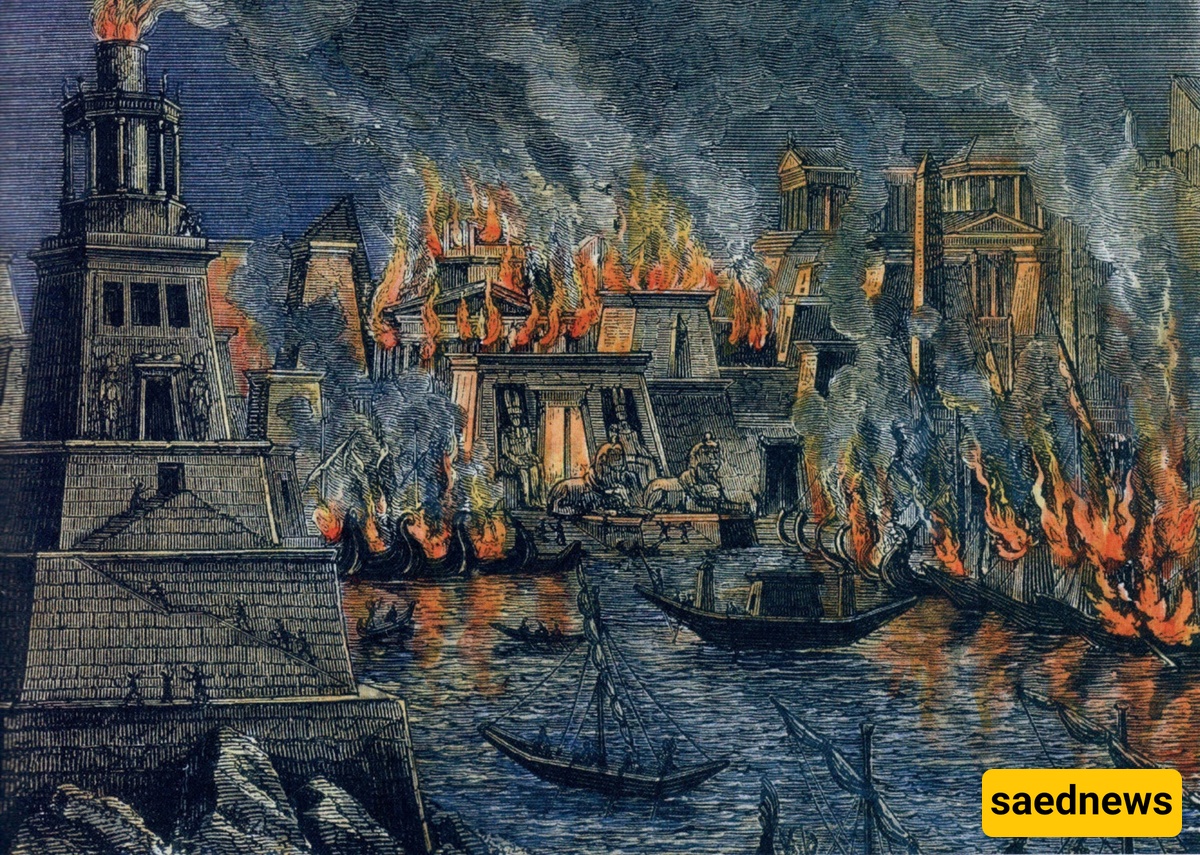
According to SaedNews, few stories from the ancient world have captured human imagination as strongly as the disappearance of the Library of Alexandria. Often described as a place where the knowledge of civilizations was gathered under one roof, the library has become a symbol of everything humanity has lost — from forgotten poems and scientific discoveries to historical records that may never be recovered.
The mystery, however, is more complicated than the famous image of a single devastating fire destroying all of ancient knowledge. Modern historians argue that the real story involved centuries of decline, political change, possible fires, and uncertainty about what parts of the collection survived.
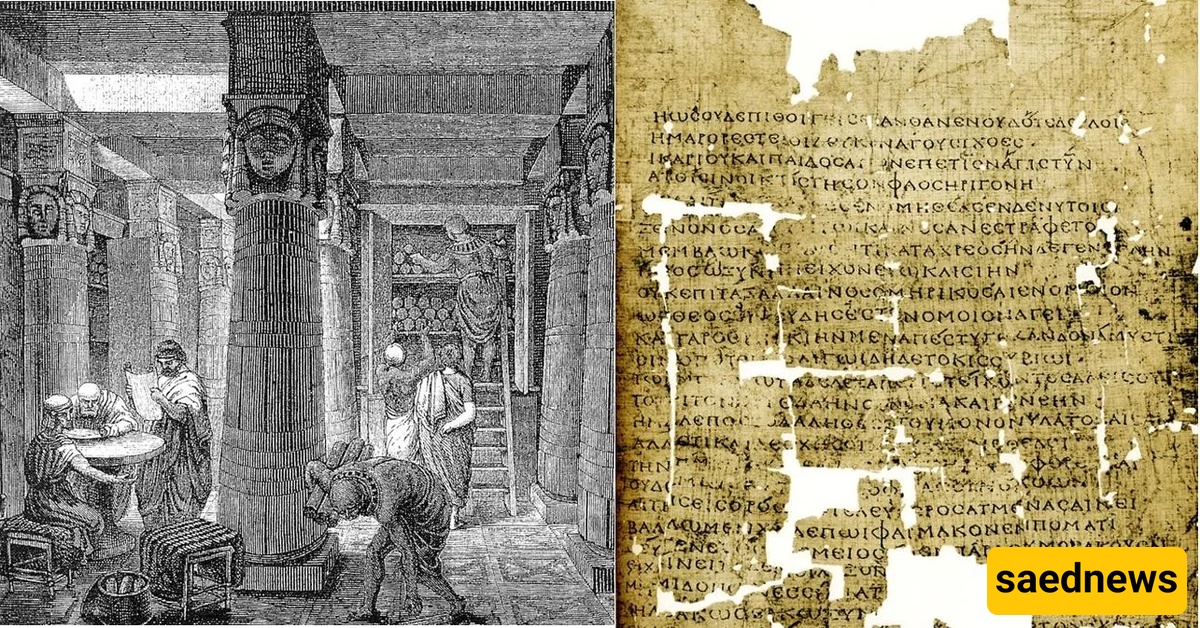
The Library of Alexandria was established in the Egyptian city of Alexandria during the Ptolemaic period, most likely in the third century BC. It was connected to the Mouseion, an institution dedicated to scholarship, research, and intellectual activity. Under the rulers of the Ptolemaic dynasty, Alexandria became a major center of learning in the ancient Mediterranean world.
Ancient accounts describe an ambitious goal: collecting writings from across the known world. The library was believed to have contained works from literature, mathematics, astronomy, medicine, philosophy, and history. Estimates of its size vary widely, with some ancient and later sources suggesting hundreds of thousands of scrolls, although historians caution that exact numbers are impossible to confirm.
Unlike modern libraries filled with printed books, Alexandria’s collection consisted mainly of papyrus scrolls. A single work could require multiple scrolls, meaning that the number of scrolls does not directly equal the number of books in today’s sense.
The most fascinating part of Alexandria’s mystery is not only the number of writings that disappeared, but the types of knowledge that may have been lost.
Ancient scholars at Alexandria worked on mathematics, astronomy, language, and literature. Researchers associated with the institution included figures such as Eratosthenes, who calculated the Earth’s circumference, and Callimachus, who created the Pinakes, an early attempt at organizing a large collection of texts.
Among the missing works could have been alternative versions of famous Greek tragedies, lost historical accounts, early scientific observations, and writings from cultures whose surviving records are extremely limited.
However, historians also warn against imagining Alexandria as a perfect archive containing every important work of the ancient world. The evidence for the library’s exact contents is incomplete, and many popular claims about its size and destruction come from later sources rather than direct records.
For centuries, the destruction of Alexandria has been linked to a dramatic story involving Julius Caesar’s campaign in Egypt in 48 BC. During the conflict, fires spread through parts of Alexandria’s harbor area, and some ancient sources reported the loss of manuscripts.
Yet historians increasingly reject the idea that one event instantly erased the entire library. Evidence suggests that damage may have occurred over time, while parts of Alexandria’s intellectual institutions continued afterward.
The decline of the library was likely connected to broader changes: political instability, reduced royal support, changing intellectual centers, and transformations in the Roman and late antique worlds. The exact sequence remains debated.
The story of Alexandria survives because it represents a deeper human fear: that knowledge can disappear.
Every lost manuscript reminds historians that the survival of ideas depends on fragile materials, political stability, and generations of people willing to preserve them. The library’s greatest legacy may not be the books that vanished, but the idea that knowledge itself is something worth protecting.
The search for Alexandria’s lost writings continues through archaeology, historical research, and the study of surviving fragments. While the missing books may never return, the mystery continues to inspire questions about what humanity once knew — and what may still be waiting to be rediscovered.