SAEDNEWS: If you use a moka pot to make coffee but over time your moka pot has become worn out, proper cleaning of the moka pot is a suitable solution that can restore it to its original, like-new condition.
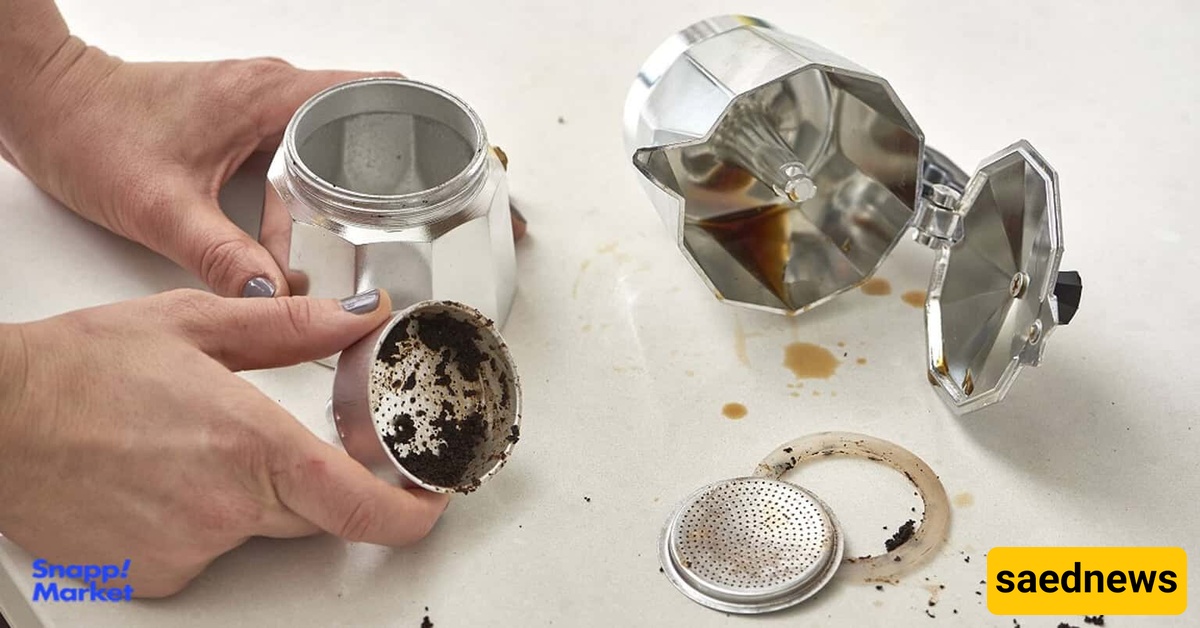
According to Saednews, If you love the taste of coffee and espresso made in a moka pot, you probably use it every day. One of the best ways to ensure your moka pot lasts a long time is to keep it clean—but how exactly should you clean it?
You can rinse your moka pot thoroughly every day after each use. However, to remove coffee residue that builds up over time, it is necessary to perform a deeper cleaning occasionally.
Generally, it is recommended to do a full deep clean once a month if you live in an area with hard water and mineral deposits. Otherwise, if you don’t use your moka pot frequently, a deep cleaning twice a year is usually enough.

If you want to clean your moka pot after each use, follow these steps:
First, empty all remaining coffee grounds. Then take the moka pot apart and place the components somewhere to air dry.
Rinse all parts under running water. Using warm or hot water is better. Clean every section carefully to remove all coffee residue.
Use a clean towel to dry all parts thoroughly. Make sure no moisture remains inside any component.

If you don’t know what to do with used coffee grounds, you can add them to plant soil as a natural fertilizer.
Avoid putting the moka pot or any of its parts in the dishwasher, as it can be too harsh and may damage it.
Do not scrub the inside with abrasive sponges, as this can cause scratches.
Water contains minerals that can enhance flavor, but over time these minerals can build up inside the moka pot, causing stains and deposits. That’s why occasional deep cleaning is necessary. Here’s how to do it:
Fill the bottom chamber with water until it reaches the safety valve level and slightly covers the filter basket area. Use more water than you normally would for brewing coffee.
Add about two tablespoons of white vinegar to the water. Apple cider vinegar or a few drops of lemon juice can also be used as alternatives.

Put the moka pot back together and let the vinegar-water solution sit inside for 2–4 hours. You can even leave it overnight. The mild acidity helps dissolve mineral buildup and remove oils without damaging the metal.
Pour out a small amount of the solution, then place the moka pot on the stove and let the remaining liquid pass through as if you were brewing coffee—but without any coffee grounds.
Once the moka pot has cooled enough to handle, discard the solution. Disassemble all parts, rinse thoroughly with hot water, and dry completely with a cloth.

Do not press coffee grounds down as you would in an espresso machine. Excess pressure can make the grounds too fine and harder to clean.
Regularly check the safety valve area, especially during cleaning, to ensure no coffee particles are stuck inside.
Do not overfill the moka pot. Always leave some space between the water level and the maximum fill line to prevent excess pressure from building up.