SAEDNEWS: This deciduous plant is native to Armenia and Southern Europe. In late spring, it produces highly fragrant white flowers, each about 3 cm in diameter.
According to Saednews,
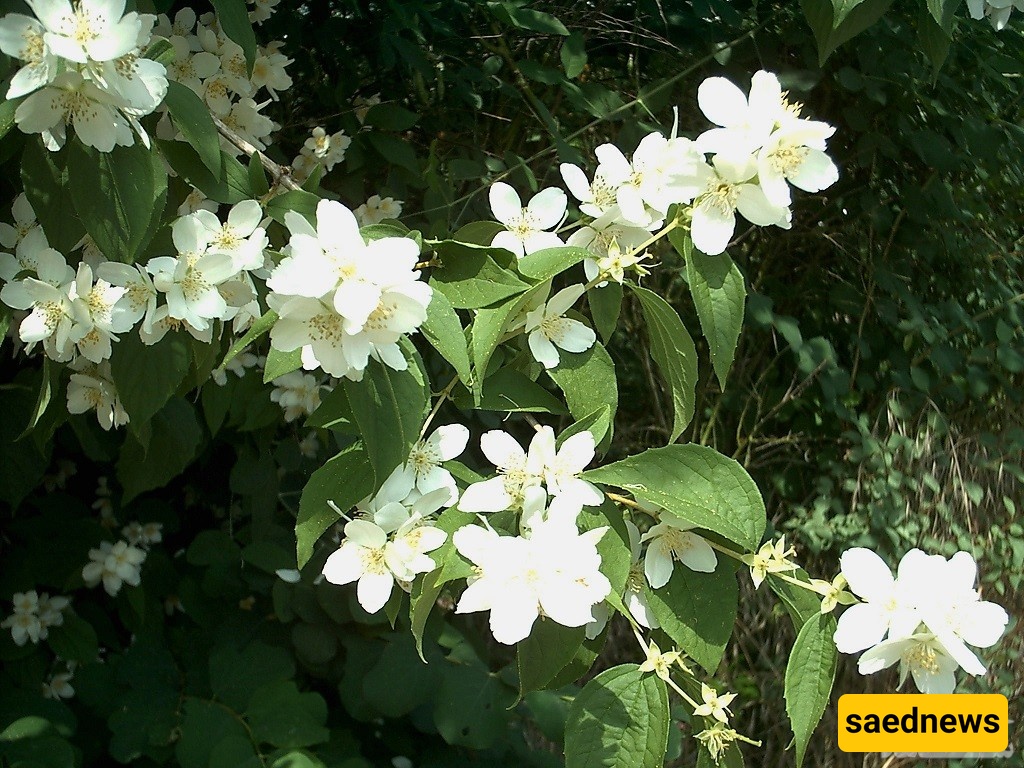
Sweet mock orange (Philadelphus coronarius) is a deciduous shrub belonging to the Hydrangeaceae family. It is native to Armenia and southern Europe and is also found in countries such as Italy and Australia. This plant is widely valued in temperate regions as an ornamental species due to its fragrant and attractive flowers.
This shrub typically grows to a height of 2.5 to 3 meters with a spread of up to 2 meters. It takes about 5 to 10 years to reach its full maturity and is considered a relatively fast-growing plant.
The leaves are light green, heart-shaped, and pointed with serrated edges. Their length ranges from 2.5 to 10 cm.
The plant produces white, cup-shaped, and highly fragrant flowers about 3 cm in diameter. Blooming occurs in late spring to early summer. The flowers are hermaphroditic (containing both male and female organs) and are pollinated by bees.
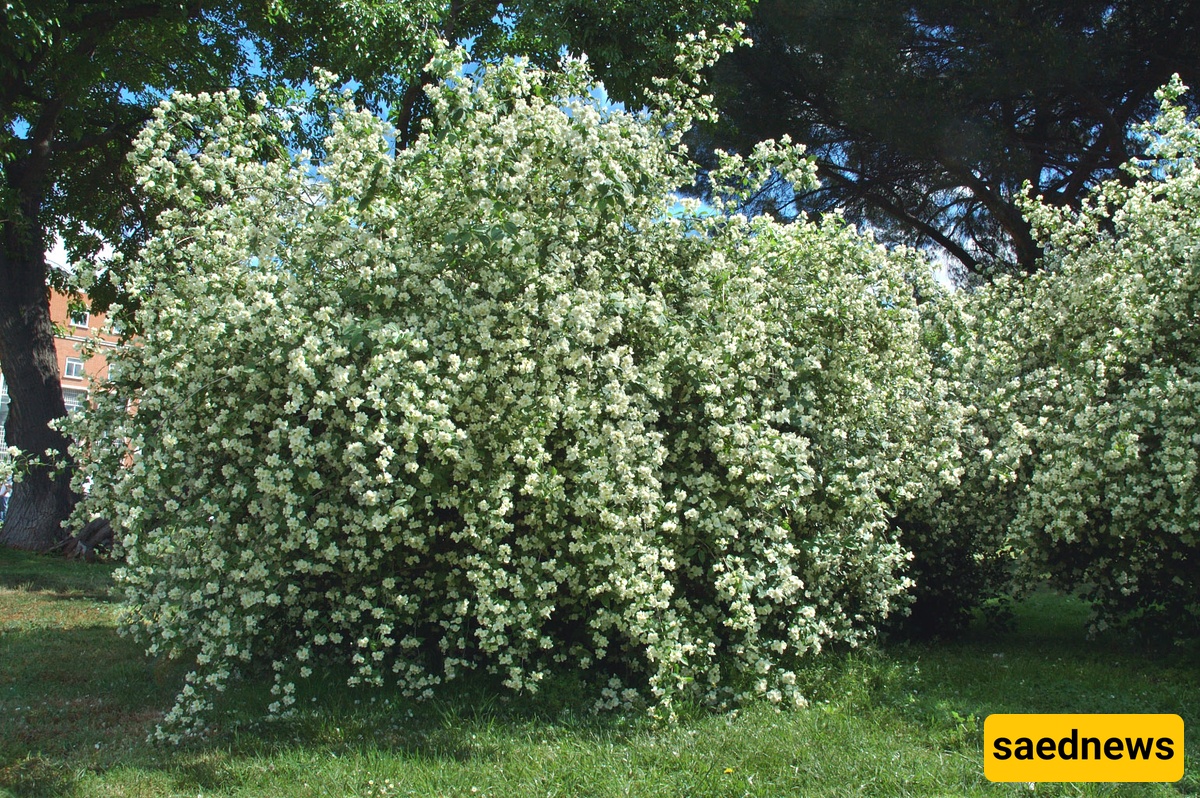
Prefers full sun for maximum flowering, but in hot summer regions partial shade is recommended
Thrives in well-drained garden soil, including sandy, loamy, or slightly calcareous soils
Tolerates temperatures from approximately -3°C to 21°C
Highly drought-resistant once established
Pruning should be done after the flowering period. Old, dry, or misshapen branches should be removed to maintain plant shape and encourage healthy growth. Additional pruning can also be carried out in summer or autumn if needed.
When healthy and well-fed, the plant is relatively resistant. However, weakened plants may be affected by pests such as aphids or diseases including canker and leaf spot.
Sweet mock orange can be propagated through:
Seed sowing in spring
Hardwood cuttings in early spring (rooted in greenhouse or frame)
Softwood cuttings in early summer
Division of suckers with roots in spring
Layering in autumn
Root cuttings
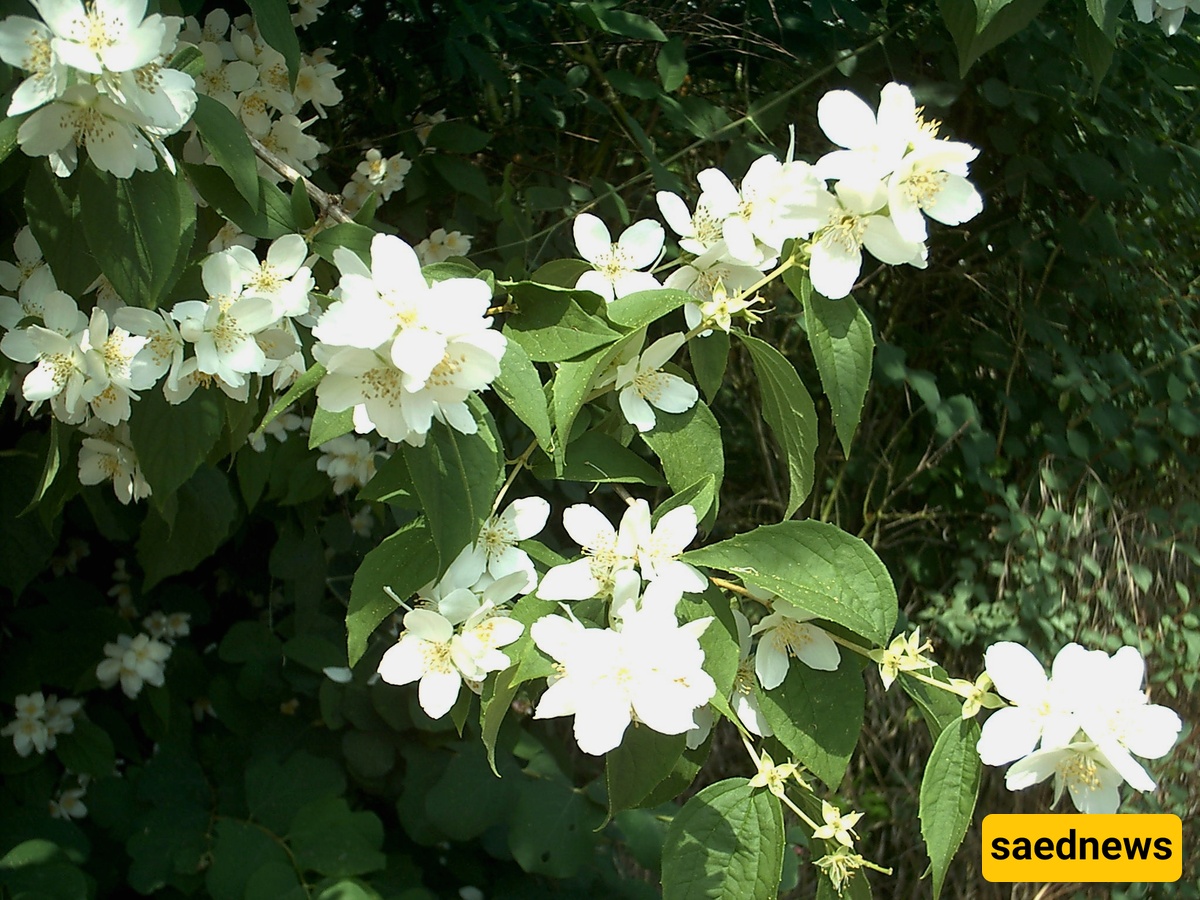
Widely used as an ornamental shrub in parks and gardens
Suitable for hedges and natural boundary planting
Ideal for mixed borders and background planting for seasonal flowers
Its strong fragrance makes it popular in landscape design
The plant’s leaves contain saponins, which produce foam when crushed in water. This gives them mild soap-like properties and allows traditional use as a gentle natural cleaner or for polishing wood and dusting.
Performs best in sunny to semi-sunny locations
Requires moderate watering with good drainage
Regular pruning improves flowering and plant shape
Highly valued for its abundant, fragrant white blossoms in late spring