SAEDNEWS: What Does mAh Mean in a Smartphone Battery?

According to Saednews, If you have ever planned to buy a smartphone, tablet, power bank, or even a smartwatch, you have probably come across a number called milliampere-hour (mAh). This number is often the first thing users look at when judging a battery’s capability. But what does milliampere-hour actually mean? Does a higher number always mean a better battery? And what exactly does this measurement represent?
In this article, we will explain the concept of mAh in a simple and practical way so that after reading it, you can compare and choose digital devices more intelligently based on their battery specifications.
Milliampere-hour is a unit used to measure battery capacity. Simply put, this number indicates how much electrical energy a battery can store and deliver to a device over time.
To understand it better, we first need to know:
Ampere (A) is the unit used to measure electric current.
Milliampere (mA) equals one-thousandth of an ampere.
When “hour” is added, the measurement also includes the element of time.
Therefore, milliampere-hour shows how long a battery can provide a specific amount of electrical current.
Imagine a battery with a capacity of 3000mAh. This means it can:
Provide 3000 milliamps of current for 1 hour
Provide 1000 milliamps for 3 hours
Provide 500 milliamps for 6 hours
The lower the device’s power consumption, the longer the battery will last. This is why two smartphones with batteries of the same capacity can have completely different battery life.
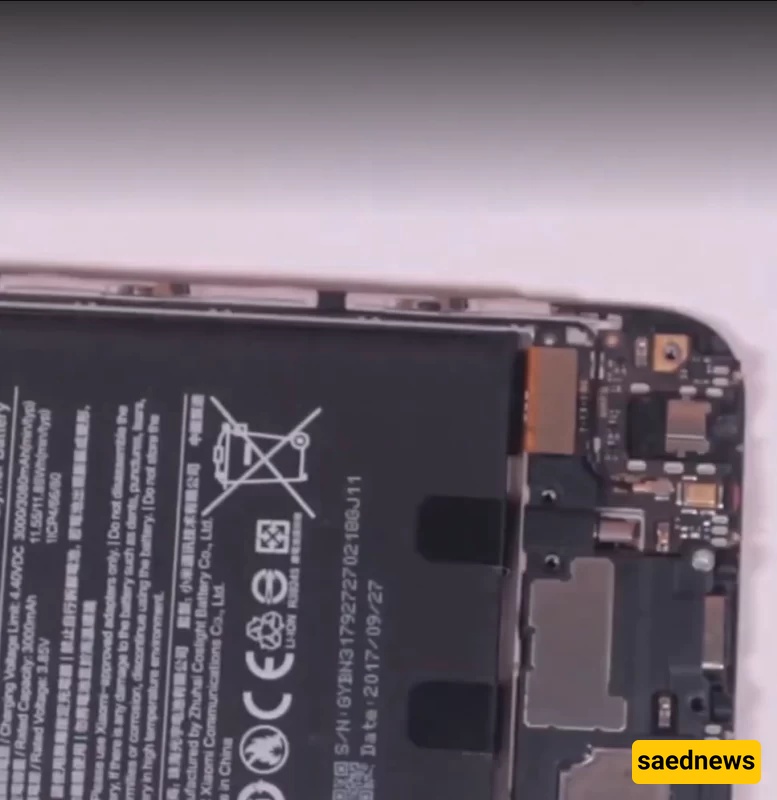
This is a common misunderstanding. mAh does not indicate battery power; it represents battery capacity.
Battery performance, charging speed, and discharge rate depend on other factors, including:
Battery voltage
Battery cell type (lithium-ion or lithium-polymer)
Operating system power management
Processor and display efficiency
In reality, mAh only tells you how much energy is stored, not how that energy is used or how quickly it is consumed.
Every device has different energy requirements. For example:
Smaller or budget smartphones usually have batteries between 4000mAh and 4500mAh.
Larger, gaming, or flagship smartphones often come with 5000mAh or higher capacity batteries.
Tablets usually have larger batteries because they use bigger displays.
Manufacturers try to balance smartphone size, weight, energy consumption, and battery capacity.
A higher mAh number alone does not guarantee excellent battery life. Actual battery performance depends on a combination of factors, such as:
Processor efficiency
Display refresh rate
Screen brightness
Use of mobile data, GPS, and gaming
Software optimization
For this reason, a smartphone with a 4500mAh battery may sometimes last longer than another phone with a 5000mAh battery.
In most cases, yes, but there are some considerations:
Higher-capacity batteries are usually heavier.
They may take longer to charge.
Poor power management can prevent the device from making full use of the extra capacity.
A large battery capacity is most valuable when combined with efficient hardware and optimized software.
When a smartphone battery is described as 5000mAh, it means the battery can store a specific amount of electrical energy and gradually provide it to the phone.
In simple terms, a 5000mAh battery can:
Supply 5000 milliamps of current for one hour
Or provide a lower current level for several hours
The lower the phone’s power consumption, the longer this stored energy can last.
Therefore, the 5000mAh figure represents energy storage capacity, not charging speed or overall phone performance.
Sometimes batteries are labeled with Wh (watt-hour) instead of mAh. Watt-hour is a more accurate measurement for comparing batteries because it also takes voltage into account.
However, in the smartphone market, mAh is more commonly used and easier for consumers to understand.
Milliampere-hour (mAh) is a measurement that shows how much energy a battery can store and how long it can potentially power a device. A higher mAh rating generally means longer battery life under similar conditions, but it is not the only factor that determines battery quality.
To make a smarter purchase decision, you should consider battery capacity along with power consumption, usage habits, hardware efficiency, and software optimization.
When all these factors work together, the true meaning and importance of mAh become clear.