SAEDNEWS: Crinum, commonly known as the spider lily, belongs to the family Amaryllidaceae. The genus includes around 180 identified species to date. Most of these plants produce striking flowers on leafless stems, giving them a distinctive and elegant appearance.
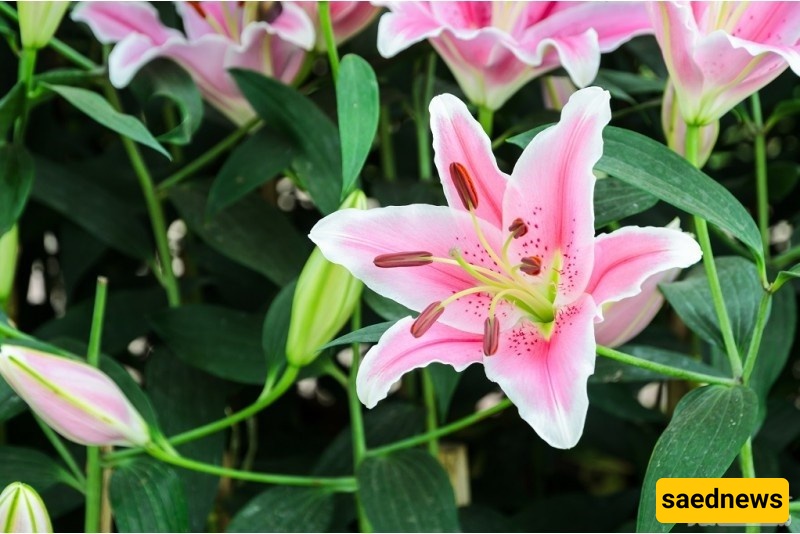
In lily bulbs, there are two types of scales: outer scales and inner scales. The outer scales are the inner scales of the previous year, while they enclose the inner scales of the current year. The inner scales are formed from a new and active meristem located near the old flowering stem and at the base of the innermost scale.
This lateral meristem becomes dominant and produces scales that enlarge and eventually form the inner scales of the following year. The apical meristem is surrounded by new scales at the upper part of the basal plate. From around July, when leaves begin to form, the scales are pushed aside. Leaf formation in greenhouse conditions continues until early February, when flower buds are initiated.
Each year during flowering, in the axil of the inner scales, a bud becomes active and develops a new apical meristem. This meristem first produces new scales that grow and increase bulb size. Then it produces leaves (vegetative growth phase), followed by the formation of the flowering shoot apex (reproductive phase). This cycle repeats after flowering.
In some lily species, roots form at the base of the bulb, while in others they also develop on the stem just above the bulb.
Lilies usually flower in summer, although some species bloom earlier in spring. By applying forcing techniques, flowering time can be adjusted so that it coincides with Nowruz (Persian New Year). For this purpose, bulbs should be planted in greenhouses during December and January.
In colder regions, lilies are grown in pots and transplanted outdoors in spring.
Temperature is a key factor in lily production, and the thermal requirements at different stages are as follows:
Rooting stage: Plant unchilled bulbs in moist peat and keep them at 16–17°C for root development.
Cold treatment (vernalization): Maintain bulbs at 2–7°C for 6 weeks to induce flowering. Temperatures above 21°C during this stage may cause abnormal development, reducing flower bud formation and delaying flowering.
Shoot emergence stage: Increase substrate temperature to 16–17°C, leading to shoot emergence and floral initiation. Growth can be controlled by temperature after this stage.
Flower development stage: Maintain 16–19°C to accelerate flowering and leaf expansion. Temperatures above 24°C may slightly speed up flowering but can cause bud blast (death of developing flower buds).
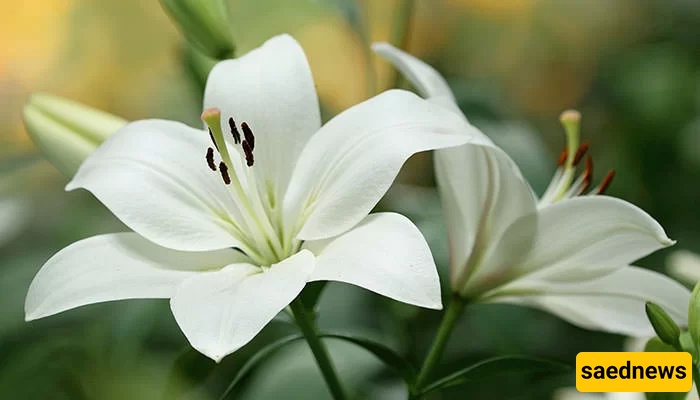
Lily growth and flowering are strongly influenced by the temperature conditions after bulb planting, as well as field conditions before harvesting. If bulbs are stored at 3°C for 4–6 weeks after planting, flowering occurs in the shortest possible time. However, this may result in smaller flowers, fewer leaves, and reduced plant height.
With 6 weeks of cold treatment, the period from planting to flowering can be reduced to less than 120 days at a greenhouse temperature of 15°C.
Instead of cold treatment, a light treatment can be used: 4 hours of night lighting (10 PM to 2 AM) at 378 lux for 6 weeks under temperatures below 22°C.
For Nowruz production, bulbs should be kept at around 20°C between lifting and storage for chilling.
In practice, bulbs can be planted in pots and kept in cold frames in early autumn. As temperatures drop in late December, they are transferred to cool greenhouses at 15°C. This allows natural chilling.
If growth is too slow, nighttime greenhouse temperature can be raised to 20°C in February and March. If plants are too advanced (buds appear too early), they can be stored in cold conditions until flowering time.
Maximum light intensity is required in greenhouse production. Insufficient light leads to elongated stems, fewer flowers, and yellowing of lower leaves.
Photoperiod does not directly affect flowering, but long days increase plant height and biomass. Artificial light is not essential for flowering regulation but can be used to adjust plant height. If early flowering is desired, day length can be extended at least 6 weeks before flowering.
Soil should be well-aerated with a slightly acidic to neutral pH. Alkaline conditions produce weak, short plants and may cause pale leaves, reduced flowering, leaf tip burn, and root discoloration.
Phosphorus management is important: excess phosphorus causes leaf burn, while deficiency reduces flower bud formation.
Soil must remain consistently moist, but overwatering—especially during low-light periods—should be avoided.
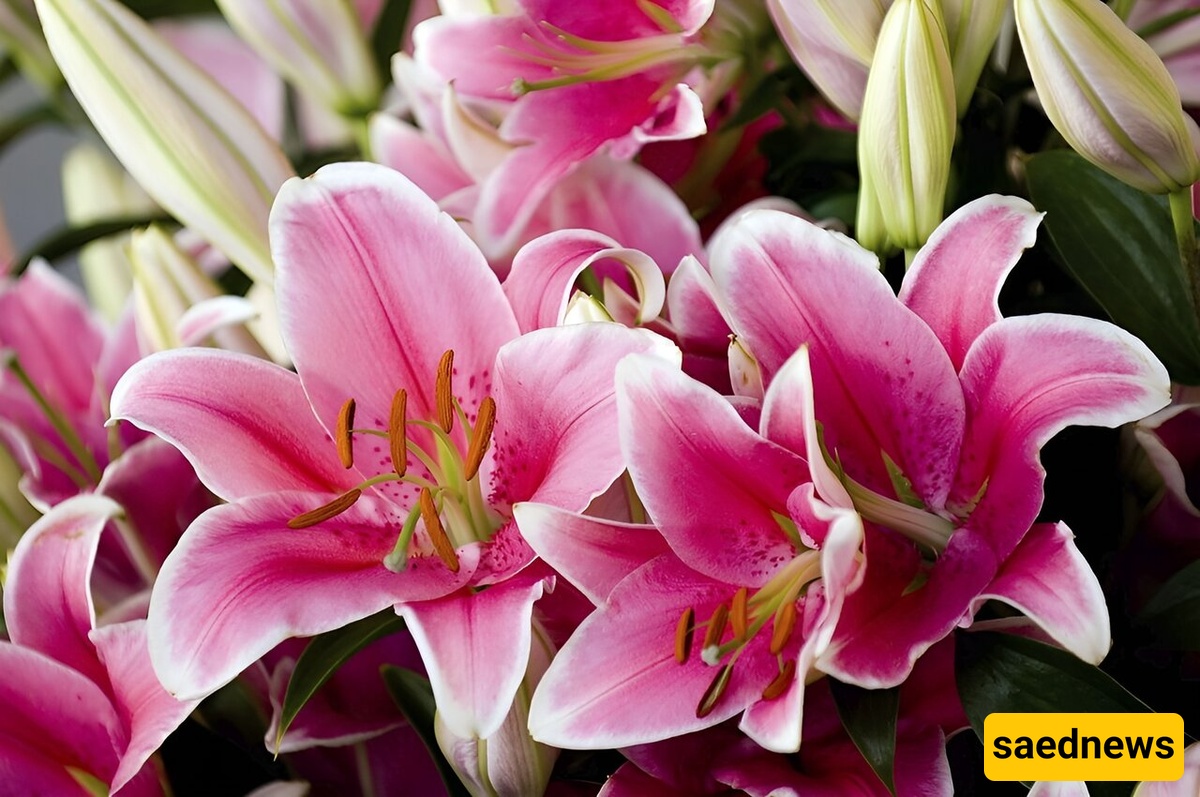
For cut flower production, staking is necessary. Wire mesh systems are commonly used, similar to carnation production. As plants grow, additional layers of mesh are added. Each mesh opening supports stems and prevents bending.
Lilies can be propagated through scale division, bulblets, and bulbils (in some species). Bulbils are small bulbs formed in leaf axils.
Planting time for white lilies is late summer to early autumn. Bulbs should not be planted deeper than 5 cm, although in species with stem-rooting ability, slightly deeper planting may be required.