Saed News: Al Jazeera network reported that Arab countries have incurred $190 billion in losses as a result of the Iran war, adding that the war has led to the loss of 3.5 million jobs.
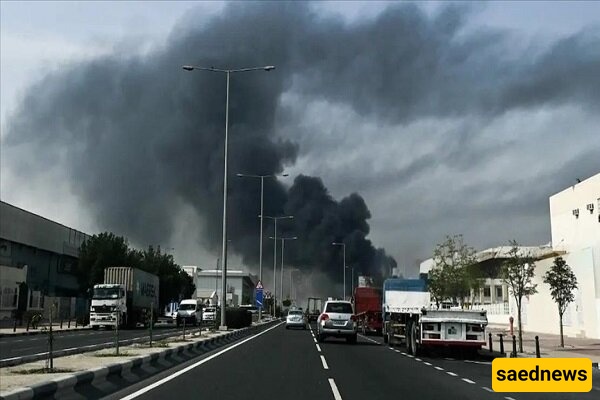
According to SAEDNEWS, the global economy in 2026, amid escalating geopolitical tensions resulting from the Iran war, the closure of the Strait of Hormuz, and Donald Trump’s customs tariffs, is heading toward a deep recession that threatens people’s livelihoods and the stability of Arab countries.
World Bank growth forecasts under current conditions have been reduced to 2.6%, making this decade the weakest period of global economic growth since the 1960s, while growth in the Middle East and North Africa is expected to reach around 1.1% during the same period.
The Iran war and the closure of the Strait of Hormuz led to a more than 50% surge in oil prices. Arab Gulf countries had lost $15 billion in energy revenues by mid-March and were suffering daily losses exceeding $2 billion.
Al Jazeera reported that estimates suggest Arab countries will suffer $190 billion in losses. Meanwhile, the United Nations has warned of the loss of 3.5 million jobs, 4 million Arabic speakers being pushed toward the poverty line, and another 45 million people worldwide being on the brink of severe hunger.
All of this is occurring alongside global debt inflation reaching $348 trillion (three times the size of the global economy). In addition, the widening wealth gap has reached an uncontrollable level, with just 1% of the world’s wealthy controlling over $33.9 trillion. In Arab countries as well, only three Arab individuals possess more than $26 billion in combined wealth, which exceeds the total wealth of 222 million Arab citizens.
Hashem Al-Sayed, an economic expert and analyst, explained to Al Jazeera that these structural anomalies are not momentary but the result of successive failures beginning with World Wars I and II and extending to the COVID-19 pandemic.
Al-Sayed added that dollar dominance has weakened national currencies and made emerging economies fragile. The ongoing war has also dried up market inflows, expanding the crisis from oil and gas to fertilizer and helium gas sectors, which supply semiconductor materials, thereby threatening the global agricultural cycle and triggering a severe food crisis.
On the other hand, economic advisor Tony Nash believes that 2025 marked the transition from inflation crisis to debt crisis due to rising interest rates and tightening credit conditions. According to Nash, central banks in countries such as Egypt and Jordan are under immense pressure as they struggle to manage heavy debt burdens and purchase extremely expensive dollars for importing already overpriced goods.
Al-Sayed emphasized that Qatar and Kuwait have also suffered the most in operational and budget costs due to the suspension of port activities and damage to infrastructure. However, despite the deep shock, they have maintained stable credit ratings from Fitch and Moody’s due to their sovereign wealth funds and GDP strength.
Meanwhile, U.S. President Donald Trump’s tariff policies, ranging from 10% to 42%, have further deepened global system anomalies. As a result, $22 billion in non-oil exports from Arab countries is now at risk.