SAEDNEWS: China has entered a new era of the “body internet” by deploying palm-based payment technology in subways and retail stores. This contactless biometric system scans the veins in a person’s hand, eliminating the need for cards or mobile phones and taking payment security to a new level.
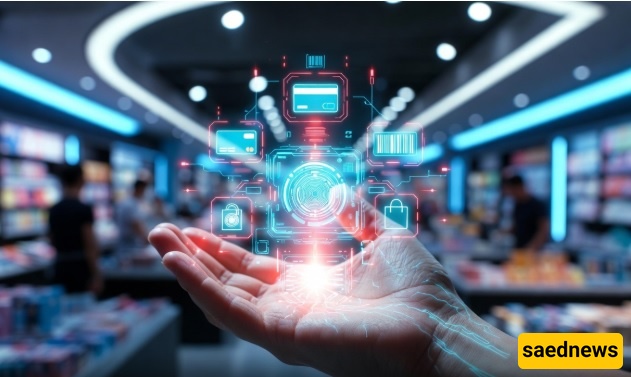
According to Saerdnews science and technology news service report, China’s payment and authentication systems have long been ahead of much of the world, and now “palm recognition technology” has taken center stage. In a recent video, Beijing subway stations are shown equipped with advanced biometric scanners that allow passengers to simply hold their hand over a sensor—without any physical contact—to open gates.
The system, also known as “WePalm,” works by mapping the unique veins and lines of the palm, delivering both high security and fast processing. It removes the need for physical cards or even smartphones at the point of entry.
This technology is part of a broader “Internet of Bodies” (IoB) ecosystem and is expected to extend far beyond public transportation, rapidly entering retail stores, offices, and service centers. While the innovation significantly streamlines user experience, it has also sparked widespread debate over privacy and biometric data security. Nevertheless, China continues moving quickly toward a future where the human body itself functions as a wallet and a universal access key to urban services.