SAEDNEWS: Despite ongoing problems, political and security challenges, internal resistance in both countries, and interference by some regional actors, the current moment appears to be the best opportunity to remove the shadow of war and sanctions through negotiation and reach a stable, comprehensive, and unconditional political agreement.
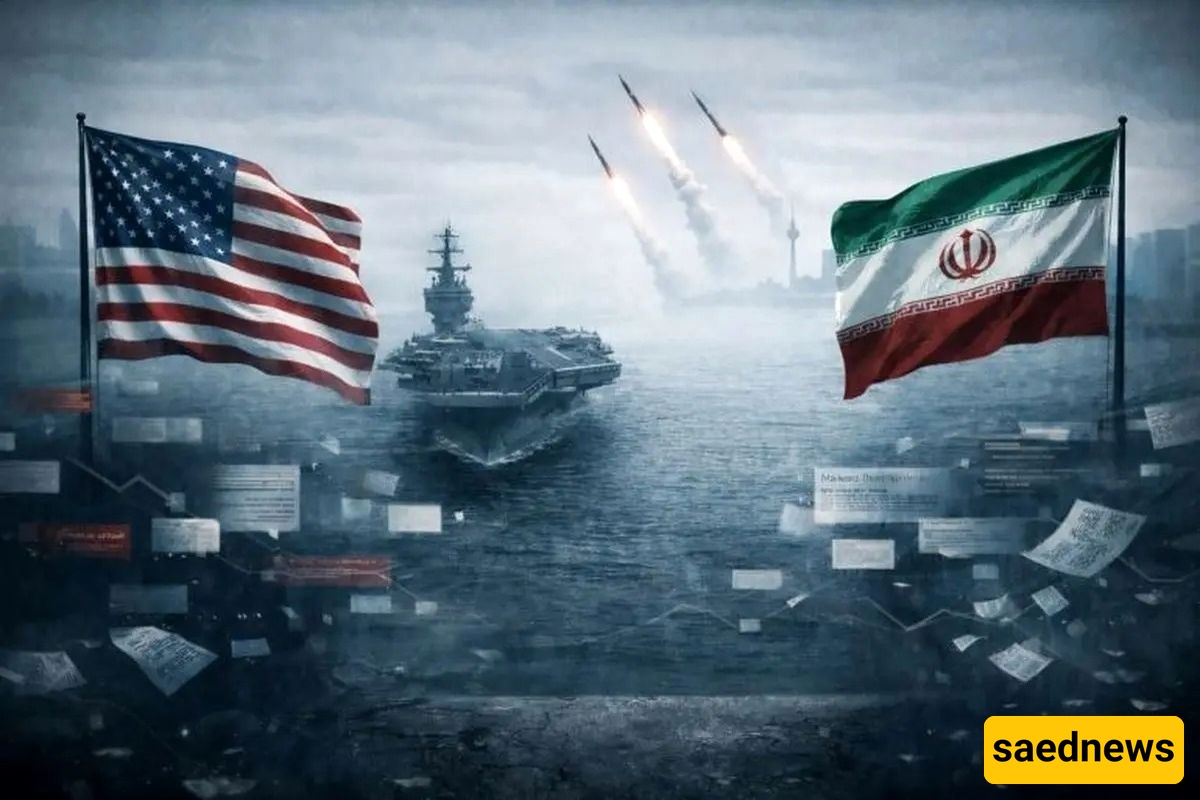
According to a report from the Politics Service of Saed News, quoting Shargh, large-scale and impactful economic sanctions have been imposed on Iran for more than three decades. During this period, Iranians have endured the hardships and suffering caused by these sanctions, along with the hope that they would eventually be lifted and lead to relief and economic opening. However, over time, not only have the sanctions not been reduced, but since 1403 (2024–2025), a more severe phenomenon—war—has gradually been imposed on Iran and its people. Within less than a year, Iran has experienced two full-scale wars lasting 12 and 40 days respectively.
In the final days of Farvardin 1405 (April 2026), although a ceasefire has been established and extensive regional and international efforts are underway to end the conflict, the reality is that the shadow of both war and sanctions simultaneously hangs over Iran, with no clear outlook for resolving this situation. This condition, in addition to causing widespread uncertainty and preventing proper planning—especially in the economic sector—has threatened Iran’s economic, social, and political resilience. This threat is not limited to the present or the current generation; it may also affect the livelihoods of future generations and, more broadly, Iran’s territorial integrity and the future structure of its economy, society, and political system.
A two-week ceasefire has created another opportunity for diplomacy and negotiations to end the war. Although the first round of talks in Islamabad, Pakistan, failed, it appears that given the willingness of the parties to end the conflict at this stage, and with efforts from some regional countries including Pakistan—despite Israel’s opposition and the reluctance of some Gulf countries—the chances of negotiation and agreement are relatively high.
However, if no agreement is reached, the likelihood of a resumption of war in at least a six-month timeframe is considered low, partly due to the upcoming FIFA World Cup in the United States in June and the approaching U.S. midterm elections, which are politically significant for Donald Trump and his team.
This situation once again places the region in a dangerous and concerning “neither war nor peace” condition—an unstable state in which governments, businesses, and economic actors lose the ability to plan and implement policies. This leads to severe uncertainty and primarily creates the conditions for another future conflict.
Given this, Iran’s key priority should be to move as quickly as possible out of this “neither war nor peace” situation and toward a final, stable agreement. Such an agreement would not only lift all sanctions and economic and trade restrictions but also minimize the possibility of future wars or attacks against the country.
The reality is that Iran’s wars with the United States and Israel—based on the two previous conflicts—are likely to become longer, more intense, more costly, and more destructive. These endless wars would ultimately only further weaken the country.
Therefore, Iran’s political system must use all available tools to prevent the realization of a scenario that is desirable for many regional countries and Iran’s adversaries. Despite existing political and security challenges, internal resistance in Iran and the United States, and interference from some regional actors, the current moment appears to be the best opportunity to lift the shadow of war and sanctions through negotiation and a comprehensive, lasting, and unconditional political agreement.
Negotiations aimed at merely maintaining a ceasefire or reaching a weak and incomplete agreement would be the worst-case scenario for Iran. While Trump and his team in the United States might be satisfied with a partial or limited deal—especially due to domestic political considerations such as the World Cup and upcoming elections—such an outcome, combined with the influence of Netanyahu in Israel and certain regional actors, would only pave the way for another, broader military confrontation in the near future.
At present, Iran should either avoid negotiations altogether or, if it enters talks, should not accept anything less than a comprehensive, stable, and unconditional agreement that permanently removes the shadow of war and prevents future aggression. The outcome of the 40-day war is such that Iran did not emerge defeated, which has strengthened its confidence to negotiate from a position of power, particularly with strategic leverage such as control over the Strait of Hormuz.
At the same time, neither the United States nor Israel perceives themselves as victorious in this conflict. Despite their display of military strength, they failed to achieve their objectives. Under these conditions, Iran should pursue a comprehensive, lasting, and unconditional agreement that permanently eliminates the justification for economic, military, or security threats.
Such an agreement should not be limited to nuclear or military issues, but should be a truly comprehensive framework covering nuclear, military, economic, and political dimensions. It would effectively end conventional military and economic threats against Iran and transform Iran–U.S. relations into a state of lasting peace and non-hostility. This would also significantly reduce the possibility of regional exploitation or aggression against Iran, strengthen its political, security, and economic position at both regional and international levels through its geopolitical and geoeconomic advantages, and help accelerate the country’s transition toward development.