SAEDNEWS: The great earthen domes known as yakhchals could keep winter ice available deep into the hot season. Their secret was not one miraculous material, but a carefully coordinated system of shade, night cooling, insulation, evaporation, drainage, and underground storage.
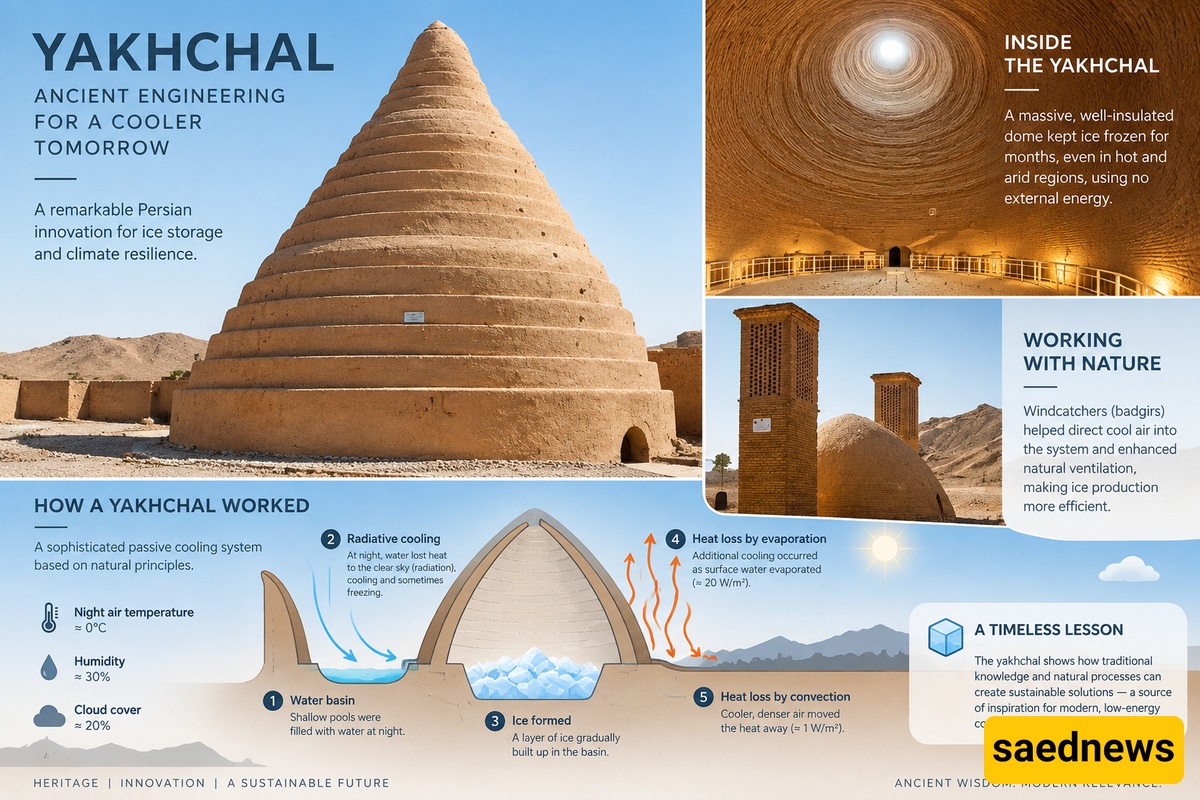
According to SAEDNEWS,The question sounds almost impossible: how could people keep ice through a fierce desert summer centuries before electric refrigeration? In Iran, the answer took the form of the yakhchal, an ingenious seasonal cooling system whose name literally refers to an “ice pit.” From a distance, many yakhchals look like enormous mud-brick domes rising out of an arid landscape. The real engineering, however, becomes clearer when the entire system is considered rather than the dome alone.
Some yakhchal complexes used shallow freezing pools built beside high walls. During suitable cold, clear winter nights, those walls shaded the water while the open sky allowed heat to radiate away. Under the right conditions, a thin layer of ice could form. Workers then broke the ice, carried it into a deep storage chamber, and packed it in layers. Other yakhchals mainly stored ice transported from colder places, so there was no single universal design. What united them was the same basic idea: collect cold when the climate offered it, then slow down the return of heat for as long as possible.
The storage chamber itself did much of the hard work. It was often sunk partly below ground, where surrounding soil helped moderate temperature swings. Thick earthen walls slowed heat transfer, while the tall conical dome reduced direct exposure and enclosed a large volume without requiring a wide roof. Meltwater was guided away through drainage channels because standing water would speed further melting. In dry conditions, evaporation could also contribute a small but useful cooling effect.
The yakhchal was therefore less like a primitive refrigerator and more like a carefully managed thermal battery. Its builders used architecture, timing, climate, and maintenance together. The system depended on seasonal knowledge: when nights were cold enough, where shade would fall, how much ice could be collected, and how the chamber should be packed and drained.
Just as importantly, yakhchals were social infrastructure. Producing and storing ice required labor. Someone had to maintain the walls and chamber, move the ice, manage access, and distribute the stored supply during warmer months. Ice could cool drinks and food and was also associated with frozen refreshments and desserts. The technology only worked because a community organized around it.
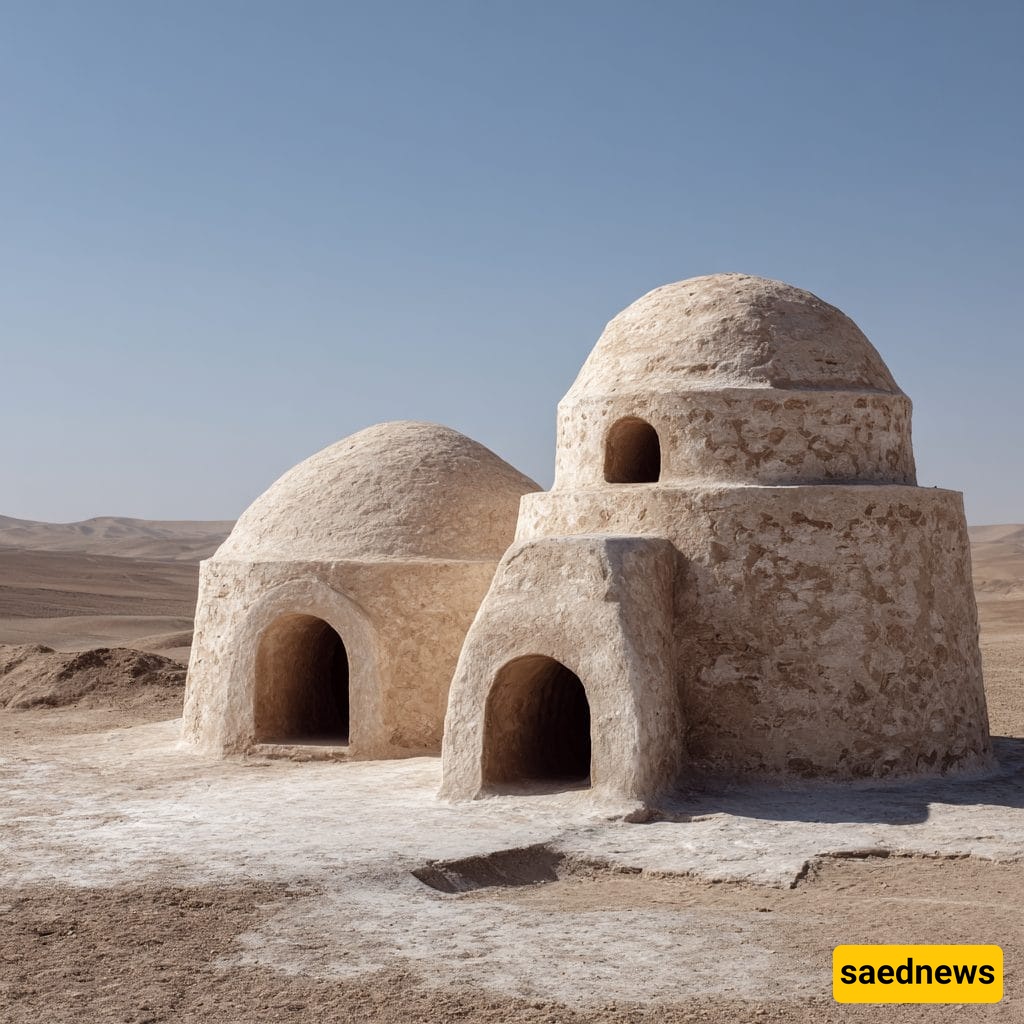
Modern researchers still study yakhchals because they demonstrate a principle that feels surprisingly current: before adding mechanical cooling, reduce heat gain as much as possible. A yakhchal cannot simply replace a modern refrigerator—food safety, humidity control, urban density, and modern comfort standards are very different—but its logic remains powerful. It shows how much can be achieved when a building works with the climate instead of fighting it at every moment.

The true wonder is not that an earthen dome somehow “made cold.” It is that generations of builders learned how to capture winter, store it underground, and release its benefits slowly when summer arrived.