SAEDNEWS: If you’re looking for a healthy, natural, and budget-friendly protein supplement, homemade whey protein can be an excellent choice. In this article, you’ll learn two practical methods for making protein powder and extracting liquid whey from milk.
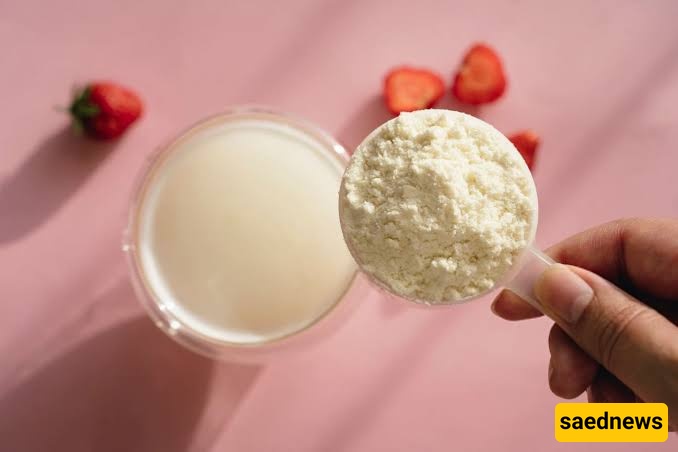
According to Saednews, Whey protein is essentially whey—the liquid separated from milk during cheese production. This clear, yellowish liquid is rich in soluble proteins and contains a complete range of essential amino acids. For this reason, whey protein supplements are widely popular around the world in concentrate, isolate, and hydrolyzed forms.
Some of the main benefits associated with whey protein include supporting immune function, increasing feelings of fullness, helping with body-fat management, and supporting lean muscle growth. With the methods in this guide, you can prepare a natural protein source at home while having greater control over the ingredients you use.
This is one of the most practical ways to prepare a protein-rich powder at home. In this recipe, the animal protein from milk powder is combined with plant-based protein from nuts and seeds to create a nutritious and flavorful powder. Adding oats also provides complex carbohydrates and fiber that can help supply energy during exercise.

Low-fat milk powder: 2 cups (about 200 grams)
Blanched almonds: 1 cup
Raw peanuts: ½ cup
Roasted soybeans or wheat: 1 cup (optional)
Pumpkin seeds: ½ cup
Chia seeds: 3 tablespoons
Rolled oats: 1 cup
Cocoa powder, for flavor: 2 tablespoons (optional)
First, separately toast the almonds, peanuts, and oats in a nonstick pan over low heat until they become fragrant. Toasting can improve the flavor of the final powder and may make the ingredients easier to digest.
Be careful not to use high heat or burn the ingredients. Once toasted, allow them to cool completely.
Place the cooled ingredients in a high-powered blender along with the pumpkin seeds and chia seeds. Pulse several times until everything becomes a fine, even powder.
If your blender is not very powerful, grind the ingredients in batches. The goal is to achieve a smooth powder without large pieces.
In a large bowl, thoroughly combine the milk powder with the ground mixture. Add the cocoa powder and mix well until its color and aroma are evenly distributed throughout the powder.
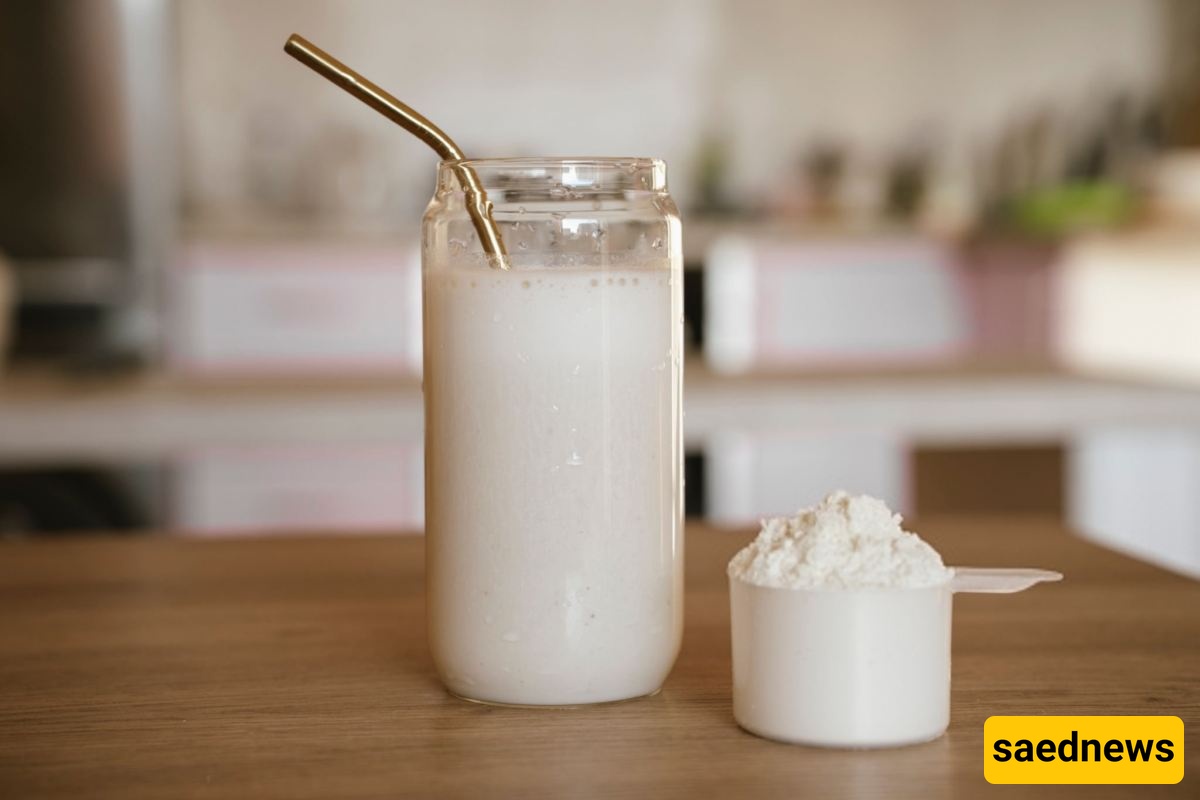
Store the homemade protein powder in an airtight glass container or a resealable bag. According to the original recipe, the mixture can be kept for up to 10 days at room temperature or for up to one month in the refrigerator.
When ready to use, mix one scoop (25–30 grams) with water or low-fat milk.
There are several whole-food options that can serve as natural alternatives to protein powder and help provide the nutrients needed to support muscle maintenance.
If you want a more direct way to obtain whey, you can separate it from milk at home. In this method, milk is heated and an acidic ingredient is added to separate the curds from the whey. The remaining yellowish liquid is natural whey, containing soluble proteins and lactose.
Fresh whole milk: 2 liters, preferably pasteurized milk
Fresh lemon juice or white vinegar: 4 tablespoons
Salt: a small amount (optional)
Pour the milk into a large saucepan and place it over low to medium heat. Stir occasionally and heat the milk thoroughly without bringing it to a full boil.
Aim for a temperature of around 80°C (176°F), when steam begins to rise from the milk.
Slowly add the lemon juice or vinegar while stirring the milk. The milk will begin to curdle, separating the curds from the pale yellow whey.
Turn off the heat and let the mixture sit for about 10 minutes to allow the separation to finish.
Place a clean cheesecloth or fine mesh cloth over a large bowl. Pour the curds and whey into the strainer.
The yellowish liquid that passes through is the liquid whey. The remaining curds can also be used separately as a fresh, relatively low-fat cheese.
You can drink the homemade whey on its own or use it in smoothies, protein shakes, soups, and even bread recipes.
However, the protein concentration of homemade whey can vary considerably depending on the milk and the amount of protein retained in the curds, so it should not be assumed to have the same protein content as commercial whey protein powder.
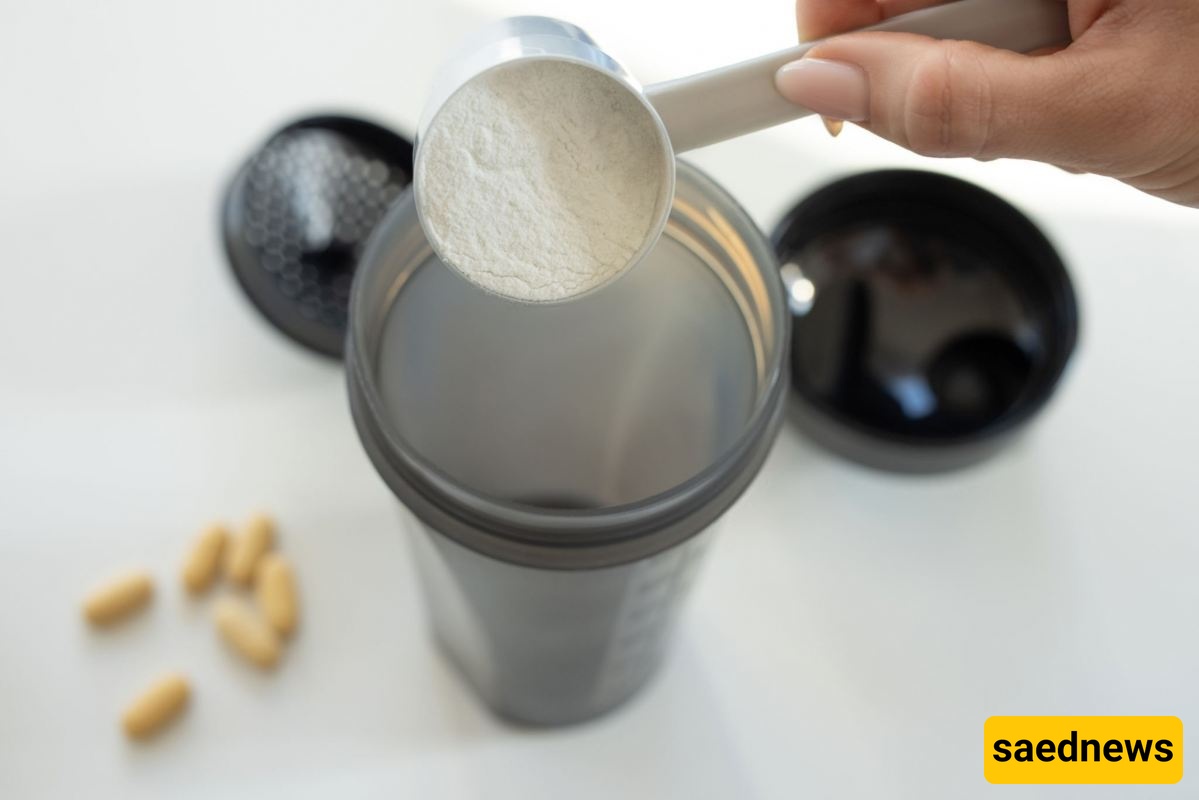
One of the main advantages of preparing protein-rich foods at home is having greater control over the ingredients and preparation process.
According to the original recipe, a 30-gram serving of the homemade powder contains approximately 18–20 grams of protein, 10 grams of carbohydrates, and 5 grams of fat. This can work as a filling snack or as part of a post-workout shake.
The liquid-whey method provides considerably less concentrated protein. The exact amount can vary depending on the milk and preparation method, so nutritional values should be considered estimates rather than fixed figures.
Whey naturally contains essential amino acids, including the branched-chain amino acid leucine, which plays an important role in stimulating muscle protein synthesis. It also contains minerals such as calcium and potassium, along with B vitamins.
Having a protein-rich shake about 30–45 minutes before strength training can provide amino acids and nutrients before exercise. Pairing protein with carbohydrates can also provide an additional source of energy for your workout.
Protein after exercise can help support muscle recovery and growth. A homemade protein shake paired with a banana can provide both protein and carbohydrates after training.
Rather than focusing on a strict 30-minute “anabolic window,” the more important factor is getting enough total protein throughout the day and distributing it across meals and snacks.
People trying to manage their weight may find protein-rich snacks useful because protein can increase feelings of fullness and help control hunger between meals.
For a simple option, blend the homemade powder with a small amount of almond milk and ice for a refreshing shake.