SAEDNEWS: Long before electric pumps, Persian qanats moved water across dry landscapes through gently sloping underground tunnels. Their engineering worked because technology, maintenance, and community rules functioned as one system.
According to SAEDNEWS,
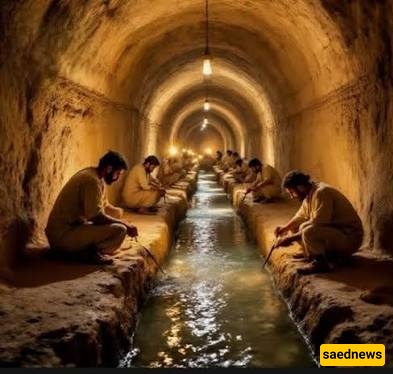
From the surface, a qanat can look like a dotted line of holes crossing an empty plain. Underground, those openings connect to a carefully graded tunnel that carries groundwater from an aquifer toward farms and settlements. Gravity does the work. The vertical shafts allow builders to remove soil, ventilate the tunnel, and return for inspection and repair.
UNESCO’s Persian Qanat World Heritage property includes eleven representative qanats. Together they show that the achievement was not simply digging a channel. Builders had to find water, calculate a slope gentle enough to avoid erosion but sufficient to keep water moving, organize excavation teams, and maintain the route across generations.
Keeping the water underground reduced exposure to intense sun and helped limit evaporation. At the outlet, water could feed reservoirs, mills, gardens, fields, and neighborhoods. Qanats therefore shaped where people lived and how communities shared a scarce resource.
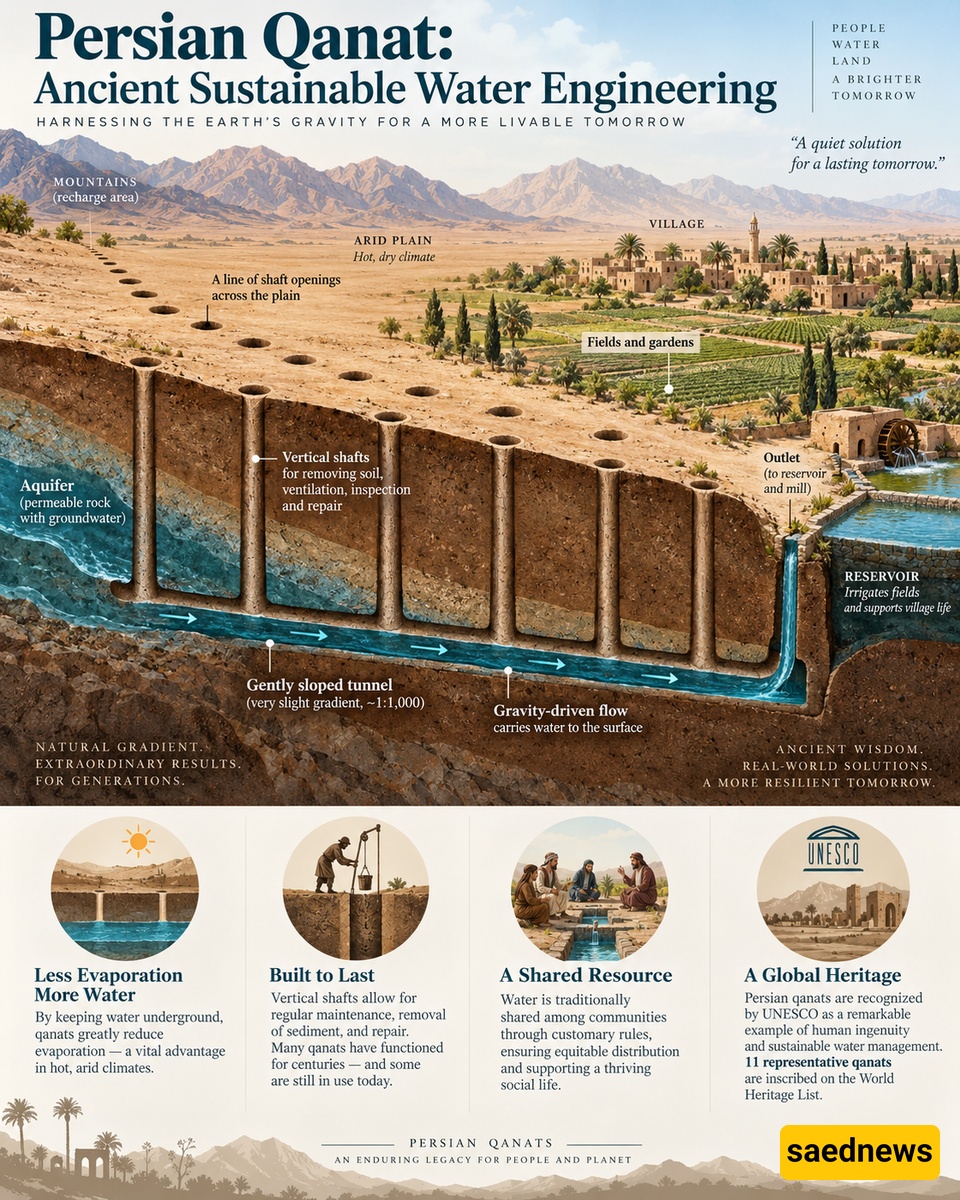
The social system was as important as the tunnel. Water turns had to be measured, rights remembered, disputes resolved, and maintenance funded. UNESCO specifically notes the continuing importance of traditional communal management and equitable distribution. A neglected tunnel could collapse; an unfair schedule could damage the entire settlement.