SAEDNEWS: Persepolis is famous for pale stone reliefs, but scientific analysis shows that its royal surfaces once carried vivid reds, blues, greens, and blacks. Reimagining the site in color changes how we understand Achaemenid power, art, and ceremony.
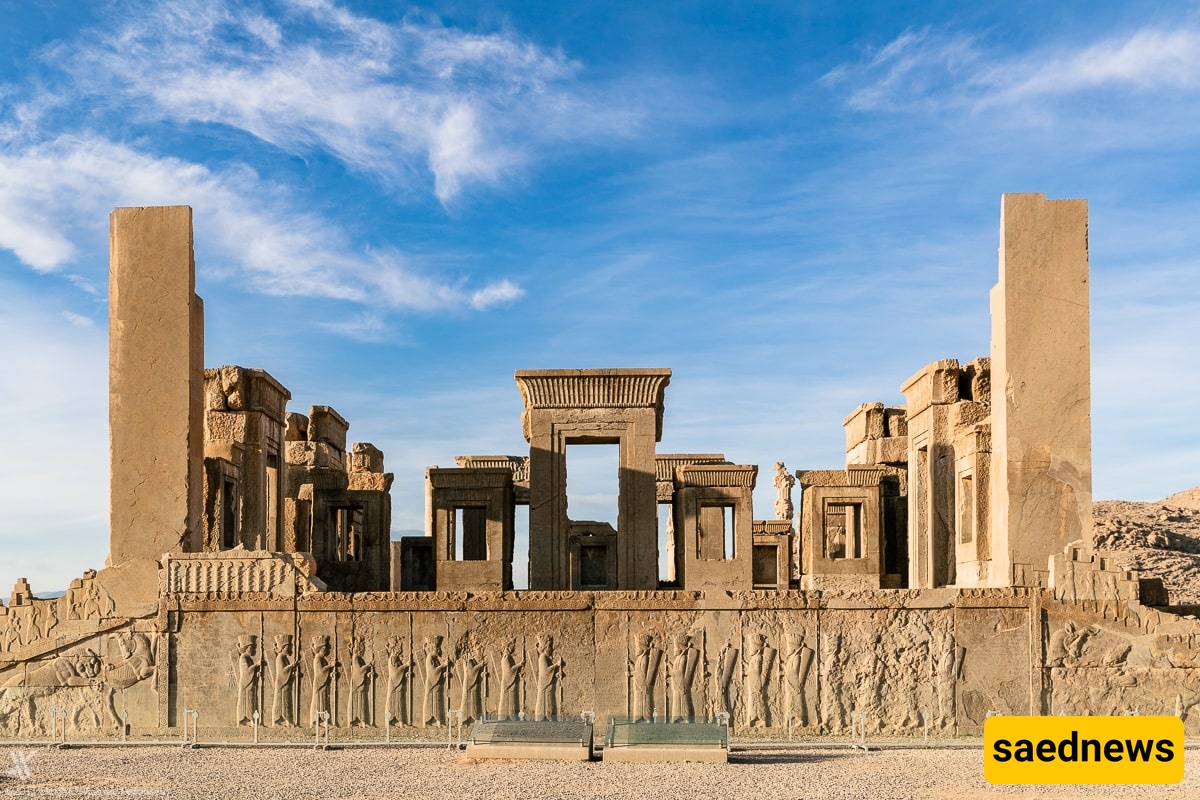
According to SAEDNEWS, Visitors often remember Persepolis as a city of honey-colored columns and gray reliefs. That appearance is real today, but it is not the complete ancient picture. The ceremonial complex founded by Darius I around 518 BCE was designed as a stage for royal authority, and evidence from its surfaces shows that color was part of the performance.
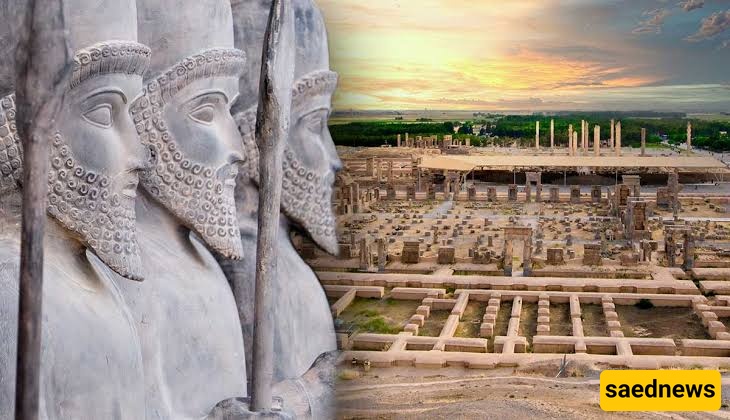
Researchers have identified pigments associated with the monuments and their archaeological context, including Egyptian blue, malachite green, red ochres, cinnabar, yellow ochre, and black materials. Recent scientific work has also examined pigment lumps and traces connected with the craft zones of Persepolis. These findings do not justify digitally painting every wall by imagination; they do show that the surviving stone is only the stripped skeleton of a richer visual environment.
Color would have made details easier to read. The patterned robes of delegations, the king’s garments, hair, weapons, flowers, and architectural ornament could have been differentiated at a distance. Painted plaster and glazed brick added other surfaces and textures. Under strong sunlight, polished stone, metal fittings, textiles, pigments, and shadow would have worked together.
This matters because modern audiences often equate bare stone with ancient seriousness. In reality, many ancient civilizations used strong color. At Persepolis, polychromy may have helped transform people from across the empire into a legible ceremonial order: different clothing and gifts remained distinct, while all delegations moved toward the same royal center.
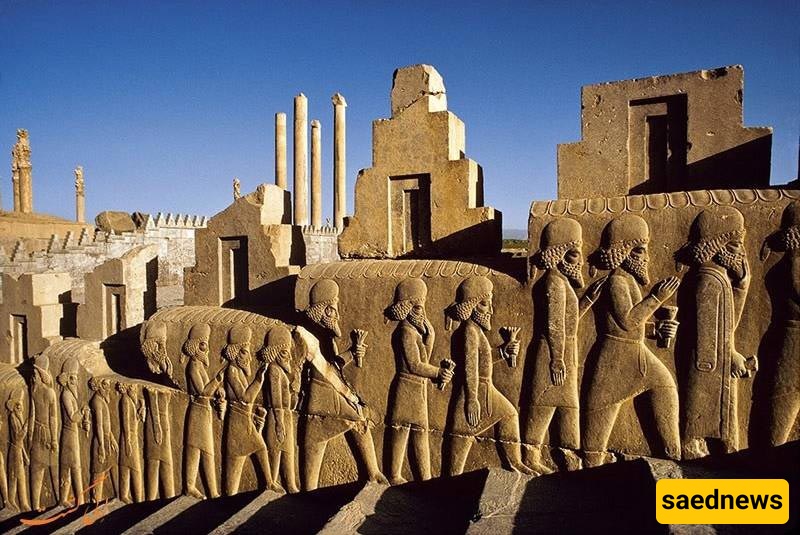
Persepolis has not become less magnificent because its colors faded. The discovery of those colors makes the site more human, more theatrical, and more surprising.