SAEDNEWS: The Ellora Caves are one of the world's largest monastic cave complexes. They are located about 30 kilometers north to northwest of the city of Aurangabad, near the village of Ellora in India.
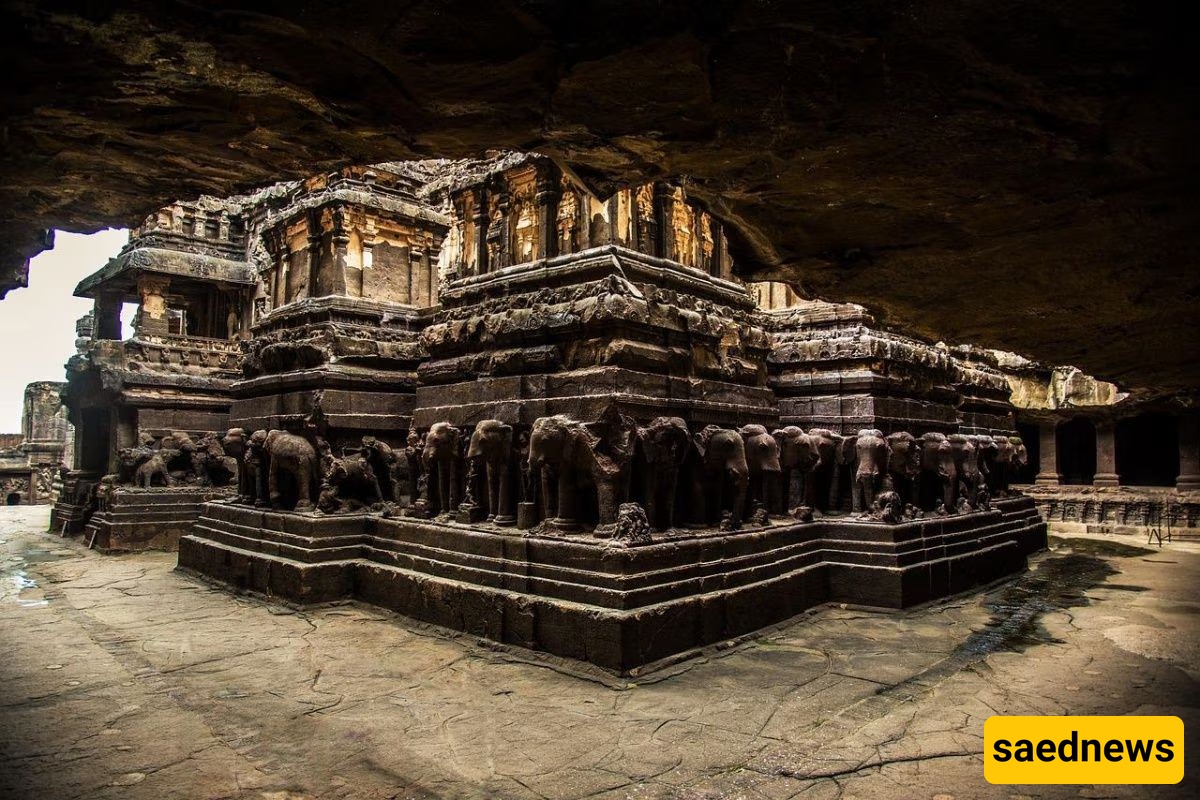
According to Saednews, The Ellora Caves are one of India's most extraordinary historical landmarks, located about 30 kilometers from Aurangabad in the state of Maharashtra. Carved between the 5th and 10th centuries CE, this remarkable UNESCO World Heritage Site showcases an exceptional blend of Buddhist, Hindu, and Jain monuments, reflecting centuries of religious harmony and artistic achievement.
Although often referred to as caves, Ellora is much more than a natural formation. Skilled craftsmen spent centuries carving magnificent temples, monasteries, and shrines directly into the solid basalt cliffs using only simple hand tools such as hammers and chisels.
The site is within reach of major cities like Mumbai and Pune, making it one of Maharashtra's most popular cultural attractions.
Visitors can explore 34 officially accessible caves, but the entire complex actually contains more than 100 rock-cut excavations.
The accessible caves are divided into three religious groups:
12 Buddhist caves (Caves 1–12), dating from the 6th to 8th centuries CE
17 Hindu caves (Caves 13–29), built between the 6th and 9th centuries CE
5 Jain caves (Caves 30–34), constructed from the 8th to 10th centuries CE
The close proximity of these sacred monuments highlights the peaceful coexistence and mutual respect among different religious communities during medieval India.
The caves primarily served as places of worship, meditation, and religious learning. Many functioned as monasteries where Buddhist and Hindu monks lived, studied, and practiced their faith.
Their location along an important ancient South Asian trade route also transformed Ellora into a significant commercial and cultural center. Merchants, travelers, and pilgrims frequently visited the site, contributing to its prosperity and influence.
Today, the Government of India carefully preserves the caves, recognizing them as one of the country's greatest archaeological treasures.
One of the most astonishing aspects of Ellora is that every temple, sculpture, and corridor was carved entirely by hand from solid rock.
Despite the absence of modern machinery, ancient artisans created towering statues, elaborate pillars, detailed reliefs, and spacious halls with remarkable precision.
Among India's many rock-cut monuments, Ellora stands out for both its scale and artistic excellence.
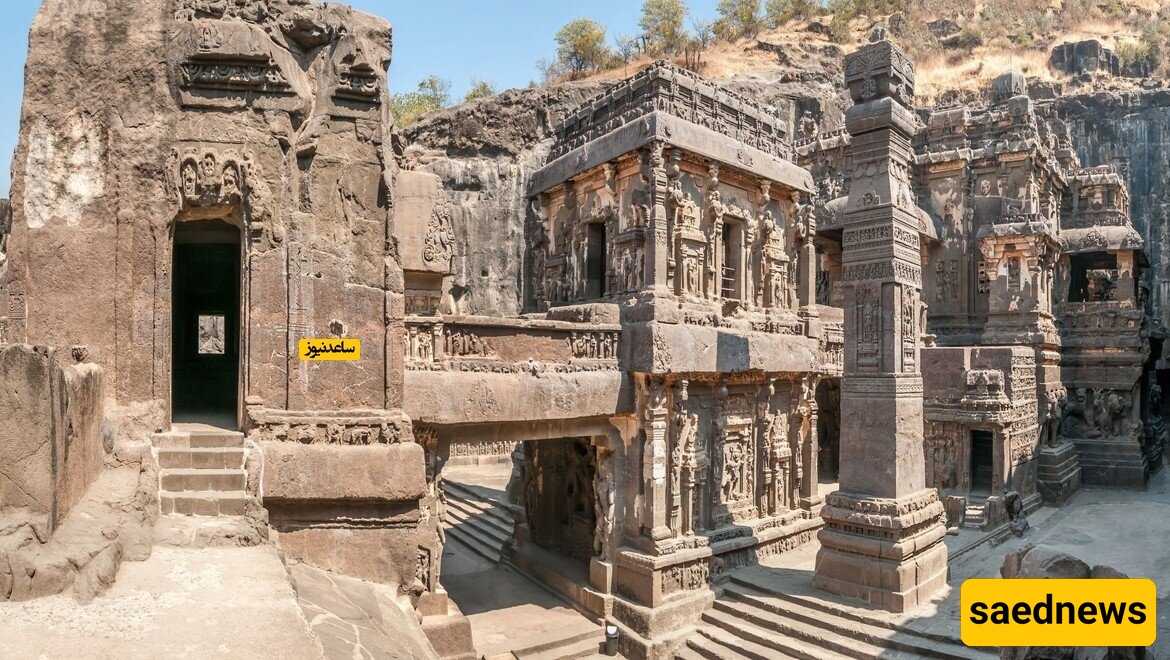
The most famous monument at Ellora is Cave 16, also known as the Kailasa Temple.
Unlike most rock-cut caves that were excavated horizontally into a hillside, this incredible structure was carved vertically from the top of a massive basalt cliff downward. It is considered the world's largest monolithic rock-cut temple.
The temple is decorated with countless carvings illustrating scenes from Hindu mythology, making it one of the greatest achievements of ancient Indian architecture. Visitors often spend hours admiring its intricate sculptures and monumental design.
Each religious group displays a distinct artistic style.
Hindu caves are renowned for their elaborate sculptures, richly decorated halls, and impressive mythological carvings.
Buddhist caves feature a simpler architectural style focused on meditation halls and monastic living spaces.
Jain caves combine refined craftsmanship with elegant decorative details that reflect Jain artistic traditions.
Several caves also contain small stone chambers where monks once slept and lived.
In 1983, the Ellora Caves were inscribed as a UNESCO World Heritage Site in recognition of their outstanding cultural, historical, and architectural significance.
The complex remains one of India's finest examples of rock-cut architecture and continues to attract visitors from around the world.
The ideal time to visit the Ellora Caves is between November and March, when temperatures across Maharashtra are cooler and more comfortable for sightseeing. This period offers pleasant weather for exploring the extensive cave complex.
The Ellora Caves are located approximately:
30 km from Aurangabad
Around 400 km from Mumbai
About 250 km from Pune
The site is easily accessible by road and is commonly included in travel itineraries throughout Maharashtra.
The Ellora Caves represent one of the greatest achievements of ancient Indian civilization. Their breathtaking rock-cut temples, remarkable engineering, and harmonious blend of Buddhist, Hindu, and Jain heritage make them a truly unique destination. Whether you are interested in history, architecture, religion, or archaeology, Ellora offers an unforgettable journey into India's rich cultural past.