SAEDNEWS: Koutoubia Mosque is an ancient place of worship in Morocco, renowned for its remarkably tall and magnificent minaret.
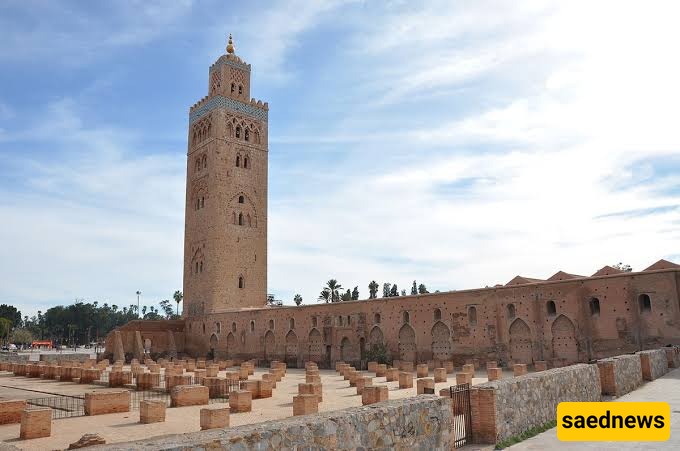
According to Saednews, The Koutoubia Mosque, also known in English as the Koutoubia Mosque, is one of the historic mosques of Morocco in North Africa. With its magnificent architecture and soaring minaret, it is regarded as one of the largest and most famous mosques in Marrakech. Its distinctive design makes it one of the city's most recognizable landmarks.
Koutoubia is among the oldest mosques in Marrakech and is known by several names, including Koutoubia, Kutubiyya, Jemaa el-Kutubiya, Koutoubin, and the Mosque of the Booksellers.
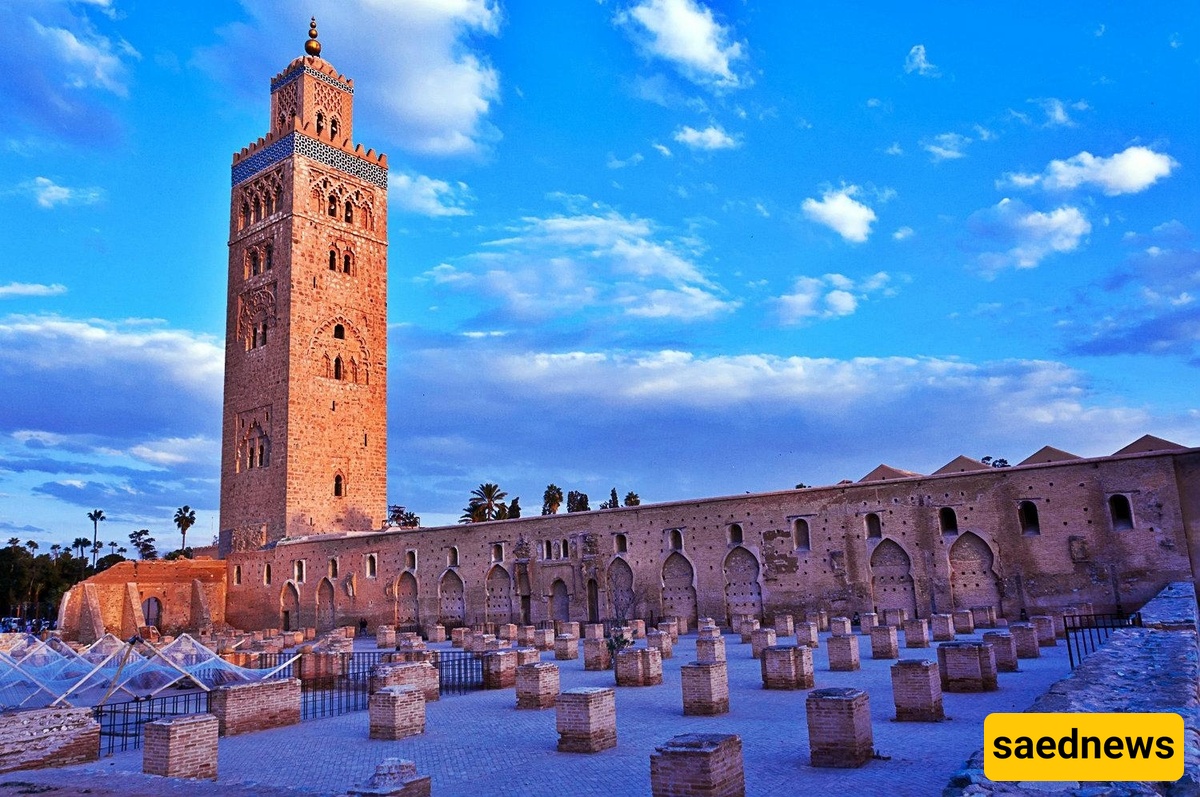
The mosque immediately captures attention with its elegant arched windows, decorative ceramics, spacious courtyard, and towering 77-meter minaret. The Koutoubia minaret can be seen clearly from many surrounding neighborhoods and has become an iconic feature of Marrakech's skyline.
Two other famous structures are particularly associated with the Koutoubia's architectural style: the Giralda Tower in Seville, Spain, and the Hassan Tower in Rabat, Morocco.
The mosque takes its name from the nearby Jemaa el-Fnaa area, located approximately 200 meters away. At the time the mosque was established, books were sold in the surrounding market, where more than 100 booksellers were reportedly active. The name Koutoubia is derived from the Arabic word kutubiyyin, associated with booksellers and the trade of books.
The Koutoubia Mosque was originally constructed between 1147 and 1154 CE and was completed around 1157. The original structure later underwent significant changes and reconstruction, eventually giving way to the form of the mosque seen today.
Abu Yusuf Yaqub al-Mansur, a ruler of the Almohad dynasty, was responsible for rebuilding the mosque. The building has subsequently undergone several restorations and modifications over the centuries.
During the reign of Yaqub al-Mansur, it was discovered that the mosque's prayer niche, or mihrab, was not correctly aligned with the direction of the Qibla. The orientation was therefore altered, and the rebuilt structure became known as the second mosque.
One of the most important changes involved the direction of the Qibla. The original orientation was approximately five degrees, while the later reconstruction adjusted it to around ten degrees.
The first prayer at the mosque is traditionally associated with 1158 CE.
The mosque that stands today was constructed primarily between 1184 and 1199 CE, meaning little of the original structure survives. Nevertheless, its architects preserved the distinctive Moroccan-Andalusian architectural tradition associated with the region.
Over time, further modifications were made to the building, leaving only limited elements of the earliest mosque.
Koutoubia Mosque is located on Avenue Mohammed V in Marrakech, approximately 200 meters from the city's historic market area. A network of roads and streets leads directly to the mosque.
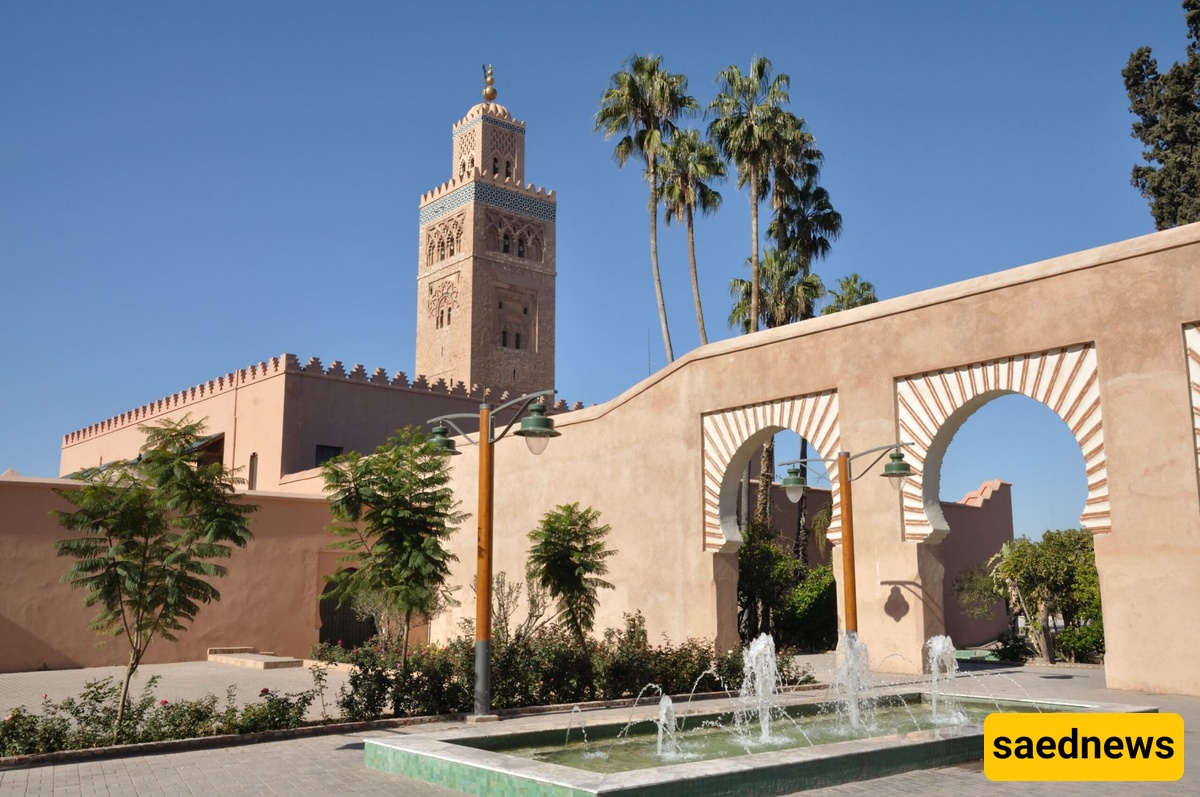
To the south and west of the mosque is a beautiful rose garden, which provides an attractive setting and is a popular area for visitors.
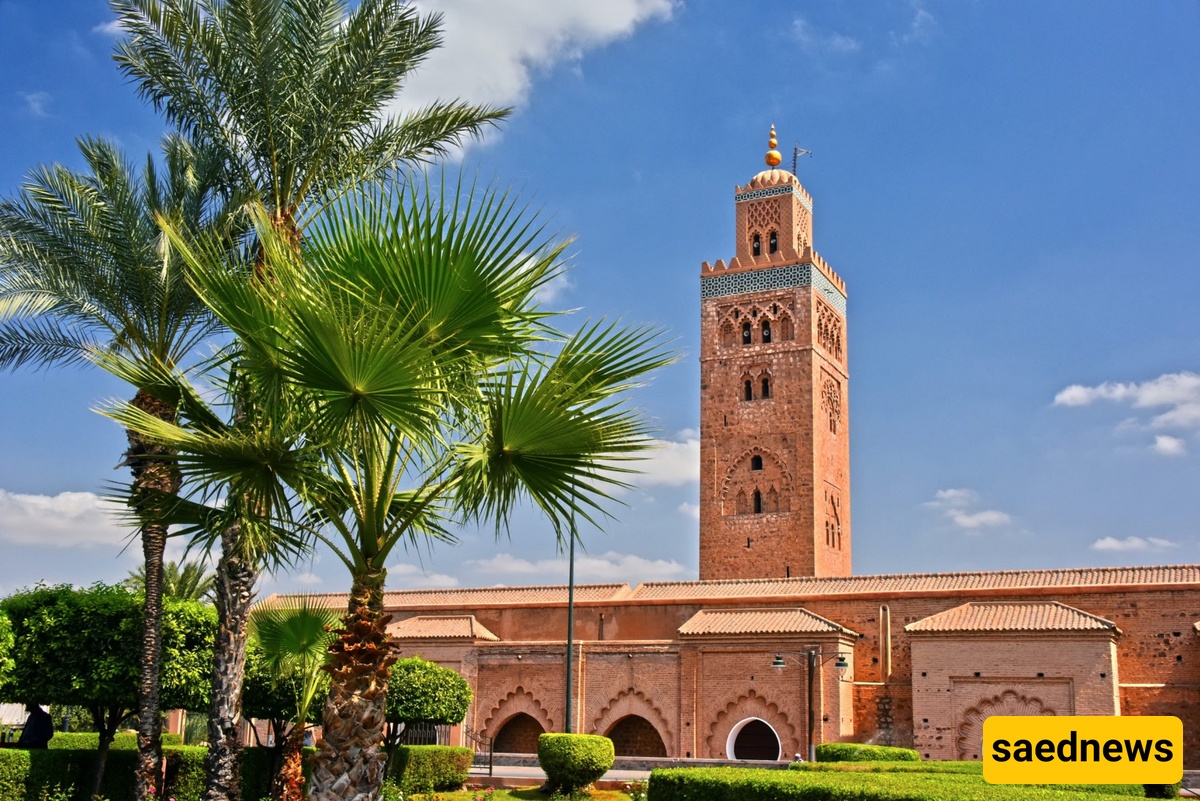
The present-day mosque is built primarily from reddish stone, a characteristic material that contributes to Marrakech's distinctive architectural appearance.
The mosque's interior includes a sequence of interconnected spaces, with balconies incorporated into the structure. Its architectural arrangement was designed to create a grand and harmonious religious complex.
The prayer hall follows a T-shaped plan and extends across a significant portion of the mosque. Approximately 100 columns support the arches within the prayer space.
The exterior combines materials and textures including sandstone, brick, and stone. The building measures roughly 80 meters across on its eastern side and about 60 meters on its western side.
The windows feature slender, polygonal arches set within rectangular frames. The decorative patterns above and around the windows create distinctive diamond-shaped motifs that contribute to the mosque's elaborate visual character.
Inside and around the mosque, visitors can see small turquoise ceramic tiles incorporated into various decorative elements.
The courtyard measures approximately 45 meters across and contains a fountain traditionally associated with ablution.
The mosque has several entrances. Three entrances open directly toward the prayer hall, while another provides access to the courtyard. Additional private entrances were historically associated with the imam and the ruler, allowing them to enter the mosque directly.
The streets in front of the mosque have traditionally been associated with shops and commercial activity, including booksellers, reflecting the origin of the mosque's name.
The Koutoubia minaret was designed in the Almohad architectural tradition and constructed from sandstone. It was originally covered with pinkish plaster, but during restoration work in the 1990s, specialists removed the plaster to reveal the original stonework.
The minaret rises approximately 77 meters above the ground, with an additional pointed structure at its summit measuring around eight meters. Each side of its square base is approximately 8.12 meters long.
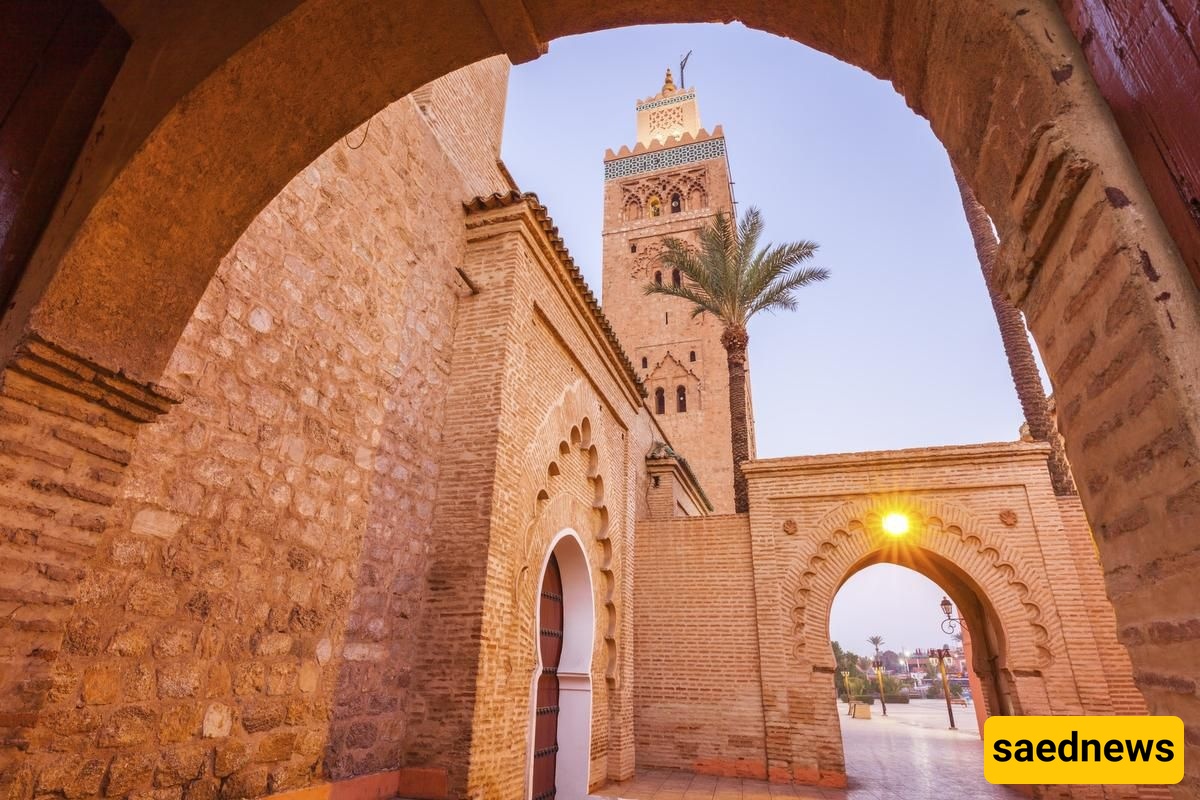
Because of its impressive height, the minaret can reportedly be seen from as far as 29 kilometers away under suitable conditions.
Its design consists of a large square shaft with a smaller, balanced upper structure crowned by a dome. The overall composition gives the minaret its distinctive proportions and unmistakable silhouette.
Many of the decorative elements found on the Koutoubia minaret can also be seen in other religious buildings throughout Morocco. These include colorful ceramic tiles, alternating geometric patterns covering different sides of the tower, elegant arched ornamentation, and intricate stonework.
Together, these features demonstrate the refined craftsmanship of Almohad architecture and help explain why Koutoubia Mosque remains one of Marrakech's most recognizable historical monuments.