SAEDNEWS: Pakistan’s Prime Minister Shehbaz Sharif says the newly signed defense agreement involving Pakistan, Saudi Arabia and Turkey is strictly defensive and is intended to strengthen peace and stability rather than support offensive action.
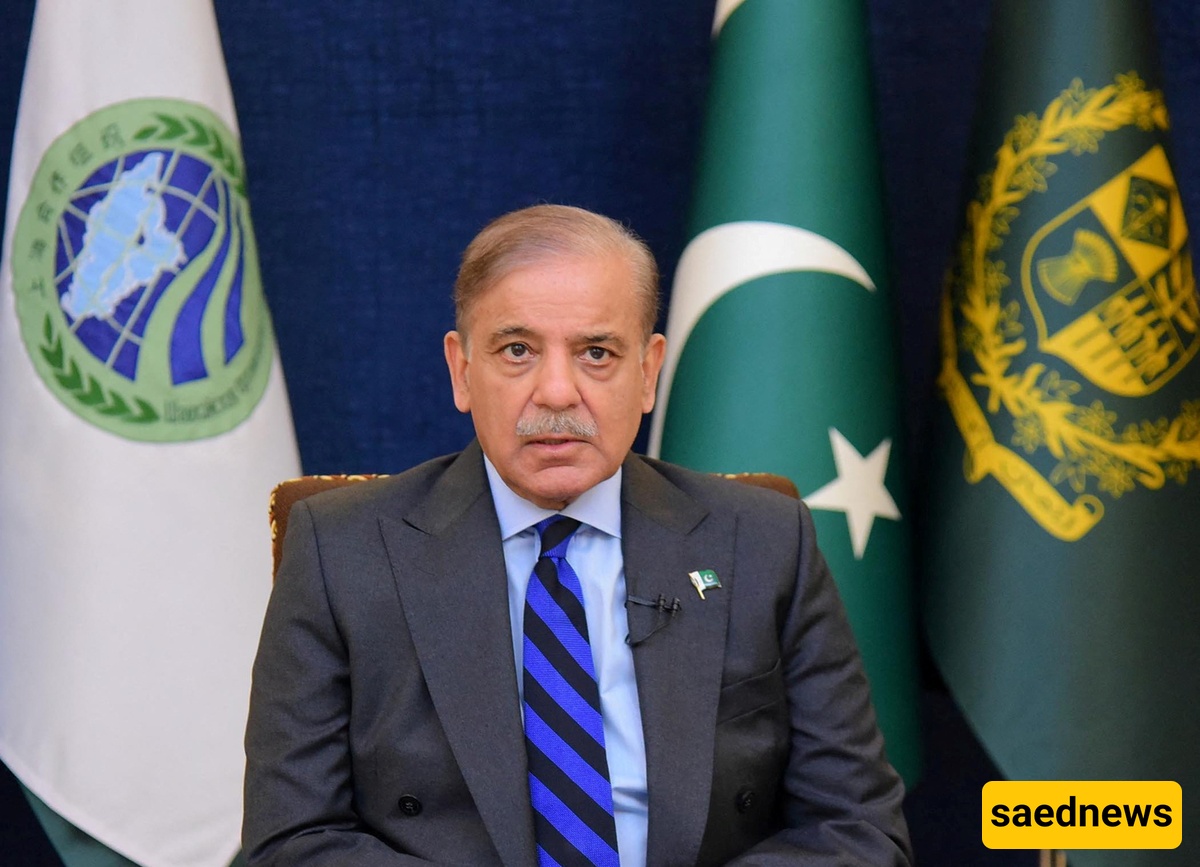
According to SaedNews: Pakistan is seeking to make one point unmistakably clear about its newly signed defense agreement with Saudi Arabia and Turkey: Islamabad says the pact is designed for defense, not aggression.
Prime Minister Shehbaz Sharif made the clarification during a cabinet meeting, stressing that the agreement signed by the three countries was built around defensive objectives and was not intended to provide a framework for offensive military action.
Sharif described the broader purpose of the agreement in terms of peace, stability, development and prosperity in the region. In his remarks, he emphasized that the arrangement should not be interpreted as a plan for aggression, but rather as a mechanism intended to strengthen security and calm.
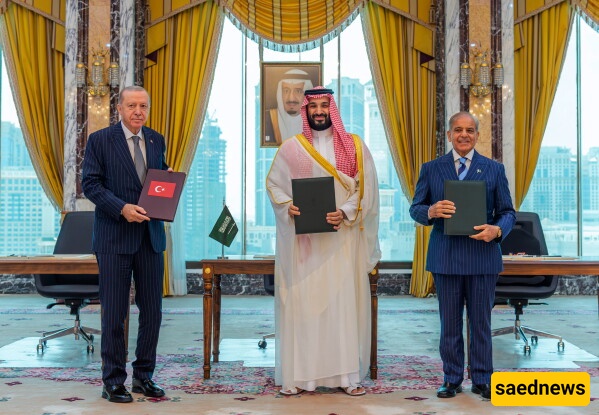
The statement comes as the new three-way defense framework draws attention because of the military significance of the countries involved. Pakistan has longstanding defense ties with both Saudi Arabia and Turkey, and Islamabad is now presenting the latest agreement as a continuation and strengthening of those relationships.
Sharif also gave the agreement a broader significance, arguing that it could become a source of strength not only for the three participating countries but for what he referred to as the entire Muslim community.
The Pakistani prime minister praised Deputy Prime Minister and Foreign Minister Mohammad Ishaq Dar as well as Asim Munir, the country’s chief of defense forces, for their roles in bringing the agreement to completion.
According to Sharif, efforts to establish a common defensive framework had continued for years before finally resulting in the trilateral agreement being signed on Friday.
The new arrangement also builds on earlier bilateral defense cooperation.
Sharif pointed out that Pakistan and Saudi Arabia had already signed a Strategic Mutual Defense Agreement in September 2025. Pakistan and Turkey, meanwhile, have maintained defense cooperation and related arrangements for decades.
One of the most significant elements of the new framework concerns what happens if one of the participating countries comes under armed attack.
Earlier, Ishaq Dar said that under the so-called Mecca Defense Agreement, an armed attack against any one of the three countries would be considered an attack against all three. He said the mechanism is based on the right of self-defense recognized under Article 51 of the United Nations Charter.
That provision gives the agreement a collective-security dimension, although Pakistani officials have continued to characterize it as defensive in nature.
Turkey has also offered an explanation of how the mutual-defense mechanism is expected to operate.
Turkish Foreign Minister Hakan Fidan previously said the mechanism is technically similar to Article 5 of the NATO treaty, the provision associated with collective defense among NATO members. However, Fidan emphasized an important distinction: the type and scale of assistance in the event of an attack would not necessarily be predetermined.
Instead, the response would depend on the circumstances of the attack and would be determined following consultations among the participating countries.
That distinction is important to understanding the agreement. While the pact creates a framework for collective defense, the details of any response would be considered according to the situation rather than automatically dictated in advance.
For Pakistan, the agreement also represents the latest stage of defense cooperation that has been developing with Saudi Arabia and Turkey over many years. Islamabad's public messaging, however, has focused heavily on preventing the pact from being interpreted as an offensive alliance.
Sharif's comments therefore place peace and regional stability at the center of Pakistan's official explanation of the agreement. At the same time, the mutual-defense provision gives the pact a substantial strategic dimension by linking the security of the three signatories.
The agreement is consequently being presented through two interconnected messages: deterrence through closer defense cooperation and an explicit commitment, according to Pakistan, to avoid using the arrangement as a tool for aggression.
Whether the new framework ultimately becomes a deeper security partnership will depend on how the three countries implement its provisions and respond to future regional developments. For now, Islamabad is emphasizing that the agreement's stated purpose is defensive—and that its ultimate goal is greater security, peace and stability.
The announcement is likely to keep attention focused on how Pakistan, Saudi Arabia and Turkey coordinate their defense policies in the coming period. For supporters, it represents stronger collective security; for observers, its practical significance will depend on what the three governments do when confronted with a real security challenge.