SAEDNEWS: Pakistan’s UN envoy, Asim Iftikhar Ahmad, said Iran–U.S. negotiations are nearing their final stage and expressed concern over regional instability.
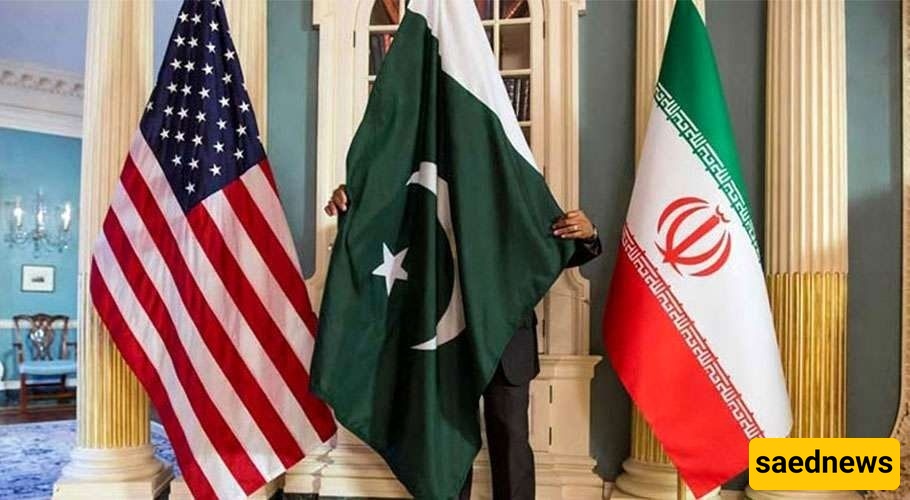
According to the political service of the Saed News website, Asim Iftikhar Ahmad, the Permanent Representative of Pakistan to the United Nations, stated during an official speech at a United Nations Security Council meeting that an agreement in the Iran–U.S. negotiations is reportedly close.
Expressing concern over rising regional tensions and their impact on the suspension of diplomatic channels and nuclear verification processes, he announced that Islamabad had hosted the highest level of direct engagement between Iran and the United States in more than four decades. The senior diplomat emphasized that, with the cooperation of regional partners, intensive efforts had been made to reduce tensions and return the parties to the negotiating table, and now that the ultimate goal is within reach, all sides must exercise restraint to allow peace a chance.
The Pakistani representative at the Security Council session, which focused on non-proliferation, stated explicitly that escalating violence in the Middle East has severely weakened the fragile ceasefire situation. Referring to recent interruptions in diplomatic efforts, he explained that hostilities have pushed the parties involved in Iran’s complex nuclear file further apart and have even disrupted critical missions of the International Atomic Energy Agency. Nevertheless, he stressed the necessity of resolving this dispute peacefully through sustained and committed dialogue.
A key part of Asim Iftikhar’s speech was the disclosure of his country’s behind-the-scenes efforts to halt the conflict. He thanked Tehran and Washington for once again trusting Pakistan to participate in discussions referred to as the “Islamabad Talks.” According to him, these talks have been conducted with the coordination and support of countries such as Saudi Arabia, Qatar, Turkey, Egypt, and China, in order to create an appropriate environment for exchanging messages and forming a meaningful path toward resolving disputes.
According to an exclusive analysis by Saad News, the public revelation of the “Islamabad Talks” at the Security Council indicates a shift from covert to overt diplomacy in the region. Observers of international affairs are well aware that, until recently, countries such as Oman or Qatar were considered the main intermediaries for message exchanges between Iran and the United States. Pakistan’s formal and assertive entry into this arena, and the description of these discussions as the “highest level of direct engagement in four decades,” suggests that the scope of these negotiations likely extends to broader issues, including controlling military tensions in the Middle East and finding new formulas to break the nuclear deadlock.
The claim that the “final goal is within reach” appears to function less as a confirmed announcement of a signed agreement and more as a strategic pressure tool and an invitation to restraint during a sensitive regional period. In practice, Pakistan and its regional partners may be attempting to raise the cost of any escalatory action or miscalculation by publicizing the progress of negotiations. If this narrative is accurate, it may be expected that in the near future, political rhetoric will soften and possibly lead to informal understandings that help manage the crisis and prevent further escalation between the two sides.