SAEDNEWS: Brazil is unveiling a broader foreign-policy strategy centered on South-South cooperation as diplomatic tensions with the United States intensify. President Luiz Inácio Lula da Silva’s government wants to strengthen BRICS, deepen South American integration and expand Brazil’s political, economic and technological independence.
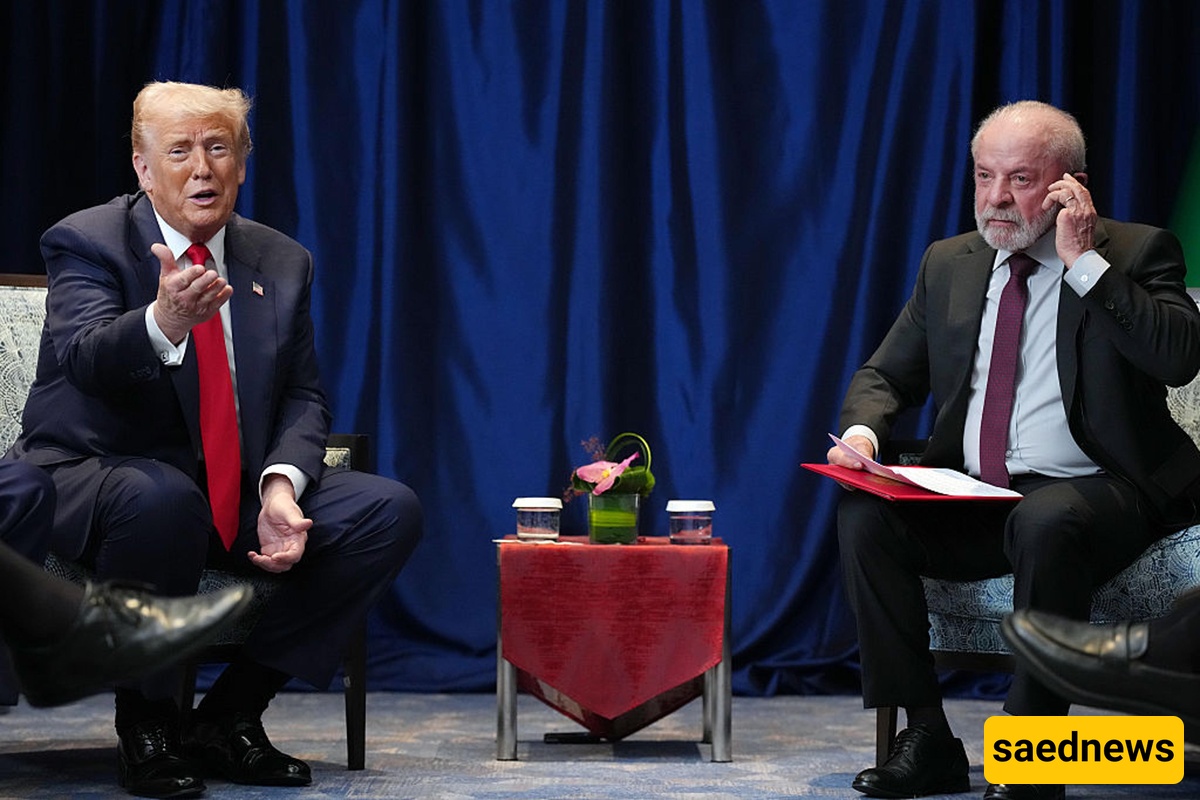
According to SaedNews: Brazil is preparing to answer growing pressure from the United States with a foreign-policy strategy designed to make the country less dependent on Washington and more deeply connected to the wider Global South.
President Luiz Inácio Lula da Silva’s government has unveiled a new foreign-policy platform that places South-South cooperation at the heart of Brazil’s international strategy. The approach comes at a sensitive moment, as diplomatic tensions between Brasília and Washington have been rising.
Rather than responding to pressure by narrowing its international options, Brazil’s new framework seeks to broaden them.
At the center of the plan is a push to strengthen BRICS while deepening South American integration through Mercosur, the common market involving countries across the region. The broader objective is to increase Brazil’s room for maneuver in international affairs and reinforce its political, economic and technological autonomy.
The strategy goes beyond traditional diplomatic relationships. One of its key components is the expansion of financing mechanisms associated with BRICS, alongside efforts to develop new tools capable of addressing infrastructure needs across developing countries in the Global South.
For Brazil, the issue is not simply about finding alternative sources of funding. The proposal reflects a wider argument that developing and emerging economies should have a greater role in shaping the institutions that govern the global economy.
The platform therefore supports reforms to the international financial architecture, including institutions such as the International Monetary Fund and the World Bank. The stated goal is to increase the influence of developing countries in global decision-making.
That ambition is also being extended to Brazil’s immediate neighborhood.
The strategy places greater South American integration on the agenda in several areas, including infrastructure, energy, defense and healthcare. One particularly notable proposal is the advancement of a common energy market across the continent, an idea that could deepen regional economic connections if pursued.
The digital sphere is another major part of the new approach.
Brazil wants to play a larger role in international discussions surrounding artificial intelligence governance, data protection and technology regulation. The government’s approach is based on the principles of digital sovereignty and scientific cooperation, suggesting that Brazil wants developing countries to have a stronger voice in defining the rules of an increasingly technology-driven global economy.
Artificial intelligence, in this framework, is therefore not treated simply as a technological issue. It becomes part of a broader foreign-policy question: who gets to establish the rules governing emerging technologies, and whose interests are represented in those rules?
Brazil is also backing reform of the United Nations Security Council. The proposal seeks a more representative multilateral system, with greater participation for developing and emerging economies.
Taken together, these initiatives point toward a foreign-policy model built around diversification.
The timing is particularly significant because Brazil is facing increasing pressure from the United States. Washington has canceled the visa of Brazil’s ambassador and imposed tariffs on Brazilian exports, adding economic and diplomatic tension to the relationship.
Against that backdrop, Lula’s government is emphasizing partnerships that extend beyond traditional alliances.
BRICS occupies an especially important place in this calculation. Strengthening the bloc and expanding its financial mechanisms could give Brazil and other developing economies additional channels for cooperation. At the same time, deeper Mercosur integration would give Brazil a stronger regional foundation.
The strategy also reflects a broader desire to ensure that Brazil has greater control over its own economic and technological choices.
For Brasília, greater autonomy does not necessarily mean abandoning cooperation with the United States. Instead, the platform signals an effort to ensure that Brazil has more alternatives and is not overly dependent on any single major power.
That distinction could become increasingly important as diplomatic pressure continues.
Brazil’s approach is therefore about more than one dispute with Washington. It represents an attempt to build a wider international network in which South American integration, BRICS cooperation, development financing, energy, healthcare, defense and technology all reinforce one another.
The challenge will be turning the ambitious framework into concrete cooperation. Expanding infrastructure links, building financial mechanisms, coordinating energy policy and establishing common approaches to digital regulation require sustained political commitment among multiple countries.
Still, the direction is clear. At a time when U.S.-Brazil relations are under strain, Lula’s government is signaling that it wants Brazil to have a broader set of international options.
The message behind the new platform is ultimately one of strategic diversification: strengthen regional ties, expand cooperation with the Global South, seek greater influence in international institutions and build technological and economic capabilities that can give Brazil more independence.
As pressure from Washington grows, the success of that strategy could determine how much room Brazil has to pursue an increasingly autonomous foreign policy—and whether the country can translate its diplomatic ambitions into lasting influence across the Global South.