SAEDNEWS: U.S. Treasury Secretary Scott Bessent’s Disrespectful Comments Reveal Four Key Truths About Iran–U.S. Relations
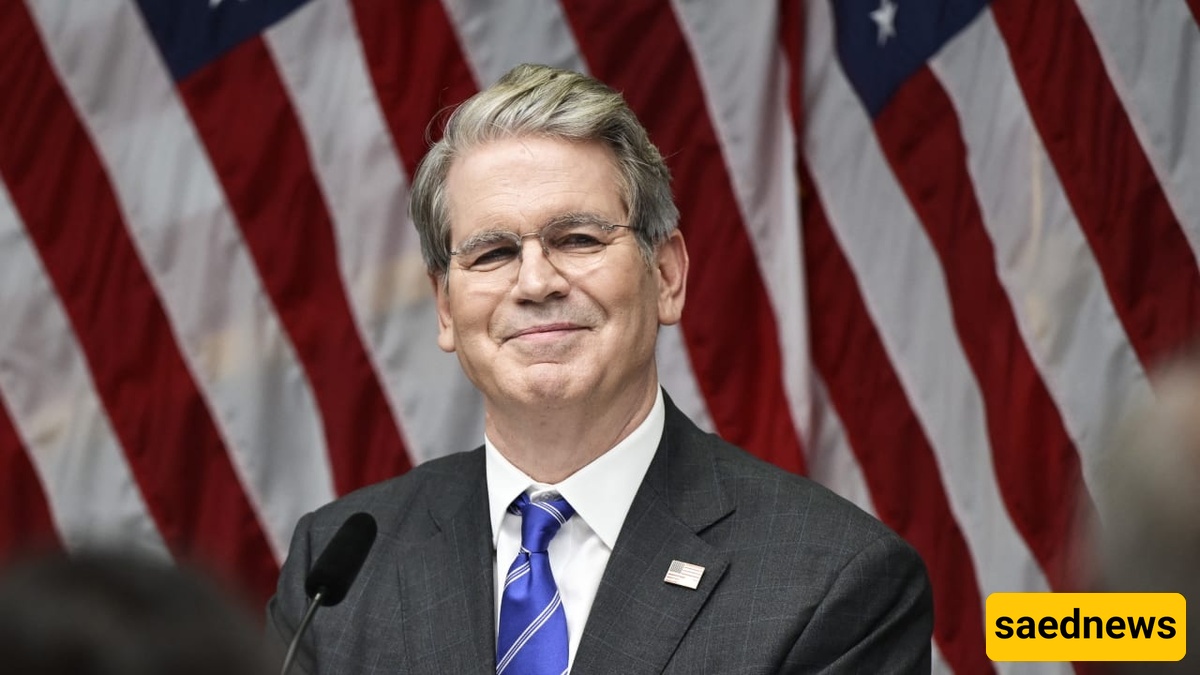
According to the political news service Saed News, Scott Bessent, the U.S. Treasury Secretary in the Trump administration, stated that “lifting oil sanctions on Iran is like giving them a carrot… it is a carrot that we can always take back. We want them to see what it feels like not having sanctions.”
These statements are, in fact, an unintentional strategic admission. Precisely for this reason, the underlying insult must be dissected and the U.S. approach must be understood.
Bessent’s remarks reflect a hierarchical, top-down mindset that has repeatedly been tested against the Iranian nation—and each time has ended in failure.
Recall Genghis Khan, who came with the sword, yet his descendants became students of Persian language and culture. Consider Saddam Hussein, who arrogantly called Iran “obsolete,” and ultimately ended his life in a dark hole, confused and defeated. Even previous U.S. presidents carried the dream of bringing this nation to its knees but failed.
Iran has repeatedly demonstrated that anyone who enters with such an outlook meets a fate no better than their arrogance. Bessent’s “carrot game” is merely a repetition of the same outdated illusion.
“The carrot that we can always take back” is, without intending to be, exactly what Iran has long argued: U.S. promises lack guarantees, and every concession can turn into a trap.
The JCPOA was a complete case study. Sanctions were lifted, Iran fulfilled its commitments, but with a single signature from Trump, the same “carrot” was snatched away and sanctions were returned in even more layers. Now they themselves admit: “we can always take it back.”
Bessent reveals a harsh reality: in their doctrine, war and negotiation are two blades of the same scissors used to paralyze Iran’s economy. He openly suggests that what could not be achieved through “maximum pressure” and sanction warfare is now being pursued through negotiation and the illusion of a “carrot.”
In other words, negotiation is not a tool for peace for them; it is a shift in the battlefield—from direct sanctions warfare to psychological manipulation.
They are not coming to reach an agreement; they are attempting to complete an unsuccessful economic war through a new psychological mechanism.
Temporary lifting of oil sanctions is not a generous “carrot.” The goal is a controlled, artificial breathing space designed to weaken Iran’s strategic partnership with China. This is a controlled opening whose valve remains in Washington’s hands.
If Iran exports oil under U.S. licensing, Washington simultaneously strengthens pressure on Beijing to reduce its purchases of Iranian oil, while also undermining Tehran–Beijing trust.
This “breathing space” is, in reality, a trap that places Iran’s economic lifeline not in the East, but in the discretion of a U.S. official who openly says it can be taken back at any moment.
History has shown that a nation that has humbled arrogant powers does not fear such rhetoric. Iran, in this view, is not “hungry for deception.”