SAEDNEWS: From the nuclear file to the Strait of Hormuz, from oil prices to approval ratings, independent assessments across six domains show Washington's stated war goals remain unmet three months in.
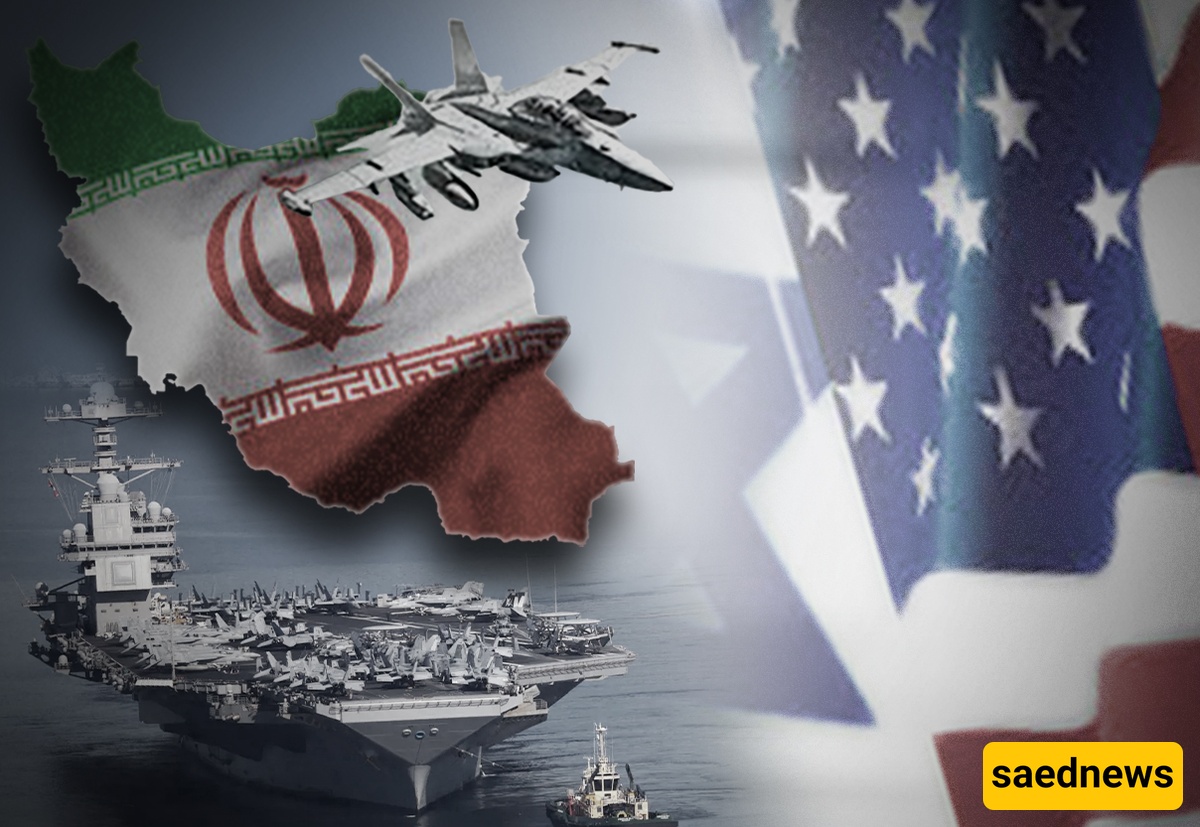
According to Saednews, From the early hours of the military operations against Iran, the Trump administration sought to frame the conflict as a decisive and historic victory. In a series of national addresses, President Trump declared Iran’s nuclear programme completely destroyed, the IRGC command incapacitated, the Iranian navy eliminated, the air force neutralised, and ballistic missile capabilities almost fully dismantled.
However, three months later, a range of internal US intelligence assessments, independent satellite analyses, global economic indicators, and domestic polling data present a markedly different picture. Based on credible Western and international sources, this assessment outlines six key areas in which the stated objectives of the war have not been achieved—and in some cases have produced outcomes contrary to US interests.
The central justification for the war was to prevent Iran from obtaining nuclear weapons capability. President Trump claimed that the Natanz, Fordow, and Isfahan facilities were completely destroyed. However, a classified preliminary assessment by the US Defense Intelligence Agency, supported by satellite imagery analysis, indicated that damage was largely confined to surface infrastructure and access points.
Key underground facilities and advanced centrifuge systems reportedly remained intact. As a result, Iran’s enrichment programme is assessed to have been delayed by approximately six to eighteen months rather than eliminated.
The Director General of the IAEA, Rafael Grossi, stated that around 400 kilograms of uranium enriched to 60 percent purity could no longer be fully accounted for. US Vice President JD Vance also acknowledged that the precise location of these stockpiles remains unknown to Washington.
According to Ali Vaez of the International Crisis Group, one of the most significant US miscalculations was effectively granting Iran enhanced leverage over the Strait of Hormuz, described as an “economic weapon of mass destruction.”
Since the onset of the conflict, Iran has exercised increased operational influence over maritime traffic in the region. Even after a temporary ceasefire, shipping flows have continued under heightened restrictions and increased insurance and transit costs. The resulting disruption has been widely compared by analysts to the Suez Canal crisis of 1956, with global energy markets experiencing sustained pressure.
The economic impact of the war was rapid and widespread. Crude oil prices surged from approximately $67 per barrel to peaks between $110 and $120, representing increases of up to 80 percent. In several US states, gasoline prices exceeded $5 per gallon. Airline fares rose by around 20 percent, and broader energy-driven inflation affected supply chains internationally.
Economists and analysts from institutions such as the Center for American Progress warned that a return to pre-war price levels would likely be slow and incomplete, creating sustained economic pressure on households and industries. This was particularly politically damaging, given earlier claims of low fuel prices as a key domestic achievement.
The war quickly evolved into a significant domestic political liability. Polling data from Reuters/Ipsos in April 2026 placed presidential approval ratings between 34 and 36 percent. Additional surveys from AP-NORC and Strength in Numbers reported similar levels, around 33 to 35 percent.
Only about one-third of Americans supported the decision to initiate military action. Economic approval ratings fell further, to roughly 23 to 25 percent. A majority of respondents—including independents—described the war as a “wrong decision” with unmet objectives.
Multiple international media outlets highlighted a widening gap between official US statements and on-the-ground assessments. While the administration continued to emphasise “complete victory” and an imminent diplomatic resolution, Iran’s core political and military structures remained functional.
Nuclear enrichment activities had not ceased, strategic maritime pressure in the Strait of Hormuz persisted, and key uranium stockpiles were still unaccounted for. This discrepancy contributed to declining confidence in the administration’s public narrative.
Reports from US media and defence analysts indicated concerns over the absence of a coherent post-conflict strategy. According to multiple sources, including major US news organisations, the administration lacked a clearly defined framework for ending the conflict or managing its economic consequences.
Military analysts also noted Iran’s resilience, its use of asymmetric strategies, and indirect backing from global partners such as Russia and China, which appeared to exceed initial Pentagon expectations.
The three main objectives used to justify the conflict—eliminating Iran’s nuclear programme, securing the Strait of Hormuz, and strengthening US economic stability—have either not been achieved or have produced unintended consequences.
While Iran has sustained significant damage, it has also retained core capabilities, expanded strategic leverage, and resisted key US objectives across multiple domains. Meanwhile, the United States has incurred substantial military, economic, and political costs, while geopolitical rivals have capitalised on the instability to advance their own positions.