Saed News: A stone statue known as a “Balbal,” standing nearly 3 meters tall, was discovered during agricultural work in the village of Ak-Bulun in Kyrgyzstan.
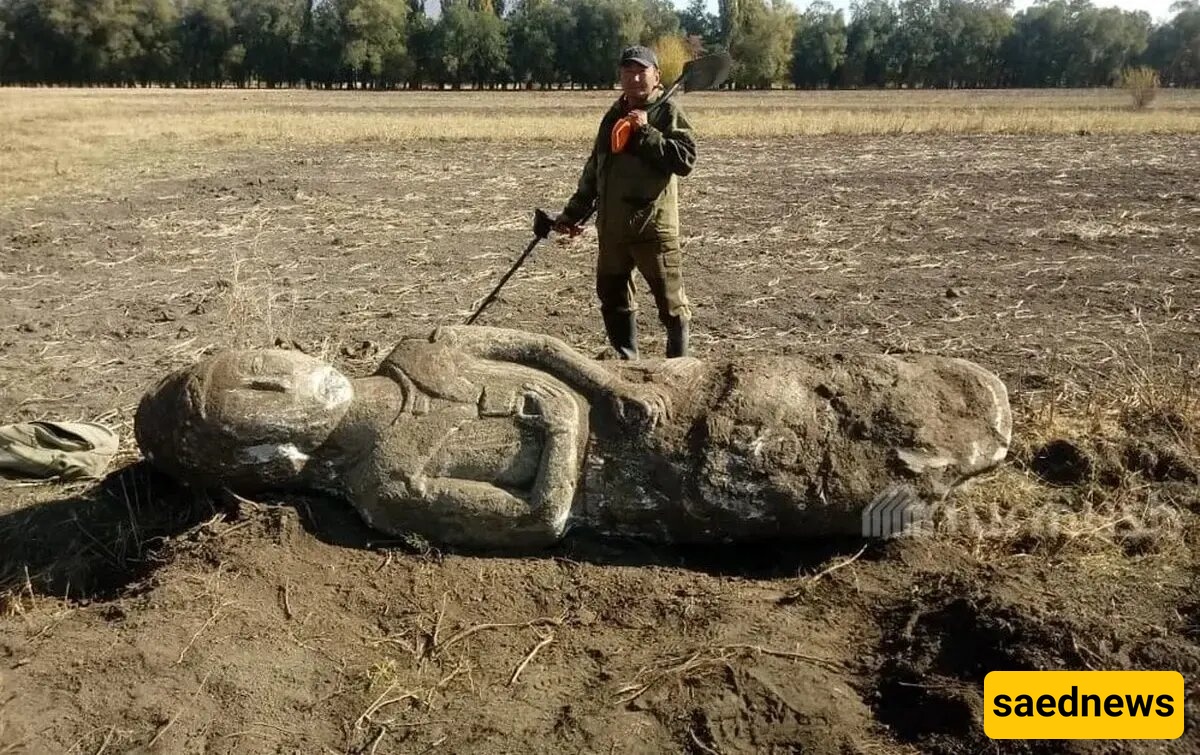
According to SAEDNEWS, citing Faradeed, “Balbal” is the name given to stone monuments or memorial statues erected by the ancient inhabitants of Kyrgyzstan beside graves or burial mounds (kurgans) to honor the deceased.
The statue was discovered in 2022 by 60-year-old farmer Erkin Turbayev. He was preparing land for planting potatoes when his plow suddenly struck a hard object and broke. Turbayev decided to excavate the area and uncovered a stone figure measuring more than two meters in length.
Turbayev, who leases 80 hectares of land between the villages of Ak-Bulak and Belovodskoye, said at the time: “This is a great historical discovery for our village and will bring good fortune.”
Numerous Balbal statues have previously been found in Kyrgyzstan. Along the shores of Lake Issyk-Kul, particularly in the regions of Cholpon-Ata and Karakol, many stone statues of nomadic Turkic warriors can be seen. Researchers believe that many of these Balbals were created during the 6th century AD. Such memorial stones were erected throughout Central Asia by nomadic Turkic tribes.
The number of Balbal stones placed beside a burial site was considered a symbol of the deceased’s power, bravery, and heroic status. This pre-Islamic tradition gradually gave way to conventional gravestones after the spread of Islam. The word “Balbal” originates from the ancient Turkic language and is believed to mean “to strike” or “to kill,” although its exact meaning remains debated.
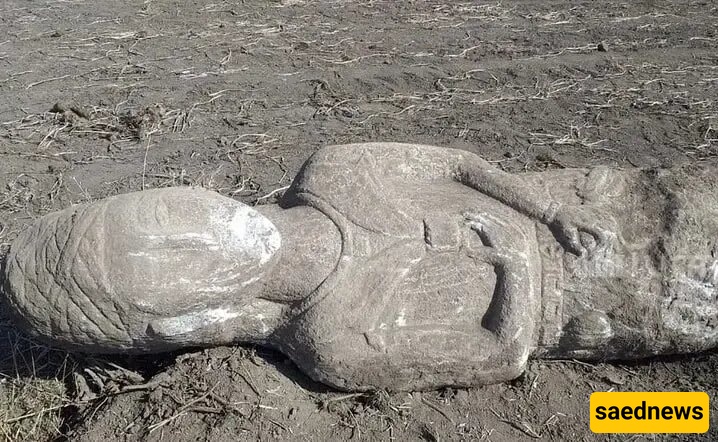
According to experts, the newly discovered statue contains distinctive features. Inscriptions are visible on its head, a pendant appears around the neck, and the position of the hands on the torso suggests that the figure may have represented a person of high rank or special status. Carvings and a belt are visible on the back of the statue as well.
The monument also depicts a short sword resembling an Akinakes, a weapon widely used during the Scythian period.
The stone statue, which sustained minor damage during excavation when struck by a tractor, measures approximately 2.7 meters in length. Local residents stated that they had never before seen a stone monument of similar size in their region.