The Kakhon is one of the most popular percussion instruments, commonly seen in the performances of musical groups. This instrument has a pleasant and appealing sound, and it also has an attractive appearance.
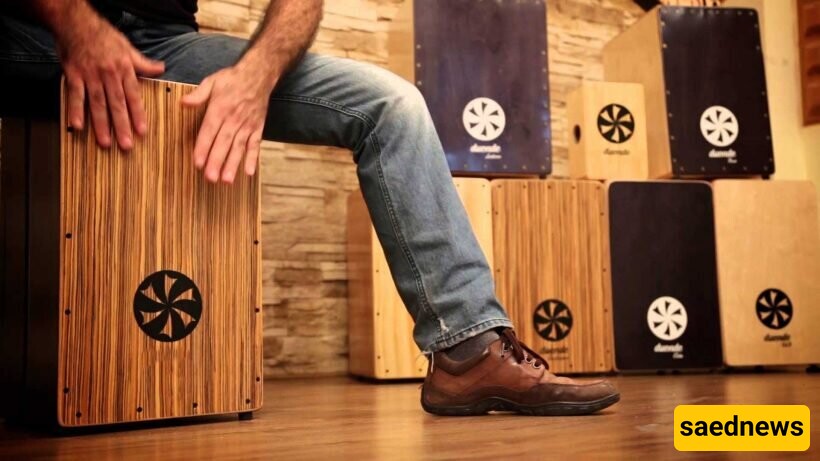
Percussion instruments are commonly used across all music genres and in all countries because of the appealing sound they produce and their ability to maintain rhythm during performances. One of the relatively newer and increasingly popular percussion instruments worldwide is the "Cajón." This instrument has an attractive sound and an appealing design. It resembles a box-like shape, and the musician sits on it, producing sound by striking its body.
As mentioned, the Cajón is a global instrument, but it is especially popular in South American countries and Spain. In this article, we will delve into the history, structure, and different playing techniques of the Cajón, giving you a comprehensive understanding of this percussion instrument. Stay with us as we explore...
The term "Cajón" means "box" in Spanish, and the instrument has a relatively short history. Initially, Spanish gypsies, along with dance, singing, and the essential guitar in flamenco music, used to play rhythms on fruit crates. Over time, these crates evolved into the modern Cajón. From the late 18th century, Afro-Peruvians (descendants of African slaves in Peru) began using the Cajón. The slaves brought from West and Central Africa to the Americas are considered the original inheritors of the Cajón. Today, this instrument is widespread across the Americas, the Philippines, and Spain. The Cajón became popular in Peru during the slavery period and reached its peak by 1850. In the late 19th century, Cajón players made modifications to its structure and sound. After slavery, the Cajón spread to other Latin American communities, including white descendants of European colonizers.
The Cajón has a box-like shape, resembling a six-sided or rectangular cube. Its five sides are made from thin layers of wood (2-3 cm thick), while the surface is made from "Tapa" or plywood in a rectangular shape. There are two main types of Cajón:
Fixed Cajón: This type is equipped with guitar strings or springs, but it doesn't offer adjustability, producing a consistent and uniform sound. While it doesn't display professional-level features, some renowned brands still produce this version.
Adjustable Cajón: A notable feature of the adjustable Cajón is its ability to modify sound easily using guitar strings or springs. By loosening the springs, the Cajón creates a wooden sound, while using the string variant allows tuning of the pitch, similar to a guitar.
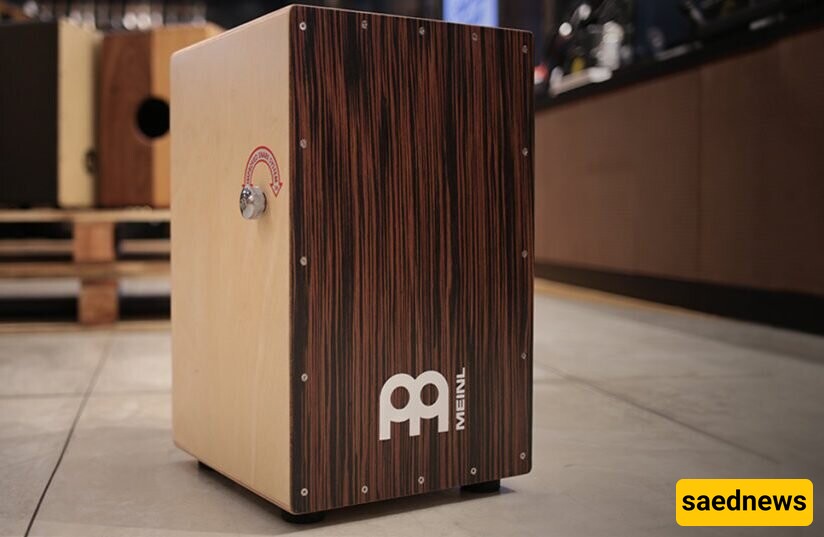
The Cajón is a rectangular box made from wood panels, with thicknesses ranging from 1/3 to 1/9 cm. The surface, made from plywood or "Tapa," has a hole on the back or on the left or right side for sound emission. The wood commonly used for the "Tapa" includes maple, mahogany, and cherry. The other parts of the instrument are made from high-quality white woods, such as poplar or pine. The Cajón is available in various materials and designs, with prices varying accordingly. The Solo Cajón is an exception, designed in long tubes, and its playing style resembles that of the conga.
The core technique for playing the Cajón involves striking the surface. The musician sits on the Cajón and strikes the Tapa (the front surface) with both hands. After striking, it's important for the musician to lift their hand immediately—never leaving the hand resting on the Tapa during play.
There are three primary playing styles for the Cajón: Peruvian, Cuban, and Flamenco. In Iran, the most common style is Flamenco. The music notation for the Cajón differs from typical notation, usually having two or three lines instead of the standard five.
When sitting on the Cajón, posture is important. The back should remain straight, and the feet should angle slightly outward. It's important not to slouch.
Various striking techniques exist, such as the "open," "bass," "slap," "high slap," and others. The top of the Tapa produces a lower sound, while the lower portion creates higher-pitched sounds. This means the further down the Tapa you strike, the higher the pitch produced.
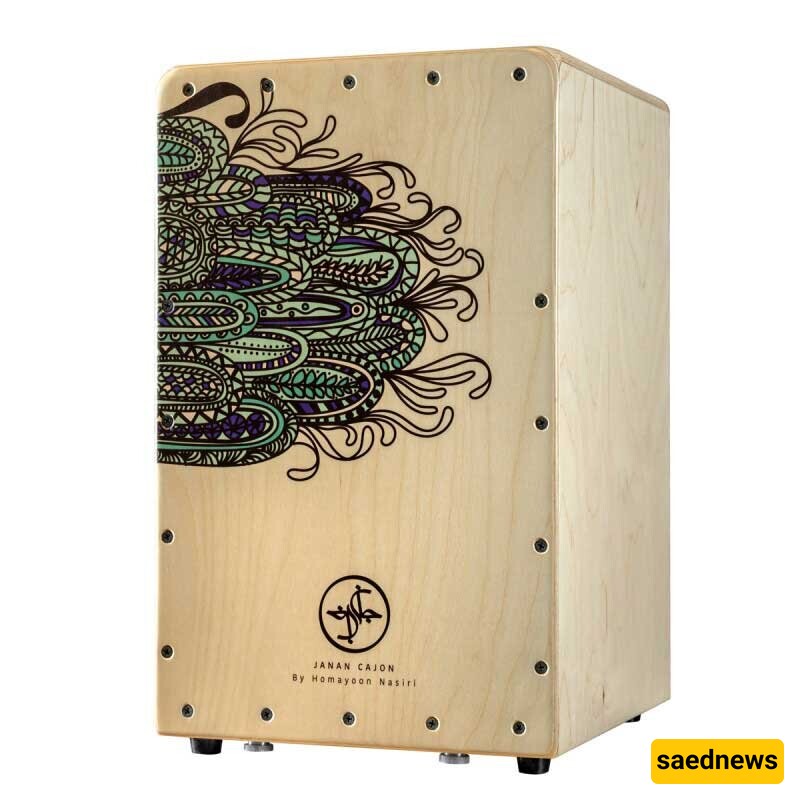
The Cajón is essentially a wooden box in the shape of a rectangular cube. Four sides are made from wooden panels, ranging from 0.5 to 0.75 inches (1.3 to 1.9 cm) thick. The main surface, the "Tapa," is made from plywood. There is a sound hole in the back or sometimes on the sides of the Cajón.
Originally, the Cajón was just a wooden box, but now it includes rubber or plastic feet and various springs or snares that create a jingling sound on the Tapa's inside and back. Cajóns are available in a wide range of models and prices.
When beginning to learn the Cajón, it's not necessary to purchase an expensive, professional model. As long as the instrument meets the basic standards, it will be a suitable choice for beginners. Once you've mastered the basics, you can upgrade to a more professional instrument.
Notable Cajón players include Mario Cortes, and in Iran, Homayoun Nasiri is well-known for playing the Cajón.
Summary
The Cajón is a type of percussion instrument. The name "Cajón" means "box" in Spanish and refers to this percussion instrument. The player sits on the Cajón and strikes the front surface (Tapa) and the sides with the palms of their hands and fingers to produce sound.