SAEDNEWS: British Columbia has declared a state of emergency as more than 100 wildfires burn across the province, forcing over 20,000 people from their homes and leaving some residents in need of rescue.
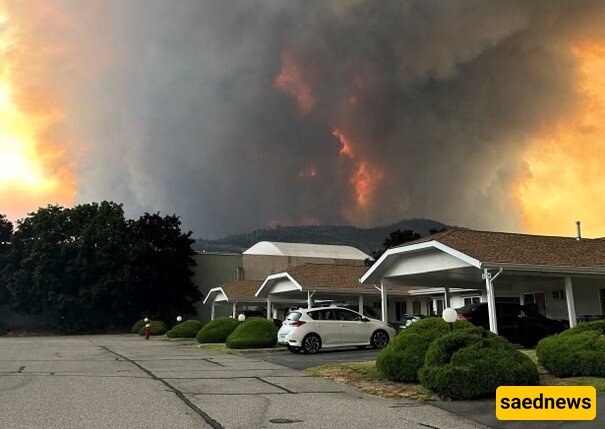
According to SaedNews: British Columbia has been pushed into a state of emergency as a rapidly expanding wave of wildfires threatens communities across the Canadian province, destroying homes, trapping residents and forcing more than 20,000 people to leave their homes.
The scale of the evacuation has turned what was already a serious wildfire season into an immediate crisis for communities in the path of the flames. Officials announced the emergency declaration on Saturday as more than 100 wildfires were burning across British Columbia.
Nearly half of those fires were reported to be out of control. Hot, windy conditions combined with a prolonged period of drought have created dangerous conditions in which fires can spread rapidly and become increasingly difficult to contain.
For residents in affected communities, the warning has become a race against time.
Authorities issued an immediate evacuation order for the entire community of Summerland, which has a population of roughly 12,000 people. Another 8,000 residents in Peachland and surrounding areas were also ordered to leave.
The evacuation orders underline the speed with which the situation has developed. Communities that only recently appeared to be facing a conventional wildfire threat have instead found themselves preparing for the possibility of flames reaching homes and cutting off escape routes.
Officials have not yet released an exact figure for the number of houses destroyed. But videos circulating on social media have offered a stark picture of the destruction, showing several homes engulfed in flames as residents attempted to escape.
Some of the most dramatic footage showed people driving along roads with fires burning on both sides. The images captured the extraordinary conditions confronting residents trying to get away from the affected areas.
The danger has not been limited to property.
According to reports, some residents became trapped and required rescue operations. Search-and-rescue teams have continued working to locate anyone who may have been stranded behind the fire lines.
That effort adds another layer of urgency to an already difficult emergency response. While firefighters and other emergency personnel work to contain the fires, rescue crews must also consider the possibility that people remain in areas that have become dangerous or inaccessible.
The situation has been particularly difficult because of the combination of weather and environmental conditions. High temperatures, strong winds and prolonged drought have contributed to the spread of the fires, while the large number of active blazes has placed additional pressure on emergency response efforts.
More than 100 separate fires burning at the same time means authorities are dealing with a crisis spread across a wide area rather than a single isolated incident. With nearly half of the fires considered out of control, the threat can change quickly as wind and dry conditions affect the direction and speed of the flames.
For people living in Summerland, Peachland and nearby areas, evacuation is now the immediate priority. The orders are intended to move residents away from the danger zone while emergency teams continue their work.
The uncertainty surrounding the number of destroyed homes also highlights how quickly the situation is evolving. Until emergency crews can safely assess affected areas, the full extent of the damage may remain unclear.
The images emerging from British Columbia have nevertheless made one thing unmistakable: this is not simply a story about flames spreading through forested areas. It is a crisis that has forced thousands of people to abandon their homes, placed residents in life-threatening situations and triggered large-scale search-and-rescue efforts.
The declaration of a state of emergency reflects the seriousness of the situation, but it also signals the scale of the challenge facing authorities as they try to protect communities while confronting fires that are being fueled by difficult weather conditions.
For those watching the dramatic scenes from afar, the most striking images may be the roads lined with fire and the homes disappearing behind walls of flame. For those caught in the evacuation zones, however, the crisis is much more immediate: leaving quickly, reaching safety and hoping their homes will still be standing when they are able to return.
As search teams continue looking for people who may be trapped and emergency crews battle fires across the province, the situation remains fluid. The coming developments will determine how much damage the fires ultimately cause and how many communities can safely return to normal.
For now, British Columbia remains focused on the most urgent task—getting people out of harm’s way as the flames continue to spread.