SAEDNEWS: FIFA has launched an unusually forceful defense of Gianni Infantino, accusing unnamed parties of coordinated efforts to weaken the organization as tensions continue over its commercial strategy and leadership. The statement also warns that FIFA will respond decisively to what it considers false or misleading information.
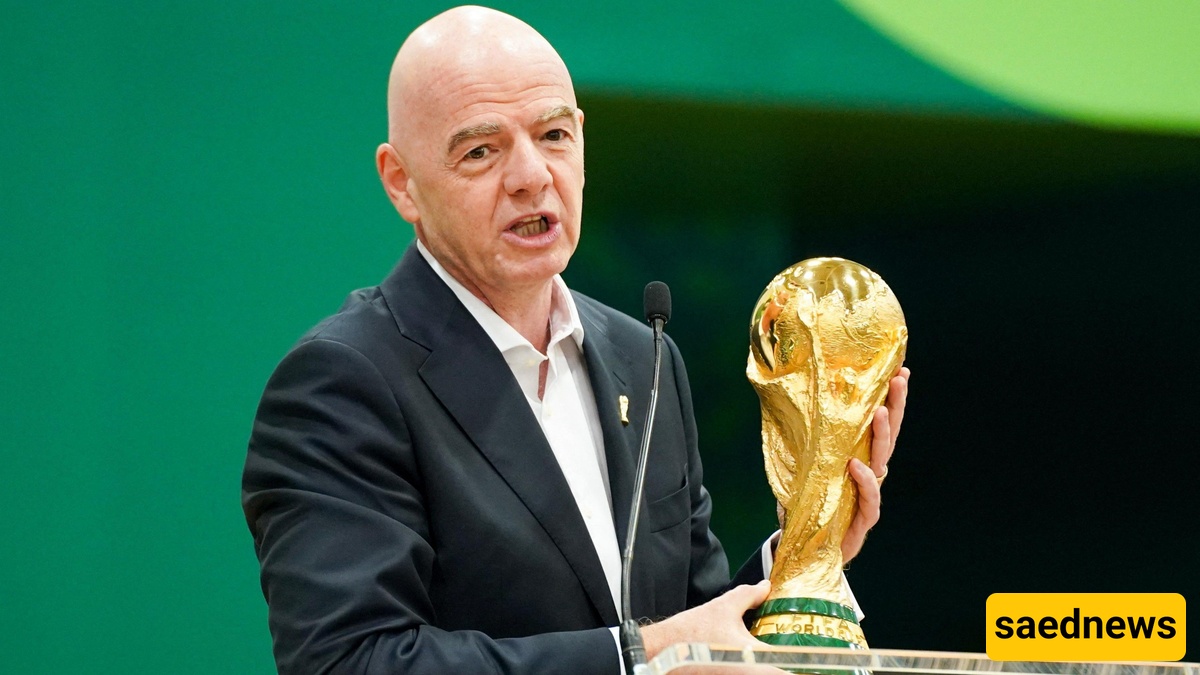
According to SaedNews: FIFA has chosen confrontation rather than silence as pressure surrounding President Gianni Infantino continues to build. In a strongly worded statement, football’s global governing body accused unnamed parties of engaging in what it described as sustained and coordinated efforts to destabilize the organization and undermine its leadership.
The statement is significant not only because of its unusually defensive tone, but also because it comes amid a broader dispute over FIFA’s commercial plans and the future of its leadership.
At the center of the tension is a proposal associated with Infantino to raise around $4.2 billion by selling part of FIFA’s future commercial rights connected to the World Cup and other competitions. The plan eventually stalled after generating opposition among several continental confederations and national football associations.
UEFA, according to the source material, went further by calling on Infantino to step down and abandon the project. The failure of the proposal added another layer of pressure to an already sensitive debate over how FIFA should manage its commercial future.
Now, FIFA is making clear that it intends to defend its president.
The organization said it would not support any presidential election process that falls outside its existing statutes and governance framework. That warning carries a broader message: whatever political or institutional disagreements may exist inside international football, FIFA says its leadership process must remain within the rules currently governing the organization.
The statement also referred to what FIFA characterized as “coordinated and ongoing efforts” by certain parties to weaken both the organization and its president.
Yet one of the most striking aspects of the statement is what FIFA did not reveal.
The governing body did not identify the individuals, federations or institutions it believes are behind the alleged campaign to destabilize FIFA. Instead, it focused on rejecting what it called inaccurate reporting and defending Infantino’s record.
FIFA expressed regret over the content of some recent media reports, arguing that they contained what it described as “baseless claims” and “blatantly false allegations.” The organization also pointed to Infantino’s more than three decades of involvement in European and global football as part of its defense of his record.
The language suggests that FIFA sees the current dispute as more than an ordinary disagreement over a commercial proposal.
It appears to be framing the controversy as a broader challenge to the organization itself.
That distinction matters. Commercial disagreements are common in international sports administration, particularly when billions of dollars in future rights are involved. But when an organization begins publicly describing criticism as part of an effort to destabilize it, the dispute takes on a distinctly political dimension.
FIFA nevertheless tried to draw a line between legitimate scrutiny and what it considers unacceptable attacks.
The organization said it welcomes legitimate oversight and review. At the same time, it argued that scrutiny should not become a justification for distorting facts or circulating information that could mislead the public.
That position allows FIFA to present its response not as opposition to accountability, but as a rejection of what it believes crosses the line between criticism and misinformation.
The governing body went even further by warning that it would respond “directly and decisively” to information it considers false or misleading.
That is perhaps the clearest signal in the entire statement. FIFA is not simply defending Infantino privately; it is publicly signaling that it intends to challenge narratives it believes damage the organization or its president.
The timing adds to the significance.
The dispute follows the collapse of a major commercial initiative that had been expected to generate roughly $4.2 billion through the sale of portions of future commercial rights. The proposal involved World Cup-related and other competition rights and became a source of friction with continental and national football bodies.
Once the plan stalled, the disagreement did not simply disappear.
Instead, it became part of a wider conversation about Infantino’s leadership and FIFA’s direction.
The organization’s latest statement appears designed to close ranks around its president while simultaneously warning critics that FIFA will not accept what it regards as attempts to undermine its institutional authority.
But the absence of named targets leaves an important question unanswered: who exactly does FIFA believe is trying to destabilize the organization?
The statement does not say.
That omission means the public debate is likely to continue around the same unresolved issues—who opposed the commercial strategy, how serious the institutional divisions are, and whether the dispute represents a temporary disagreement or a deeper struggle over FIFA’s future direction.
For now, however, FIFA’s position is unmistakable.
The organization says it stands behind Infantino, rejects what it considers false or misleading accusations, and will not endorse a presidential election process that falls outside its current statutes and governance framework.
It has also reaffirmed its commitment to its 211 member associations and to the development of football around the world.
The controversy therefore extends beyond one commercial project or one presidential figure. It touches on a larger question facing any powerful international sports organization: how should it respond when commercial ambitions, political pressure, institutional oversight and leadership disputes collide?
FIFA’s answer, at least in this latest statement, is to defend its leadership openly and confront what it considers misinformation rather than allow the dispute to define the organization uncontested.
Whether that stance will calm the situation or intensify the debate remains to be seen.
What is clear is that the argument surrounding Infantino has moved into a more public phase. FIFA has drawn its line, but because it has not named the parties it accuses of trying to destabilize the organization, one of the biggest questions remains unanswered.
And that unanswered question may be what keeps this football power struggle in the headlines.