Saed News: Although ice therapy can temporarily reduce pain and inflammation, it may interfere with the body's natural healing process, potentially prolonging recovery time and even extending the duration of pain.
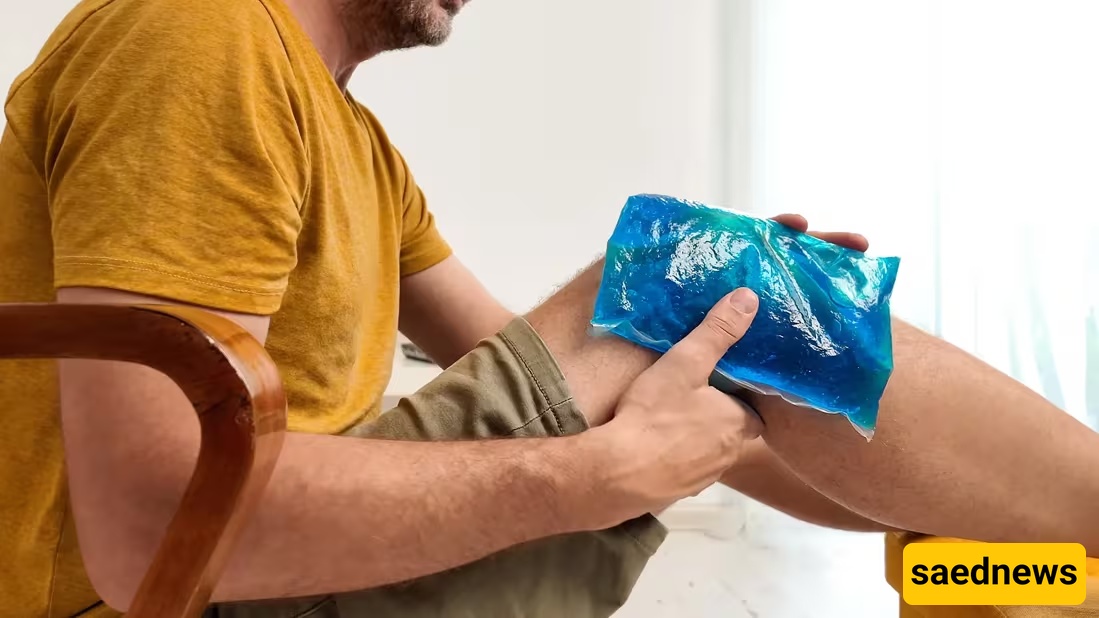
According to SAEDNEWS, for many years, applying ice to an injured ankle or muscle has been considered an effective way to reduce pain and swelling. However, a new study from McGill University suggests that this common practice may actually have the opposite effect.
As reported by Salamat News, the study, published in the journal Anesthesiology, found that while ice therapy reduces pain in the short term, it may more than double recovery time in some cases.
Dr. Lucas Lima, the study's lead author, said that the findings reveal a paradox: treatments that reduce inflammation and provide short-term pain relief may sometimes interfere with the natural processes required for complete healing.
Researchers explained that ice reduces inflammation by decreasing blood flow to the injured area. However, inflammation is actually a normal and necessary part of the healing process. It is the body's response to injury that attracts repair cells to the affected area. When ice suppresses this response, healing may proceed more slowly.
The new study builds on previous research suggesting that medications such as aspirin may also prolong pain duration. Animal studies had already indicated that ice therapy could slow tissue repair.
This research provides the first direct evidence that ice therapy may also affect how long pain lasts.
Ice application is part of the well-known RICE method, which stands for Rest, Ice, Compression, and Elevation. Although many healthcare professionals rely on this approach, researchers argue that there is limited evidence supporting its long-term benefits.
Professor Jeffrey Mogil stated that the goal is to understand when anti-inflammatory treatments are beneficial and when they may be harmful.
Professor Mogil emphasized that these findings are not yet conclusive for humans. Researchers are currently studying patients who have undergone surgery, such as wisdom tooth extraction, to determine whether the same negative effects of ice can be observed.
Ice can be useful for immediate pain relief, but prolonged or repeated use may slow the healing process. For serious injuries, it is advisable to consult a healthcare professional before relying on ice therapy.